The Complete Guide to Track Saws (2026)
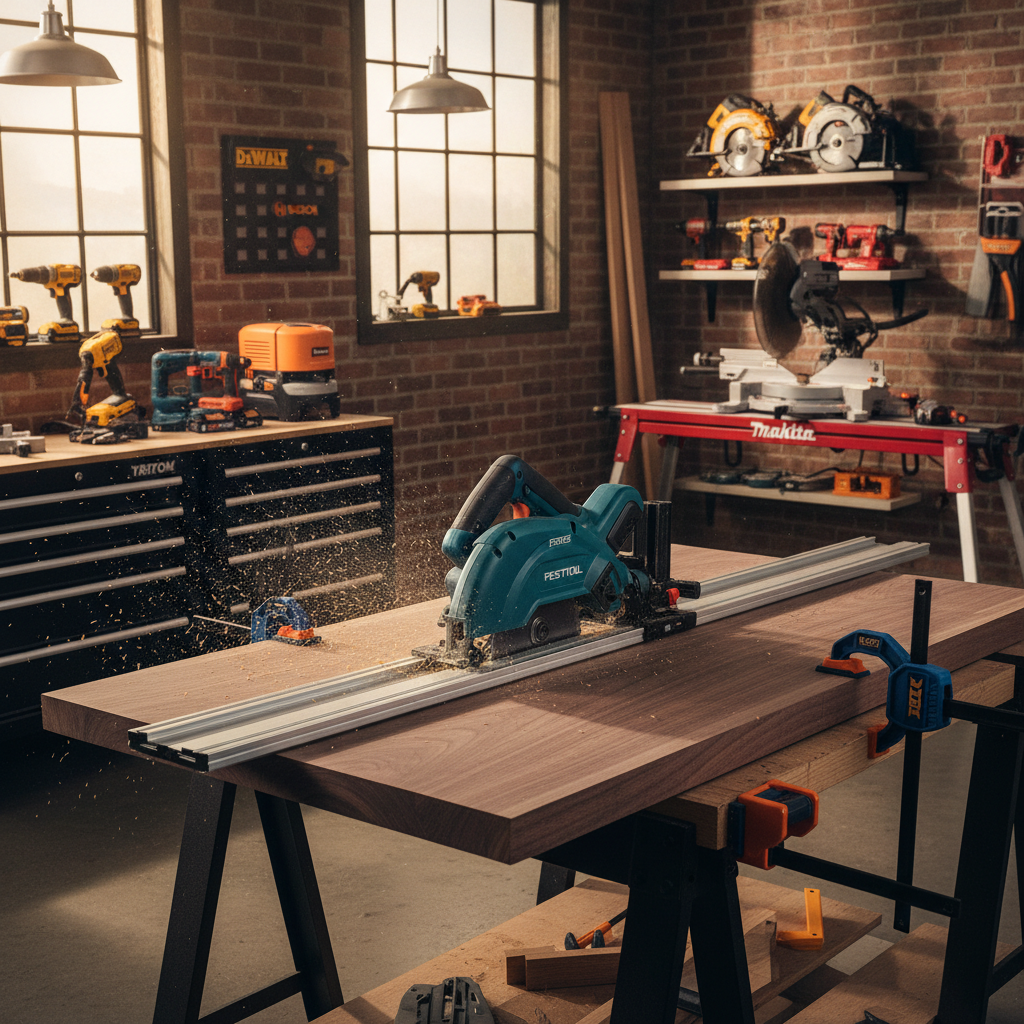
A track saw (also called a plunge saw) rides along an extruded aluminum guide rail to produce perfectly straight, splinter-free cuts in plywood, MDF, hardwood, and other sheet goods. The combination of a plunge-cut mechanism, anti-splinter strip, and zero-clearance design produces table-saw-quality cuts with the portability of a circular saw. Track saws have revolutionized job site and small shop work.
Key Takeaways
- A track saw (also called a plunge saw) rides along an extruded aluminum guide rail to produce perfectly straight, splinter-free cuts in plywood, MDF, hardwood, and other sheet goods.
- The combination of a plunge-cut mechanism, anti-splinter strip, and zero-clearance design produces table-saw-quality cuts with the portability of a circular saw.
- Track saws have revolutionized job site and small shop work.
- Track saws are used for breaking down full sheets of plywood and MDF, making long straight rip cuts, crosscutting wide panels, trimming doors and countertops on site, cutting dados with depth adjustment, and any application requiring a perfectly straight, clean edge without needing a table saw.
- Anti-splinter strip for zero-tearout, plunge depth control, dust extraction efficiency (90%+ with Festool), bevel capacity, track connection mechanism (play-free fit), variable speed, soft start, riving knife, track lengths available (55 and 75 inch standard), track connectors for extending length, and spring-loaded plunge mechanism.
What It's Used For
Track saws are used for breaking down full sheets of plywood and MDF, making long straight rip cuts, crosscutting wide panels, trimming doors and countertops on site, cutting dados with depth adjustment, and any application requiring a perfectly straight, clean edge without needing a table saw.
Types & Variations
Dedicated Track Saws (designed exclusively for rail use, like Festool TS 55/75), Track-Compatible Circular Saws (standard circular saws with optional rail adapters from DeWalt and Makita), Cordless Track Saws (battery-powered for maximum portability), and Dual-Rail Systems (for wider cuts and panel processing).
Key Features to Look For
- Anti-splinter strip for zero-tearout
- plunge depth control
- dust extraction efficiency (90%+ with Festool)
- bevel capacity
- track connection mechanism (play-free fit)
- variable speed
- soft start
- riving knife
- track lengths available (55 and 75 inch standard)
- track connectors for extending length
- and spring-loaded plunge mechanism.
How to Use
1) Place the guide rail on your material with the anti-splinter strip along the cut line. 2) The rail's rubber strips grip the material — no clamps needed for most cuts. 3) Set the plunge depth to slightly more than the material thickness. 4) Mount the saw on the rail and verify it slides smoothly. 5) Turn on the dust extractor if equipped. 6) Start the saw, plunge the blade, and push steadily along the rail. 7) The saw cannot deviate from the rail — focus on maintaining a steady feed rate.
⚠️ Safety Tips
Always wear safety glasses and hearing protection. Connect to a dust extractor for clean, healthy cutting. Make sure the track is secure on the material before starting. Keep the power cord away from the blade path. Do not force the saw through the material. Use proper support for sheet goods so they do not sag. Let the blade stop before lifting the saw off the track.
Maintenance
Replace the anti-splinter strip when it becomes worn or chipped. Clean the track rails and saw runner surfaces. Check the plunge mechanism for smooth operation. Inspect and clean the dust extraction port. Wax the track rails for smooth sliding. Store the tracks flat to prevent warping. Replace the blade when it dulls — use quality thin-kerf blades for best results.
Price Range & Recommendations
Price Range: $200-$400 for track-compatible circular saws with rail kits, $400-$700 for dedicated track saws, $700-$1,200 for premium Festool and Makita systems, $1,200+ for Festool TS 75 with full rail package.
Beginners will get excellent results from the Makita SP6000J ($400 range) or the Kreg Adaptive Cutting System (affordable entry point). Budget-conscious buyers can add a track adapter to a DeWalt circular saw. Pros swear by the Festool TS 55 REQ with CT dust extractor — it is the industry gold standard for precision, dust collection, and build quality, though the full system costs over $1,000.
Top Brands
Related Tools
Frequently Asked Questions
Related Guides
Band Saw
Learn how to choose and use a band saw for resawing, curves & joinery. Compare Jet, Rikon & Grizzly
Read guideChainsaw
Find the right chainsaw for your needs. Compare gas, electric & battery models from Stihl, Husqvarna
Read guideCircular Saw
Learn how to choose and use a circular saw. Compare top brands like DeWalt, Milwaukee & Makita. Tips
Read guideJigsaw
Discover how to choose and master a jigsaw for curves, cutouts & scroll work. Compare Bosch, DeWalt
Read guide