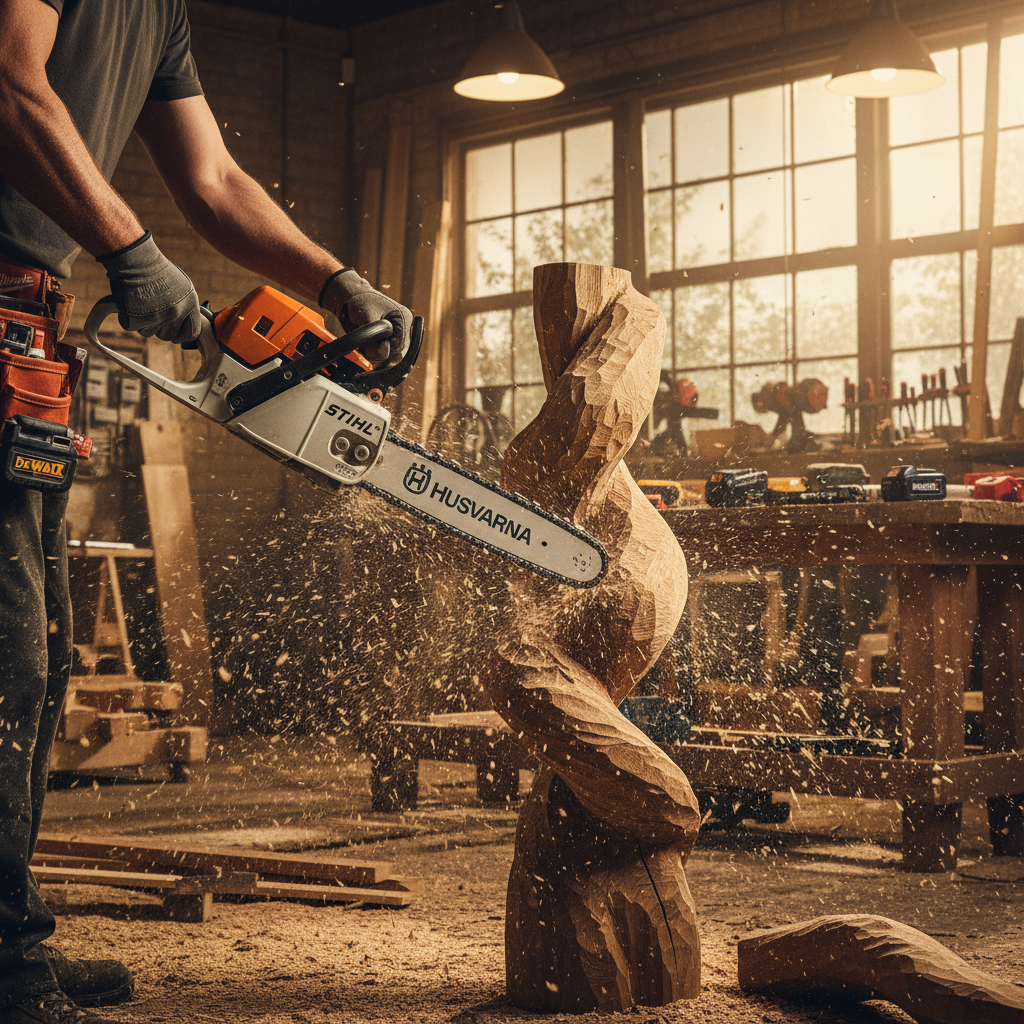
The Complete Guide to Chainsaws (2026)
A chainsaw is a powerful portable cutting tool that uses a rotating chain with sharpened teeth to cut through wood at high speed. Whether you are felling trees, bucking logs, limbing branches, or milling lumber with an Alaskan mill, the chainsaw is the essential outdoor cutting tool. Available in gas, corded electric, and battery-powered models for every scale of work.
Key Takeaways
- A chainsaw is a powerful portable cutting tool that uses a rotating chain with sharpened teeth to cut through wood at high speed.
- Whether you are felling trees, bucking logs, limbing branches, or milling lumber with an Alaskan mill, the chainsaw is the essential outdoor cutting tool.
- Available in gas, corded electric, and battery-powered models for every scale of work.
- Chainsaws are used for felling trees, bucking logs into firewood, limbing branches, storm cleanup, clearing brush, milling lumber with chainsaw mills, cutting fence posts, carving wood sculptures, and any heavy-duty wood cutting that requires portable power.
- Bar length (12-36 inches), engine displacement (cc for gas), chain brake (inertia-activated), anti-vibration system, automatic chain oiler, tool-free chain tensioner, chain type (low-kickback for beginners), decompression valve for easy starting, air filtration system, bumper spikes for leverage, and weight.
What It's Used For
Chainsaws are used for felling trees, bucking logs into firewood, limbing branches, storm cleanup, clearing brush, milling lumber with chainsaw mills, cutting fence posts, carving wood sculptures, and any heavy-duty wood cutting that requires portable power.
Types & Variations
Gas-Powered (2-stroke engine, 30cc-120cc, most powerful), Battery/Cordless (36V-80V, quiet, low maintenance), Corded Electric (lightweight, best for small tasks near power), Top-Handle (for arborists working in trees), Rear-Handle (standard ground use), and Pole Saws (extended reach for high limbs).
Key Features to Look For
- Bar length (12-36 inches)
- engine displacement (cc for gas)
- chain brake (inertia-activated)
- anti-vibration system
- automatic chain oiler
- tool-free chain tensioner
- chain type (low-kickback for beginners)
- decompression valve for easy starting
- air filtration system
- bumper spikes for leverage
- and weight.
How to Use
1) Inspect the saw — check chain tension, oil level, and fuel (gas models). 2) Wear full PPE: helmet with face screen, hearing protection, chaps, steel-toe boots, and gloves. 3) Place the saw on the ground, engage the chain brake, and start the engine. 4) Disengage the chain brake before cutting. 5) Maintain a firm two-hand grip at all times. 6) Use the bumper spikes as a pivot point when bucking. 7) For felling, make a notch cut (open-face or conventional) on the fall side, then a back cut from the opposite side. 8) Maintain an escape route and never stand behind a falling tree.
⚠️ Safety Tips
Always wear chainsaw chaps, helmet with face shield, hearing protection, and steel-toe boots. Never cut above shoulder height. Maintain the chain brake and test it before each use. Keep the chain sharp — a dull chain is more dangerous than a sharp one. Never operate alone in remote areas. Watch for kickback — keep the bar tip away from objects. Use the anti-kickback features. Never cut with the tip of the bar.
Maintenance
Sharpen the chain every 2-3 tanks of fuel or when it produces dust instead of chips. Clean the air filter after each use. Check the chain tension frequently — it should snap back when pulled. Clean the bar groove and oil port. Inspect the chain brake mechanism. For gas models: use fresh fuel mix, replace the spark plug annually, and clean the carburetor. Store with the bar cover on.
Price Range & Recommendations
Price Range: $100-$200 for small electric/battery, $200-$400 for mid-range battery, $250-$500 for homeowner gas models, $400-$1,000+ for professional gas chainsaws.
Beginners should start with a battery-powered saw like the Ego CS1804 18-inch or DeWalt DCCS670X1 for quiet, low-maintenance operation with reduced kickback risk. For light gas use, the Stihl MS 170 is affordable and reliable. Pros will reach for the Stihl MS 261 C-M or Husqvarna 562 XP for professional felling and all-day use, with the MS 500i fuel-injected saw at the top tier.
Top Brands
Related Tools
Frequently Asked Questions
Related Guides
Band Saw
Learn how to choose and use a band saw for resawing, curves & joinery. Compare Jet, Rikon & Grizzly
Read guideCircular Saw
Learn how to choose and use a circular saw. Compare top brands like DeWalt, Milwaukee & Makita. Tips
Read guideJigsaw
Discover how to choose and master a jigsaw for curves, cutouts & scroll work. Compare Bosch, DeWalt
Read guideMiter Saw
Master miter saw selection and technique. Compare sliding vs compound models from DeWalt, Bosch & Ma
Read guide