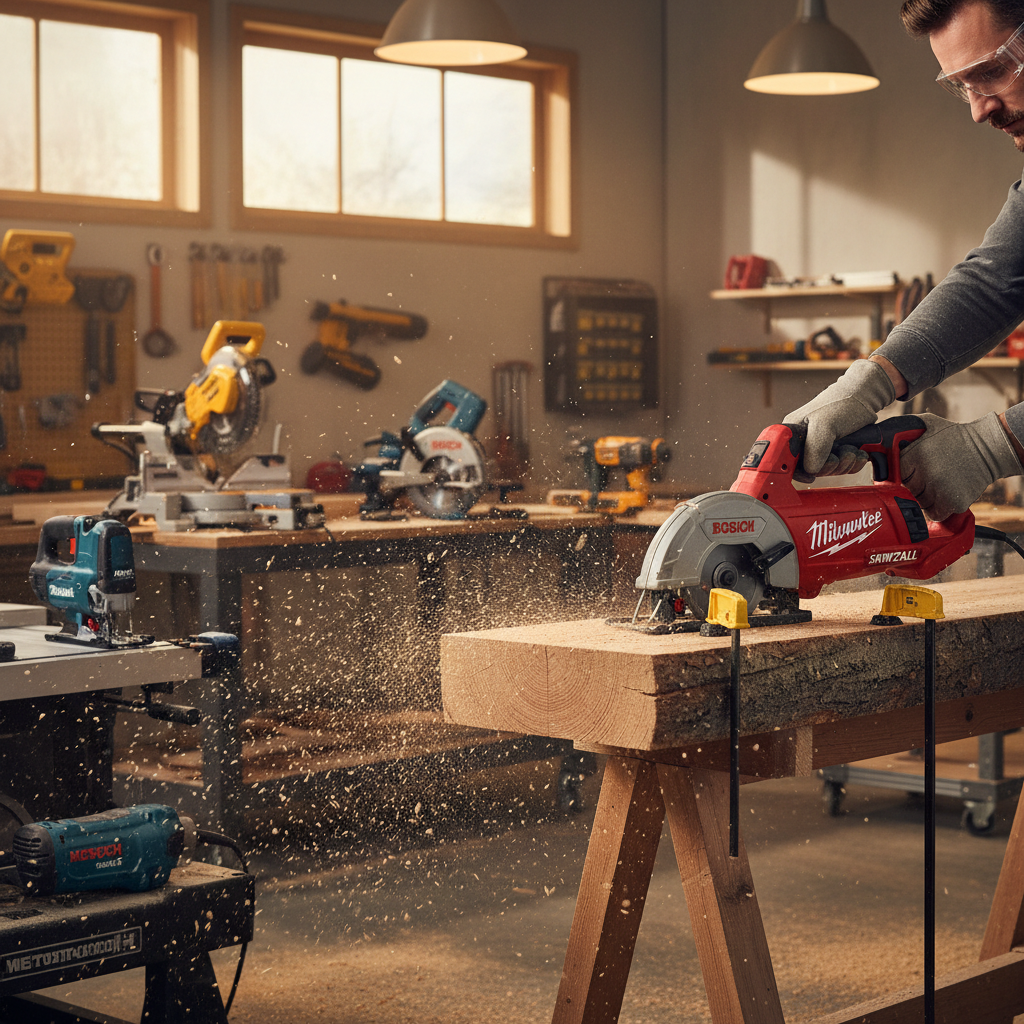
The Complete Guide to Reciprocating Saws (2026)
The reciprocating saw — commonly called a Sawzall (Milwaukee's trademark name) — is the ultimate demolition and rough-cutting tool. Its long blade strokes back and forth aggressively, slicing through wood, metal, nails, pipes, drywall, and almost anything else you throw at it. Indispensable for remodeling, plumbing, electrical work, and tree pruning.
Key Takeaways
- The reciprocating saw — commonly called a Sawzall (Milwaukee's trademark name) — is the ultimate demolition and rough-cutting tool.
- Its long blade strokes back and forth aggressively, slicing through wood, metal, nails, pipes, drywall, and almost anything else you throw at it.
- Indispensable for remodeling, plumbing, electrical work, and tree pruning.
- Reciprocating saws are used for demolition (removing walls, cutting studs, pulling apart framing), cutting pipes (PVC, copper, cast iron), pruning tree branches, cutting nail-embedded lumber, removing old windows and doors, cutting through plaster and lath, and any rough cutting where precision is secondary to power and access.
- Stroke length (1 to 1-1/4 inches), strokes per minute (0-3,000 SPM variable), orbital action, tool-free blade change, pivoting or adjustable shoe, anti-vibration technology, variable speed trigger, LED light, battery platform (for cordless), and overall weight for overhead work.
What It's Used For
Reciprocating saws are used for demolition (removing walls, cutting studs, pulling apart framing), cutting pipes (PVC, copper, cast iron), pruning tree branches, cutting nail-embedded lumber, removing old windows and doors, cutting through plaster and lath, and any rough cutting where precision is secondary to power and access.
Types & Variations
Standard Full-Size (two-hand grip), Compact/One-Handed (for tight spaces), Corded (constant power for heavy demolition), Cordless (portability for overhead and remote work), and Orbital-Action models that add an elliptical blade motion for faster wood cutting.
Key Features to Look For
- Stroke length (1 to 1-1/4 inches)
- strokes per minute (0-3
- 000 SPM variable)
- orbital action
- tool-free blade change
- pivoting or adjustable shoe
- anti-vibration technology
- variable speed trigger
- LED light
- battery platform (for cordless)
- and overall weight for overhead work.
How to Use
1) Select the appropriate blade for the material — bi-metal for nail-embedded wood, carbide-grit for cast iron, fine-tooth for metal. 2) Press the shoe firmly against the material for stability. 3) Start the saw at low speed and increase once the blade engages. 4) Let the blade do the work — do not force or twist. 5) For plunge cuts, angle the blade tip into the material and rock forward. 6) Use a pivoting shoe to adjust the cutting angle. 7) When cutting pipes, wrap the blade around gradually.
⚠️ Safety Tips
Always wear safety glasses, gloves, and hearing protection. Check for hidden wiring and plumbing before cutting into walls. The shoe gets hot during extended use — wear gloves. Hold the saw with both hands whenever possible. Be aware that the blade can catch and jerk the saw — maintain a firm grip. Never cut materials you cannot identify (may contain asbestos). Disconnect batteries before changing blades.
Maintenance
Clean the shoe and blade clamp after each use. Blow out sawdust from motor vents with compressed air. Inspect the blade clamp for wear — replace if blades wobble. Check the cord for cuts or fraying. Lubricate the shoe pivot. Replace carbon brushes on corded models when worn. Store in a case to protect the mechanism.
Price Range & Recommendations
Price Range: $50-$100 for basic corded, $100-$180 for mid-range corded, $130-$250 for cordless, $200-$400 for premium cordless with advanced features.
Beginners should grab the DeWalt DWE305 corded recip saw — it is powerful, reliable, and under $100. For cordless convenience, the Ryobi ONE+ P519 is budget-friendly. Pros will want the Milwaukee M18 FUEL SUPER SAWZALL 2722 for its orbital action and brutal cutting speed, or the DeWalt FLEXVOLT DCS389 for maximum battery power during all-day demolition.
Top Brands
Related Tools
Frequently Asked Questions
Related Guides
Band Saw
Learn how to choose and use a band saw for resawing, curves & joinery. Compare Jet, Rikon & Grizzly
Read guideChainsaw
Find the right chainsaw for your needs. Compare gas, electric & battery models from Stihl, Husqvarna
Read guideCircular Saw
Learn how to choose and use a circular saw. Compare top brands like DeWalt, Milwaukee & Makita. Tips
Read guideJigsaw
Discover how to choose and master a jigsaw for curves, cutouts & scroll work. Compare Bosch, DeWalt
Read guide