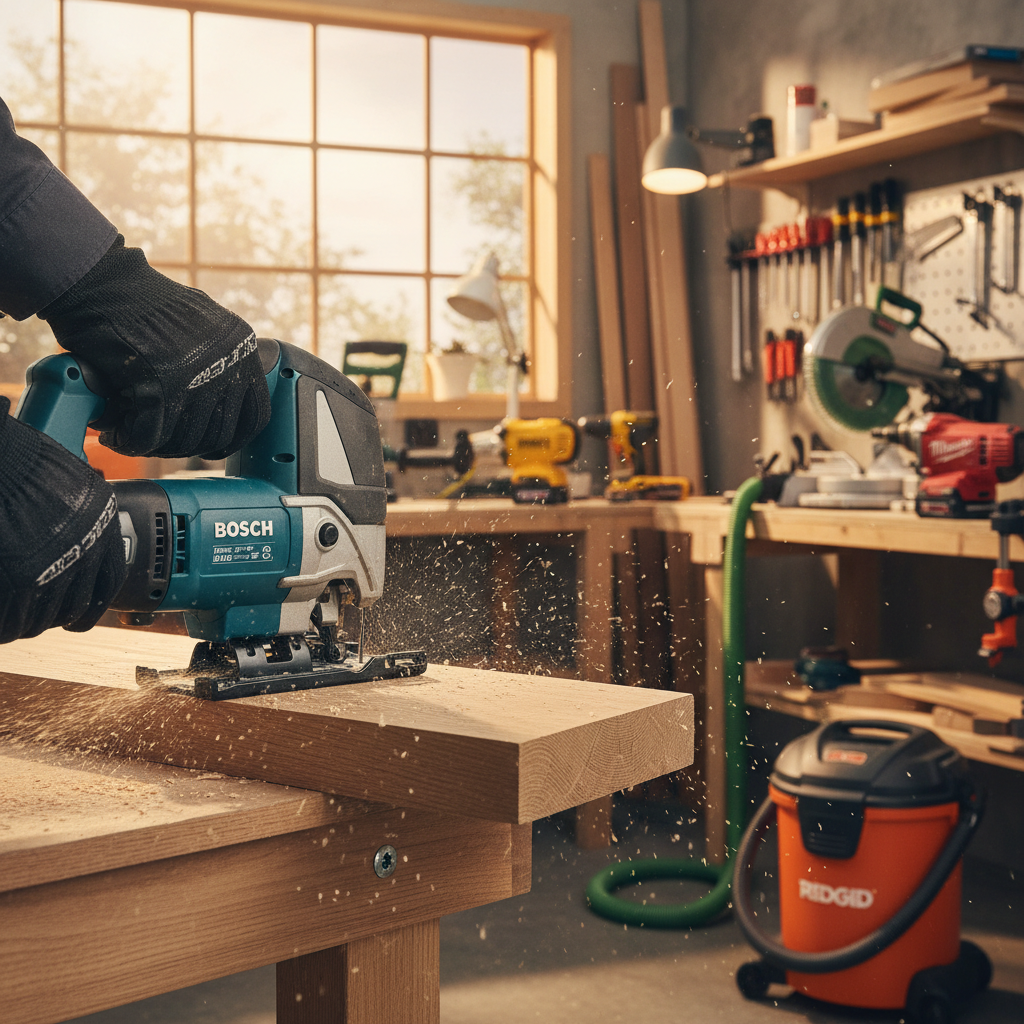
The Complete Guide to Jigsaws (2026)
A jigsaw is the go-to power tool for cutting curves, circles, and intricate shapes in wood, metal, plastic, and other materials. Its thin, reciprocating blade moves up and down rapidly, allowing you to follow curved lines that no other portable saw can match. Jigsaws are lightweight, easy to control, and one of the safest power saws for beginners.
Key Takeaways
- A jigsaw is the go-to power tool for cutting curves, circles, and intricate shapes in wood, metal, plastic, and other materials.
- Its thin, reciprocating blade moves up and down rapidly, allowing you to follow curved lines that no other portable saw can match.
- Jigsaws are lightweight, easy to control, and one of the safest power saws for beginners.
- Jigsaws are used for cutting curves and irregular shapes, making interior cutouts (like sink openings in countertops), scrollwork and decorative patterns, cutting circles, trimming laminate flooring, cutting metal and plastic with specialty blades, and plunge cuts in sheet material.
- Orbital action settings (0-3 levels), variable speed control (500-3,100 SPM), tool-free blade change, blade guide type (roller vs anti-vibration), dust blower, LED work light, low vibration design, soft-grip handle, bevel capacity (0-45 degrees), shoe material (stamped steel vs cast), and battery platform compatibility for cordless.
What It's Used For
Jigsaws are used for cutting curves and irregular shapes, making interior cutouts (like sink openings in countertops), scrollwork and decorative patterns, cutting circles, trimming laminate flooring, cutting metal and plastic with specialty blades, and plunge cuts in sheet material.
Types & Variations
Top-Handle (D-handle, most common), Barrel-Grip (body-grip for better control on intricate cuts), Corded (constant power), Cordless (battery-powered portability), and Pendulum/Orbital Action models with adjustable orbital settings for faster cutting in wood.
Key Features to Look For
- Orbital action settings (0-3 levels)
- variable speed control (500-3
- 100 SPM)
- tool-free blade change
- blade guide type (roller vs anti-vibration)
- dust blower
- LED work light
- low vibration design
- soft-grip handle
- bevel capacity (0-45 degrees)
- shoe material (stamped steel vs cast)
- and battery platform compatibility for cordless.
How to Use
1) Select the correct blade for your material (fine-tooth for metal, coarse for wood). 2) Mark your cut line clearly on the workpiece. 3) Secure the material with clamps. 4) Set the orbital action — lower settings for metal and curves, higher for fast straight cuts in wood. 5) Start the saw and let it reach speed before contacting the material. 6) Guide the saw along the line, letting the blade do the work. 7) For interior cutouts, drill a starter hole and insert the blade. 8) Move slowly on tight curves to avoid blade deflection.
⚠️ Safety Tips
Wear safety glasses as jigsaw cuts produce fine dust and chips that fly upward. Clamp your workpiece securely to prevent vibration. Keep hands away from the underside of the material where the blade exits. Unplug or remove the battery before changing blades. Use the correct blade for the material to prevent breakage. Let the blade stop completely before setting the saw down.
Maintenance
Keep the shoe plate clean and scratch-free. Check the blade guide rollers for wear and replace if needed. Clean sawdust from the motor vents and gear housing. Inspect the cord for damage on corded models. Lubricate the blade clamp mechanism periodically. Replace the shoe plate if it becomes bent or scored. Store with no blade installed.
Price Range & Recommendations
Price Range: $30-$80 for entry-level corded, $80-$150 for mid-range corded, $100-$200 for cordless, $150-$300 for premium barrel-grip models.
Beginners should start with the Bosch JS470E top-handle — it offers excellent control, variable speed, and tool-free blade changes for under $120. Pros will love the Bosch JS572EBK barrel-grip for precision scroll work, the Festool Carvex PSB 420 for near-zero vibration, or the Milwaukee M18 FUEL for cordless power on the job site.
Top Brands
Related Tools
Frequently Asked Questions
Related Guides
Band Saw
Learn how to choose and use a band saw for resawing, curves & joinery. Compare Jet, Rikon & Grizzly
Read guideChainsaw
Find the right chainsaw for your needs. Compare gas, electric & battery models from Stihl, Husqvarna
Read guideCircular Saw
Learn how to choose and use a circular saw. Compare top brands like DeWalt, Milwaukee & Makita. Tips
Read guideMiter Saw
Master miter saw selection and technique. Compare sliding vs compound models from DeWalt, Bosch & Ma
Read guide