Rubberwood (Rubber Wood): Furniture, Durability and Buying Guide
Hevea brasiliensis
By Lumberama · Updated 10/1/2026 · Source-based editorial guidance; no individual expert review claimed. Editorial standards
Rubberwood, also called rubber wood, parawood or hevea, is timber from Hevea brasiliensis. Properly processed stock is widely used for indoor furniture and components. It is naturally non-durable, so treatment, drying, construction and intended exposure matter. Plantation by-product sourcing can recover useful timber, but does not certify every product as sustainable or make it suitable for outdoor use.
Wood Appearance
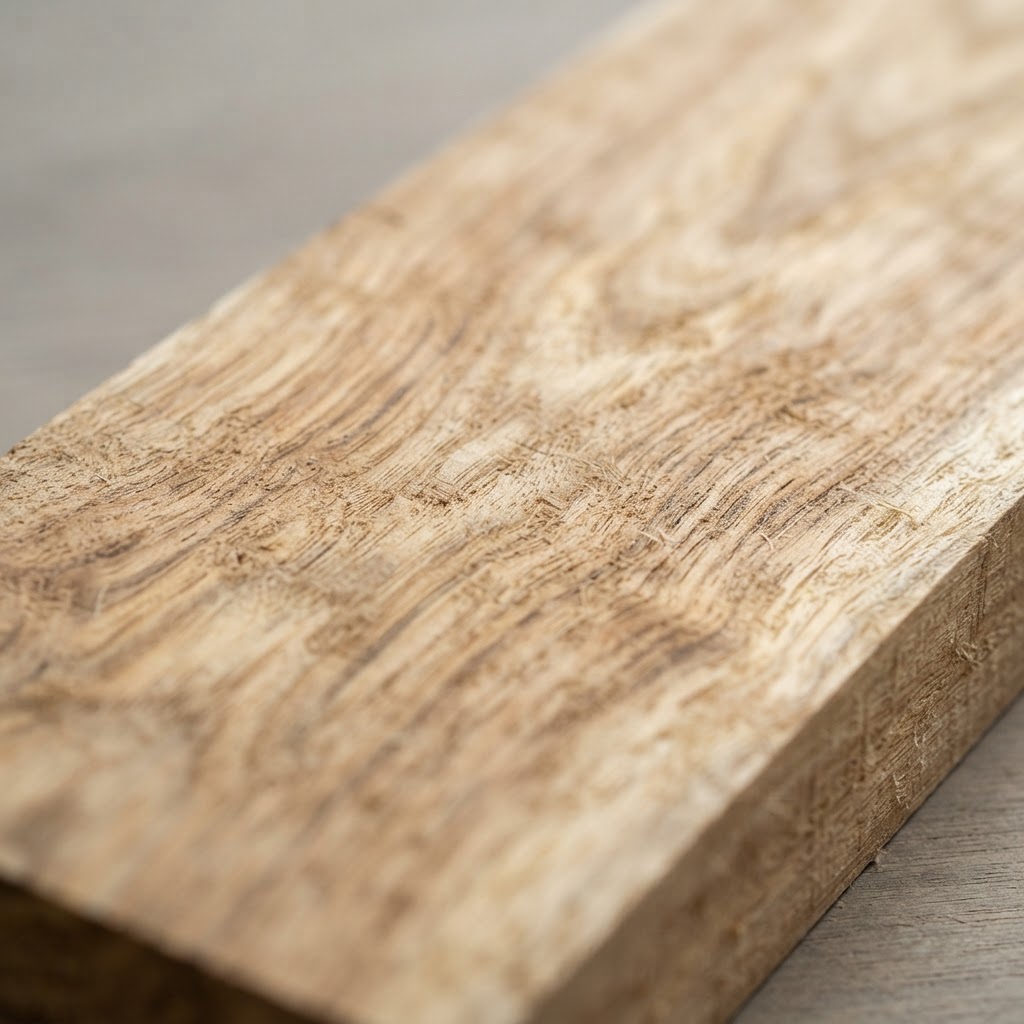
Natural Grain
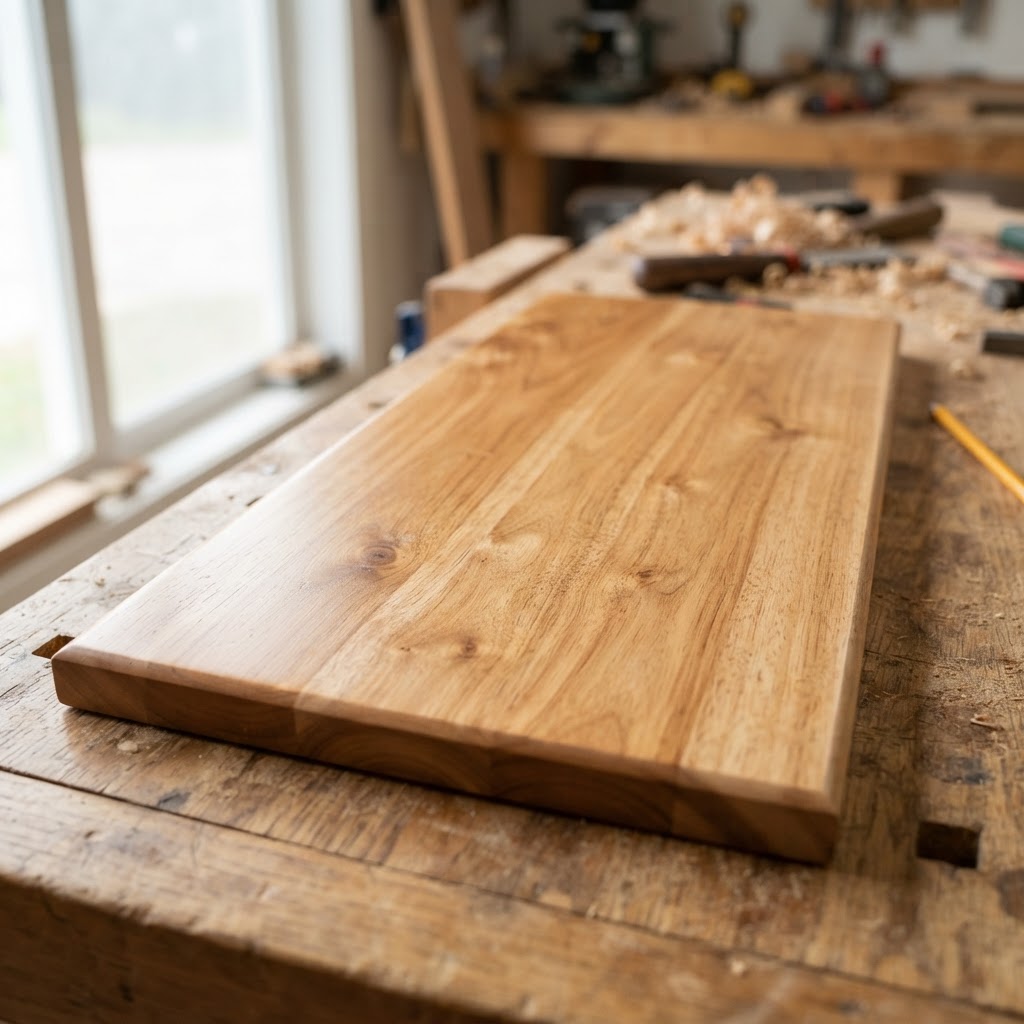
Finished Surface
Key Takeaways
- Density: 37 lbs/ft³
- Classification: Hardwood
- Origin: Malaysia, Thailand, Indonesia, Vietnam, Sri Lanka, Brazil
- Common uses include Indoor furniture, cabinet components, interior joinery
Quick Facts
Representative reference values — natural wood varies by growing region, moisture content and individual board.
Durability, Stability & Workability
Texture: Relatively large scattered pores; appearance and surface quality depend on machining and sanding.
Workability: Generally suitable for machining and gluing. Check for tension wood, drying defects and surface quality; confirm treatment and moisture before assembly.
Fastening: Pre-drilling recommended for screws and nails.
Finishing: Can accept stain and finish with suitable sanding. Test the complete finish system on actual stock; confirm treatment and coating suitability for the intended use.
Color change: Cream-colored fresh wood can become yellowish after seasoning. Finish and exposure affect final color; minimal color change is not guaranteed.
Insect resistance: Untreated wood is susceptible to fungi and insects. Protective processing does not automatically approve a product for outdoor or ground-contact exposure.
Ratings and published values are representative reference figures. Natural wood varies with growing region, moisture content and individual boards — treat them as guidance, not guarantees.
Common Sizes & Availability
Typical market availability for Rubberwood. Lumberama is a sourcing marketplace — actual stock, widths and lengths vary by supplier. Request a quote to confirm what's available for your project.
Availability notes: Confirm supplier stock, lead time, treatment and construction. Historical descriptions of abundant plantation timber are not a current inventory claim.
How lumber sizes are described
- Rough (4/4, 8/4…)
- Hardwood thickness in quarters of an inch as sawn, before surfacing. 4/4 = 1" rough.
- Surfaced (S2S/S4S)
- Thickness after planing. 4/4 typically finishes at 13/16" or 3/4".
- Nominal vs. actual
- Construction lumber is sold by nominal size; a 2x6 measures about 1-1/2" x 5-1/2".
- Random width / length
- Most hardwood is sold as it comes from the log — widths and lengths vary within a range rather than being fixed.
Color & Grain
Color: Fresh wood is white to cream, sometimes pinkish; it can become yellowish after seasoning. Heartwood and sapwood are not readily distinguishable.
Grain: Generally fairly straight grain; tension wood can produce fuzzy machined surfaces and tapping damage can produce staining.
Common Uses
- Indoor furniture
- cabinet components
- interior joinery
- laminated panels
- shelving
- flooring products with manufacturer-approved specifications
Key Characteristics
Also known as: Parawood, Hevea, Rubber wood, Malaysian oak (trade name; not a Quercus oak)
Advantages
- Janka indentation hardness: 980 lbf
- Heartwood decay rating: Non-Durable
- Sourced from Malaysia, Thailand, Indonesia, Vietnam, Sri Lanka, Brazil
Considerations
- Pre-drilling recommended for fasteners
- Hardness does not establish decay resistance or structural design strength
- Availability may vary
What is rubberwood?
Rubberwood is the timber of Hevea brasiliensis, the tree used to produce natural latex. The wood is rigid timber, not a flexible rubber material. Parawood and hevea refer to the same species; “Malaysian oak” is a trade description, not evidence that it is a Quercus oak. Confirm the botanical identity and country of harvest rather than treating a marketing name as a technical specification.
Is rubberwood a good choice for furniture?
Properly processed stock is useful for indoor tables, chairs, cabinet components and other joinery. The FAO reference describes machining, gluing and finishing potential, but it does not establish the quality of a particular chair or cabinet. Look at joints, component thickness, panel attachment, finish coverage and hardware. A well-made rubberwood piece can serve its intended use; a species label cannot compensate for weak joints, poor drying or unsuitable construction.
Solid stock, finger joints and laminated panels
Large rubberwood surfaces are often made by joining shorter or narrower pieces. Edge-glued strips, finger joints, veneer and engineered cores are different constructions. Request the composition of the top, legs, rails and panels separately; “made with rubberwood” does not mean every component is solid timber. Inspect visible joints and clarify whether finger joints are permitted on exposed faces. Ask for finished dimensions and any dimensional tolerances before purchasing project panels.
Drying, moisture and dimensional movement
Rubberwood still changes dimension as moisture conditions change. Drying defects can include checking, bowing, twisting or cupping, and a glued panel still requires movement allowance at attachments. Inspect delivered stock and measure moisture using an appropriate meter and species correction where available. The target depends on the service environment rather than one universal percentage or fixed acclimation period. Store panels flat with appropriate support and follow the manufacturer’s conditioning and attachment instructions.
Natural durability is not the same as processing protection
FAO describes untreated rubberwood as non-durable and vulnerable to fungi and insects. Protective processing can help make stock usable, but the treatment applied to an indoor component is not necessarily an exterior-use specification. Ask the supplier what treatment was used and what exposure it permits. An indoor table, a sink-adjacent worktop and a ground-contact post face different conditions. Do not assume paint, stain or a clear topcoat turns an ordinary furniture panel into weatherproof lumber.
Finishing, cleaning and refinishing
The pale wood can accept a range of finishes, but final color and uniformity depend on sanding, stock and the finishing system. Test on an offcut or concealed area. For purchased furniture, follow the supplied cleaning instructions and avoid prolonged wetting or heat exposure outside the product’s stated limits. Before sanding a tabletop, determine whether it is solid wood, veneered or otherwise coated. A thin veneer can be damaged long before a solid panel would be.
Cutting boards, toys and special-use claims
Do not infer food-contact or toy compliance from the species name or an attractive finish. Those uses depend on the complete product, including treatment, adhesive and coating, and on the applicable requirements. Ask the manufacturer for the relevant product documentation and care instructions. Unknown treated lumber should not be repurposed into a cutting board or children’s toy simply because rubberwood appears in some commercial kitchen or novelty products.
What plantation sourcing does and does not prove
The FAO article explains using trees removed when latex yields decline. Recovering that timber can make productive use of an agricultural by-product, but it does not certify every supply chain, prove that plantations never displaced natural habitat or quantify a finished item’s carbon footprint. Ask for country of harvest, supplier traceability and the scope of any certification claim. Historical plantation and production statistics in the reference are not current availability data or a ranking of today’s most sustainable materials.
How to compare cost and write the order
Compare delivered quotes for the same finished size, usable clear area, panel construction, drying, treatment and finish scope. For a hypothetical order, a $20 saving on each of five panels is $100; an extra $120 freight charge reverses the saving before other costs. That example is arithmetic, not live pricing. List botanical species, acceptable joints and face character, moisture requirements, dimensional tolerances, treatment documentation, intended use, quantity and substitution approval. Do not compare a rough board price directly with a ready-to-install furniture panel.
Sources and limitations
References consulted October 1, 2026. The FAO article is a historical technical overview, not a current price survey, sustainability certification or approval for an individual product. This is source-based editorial guidance, not an independent product test.
Frequently Asked Questions
Alternatives to Consider
Species commonly specified for similar applications when Rubberwood is unavailable or over budget.
Related Species
Explore More on Lumberama
Popular Applications
Comparisons
Calculators & Tools
Related Blog Posts
Heat Pump Guide: Types, Cost & How They Work
Heat and cool your home efficiently with one system.
Read articleAir Conditioning Guide: Types, Cost & Efficiency
Stay cool and save money on cooling.
Read articleWater Heater Guide: Types, Cost & Replacement
Choose the best water heater for your home.
Read article