The Complete Guide to Framing Nailers (2026)
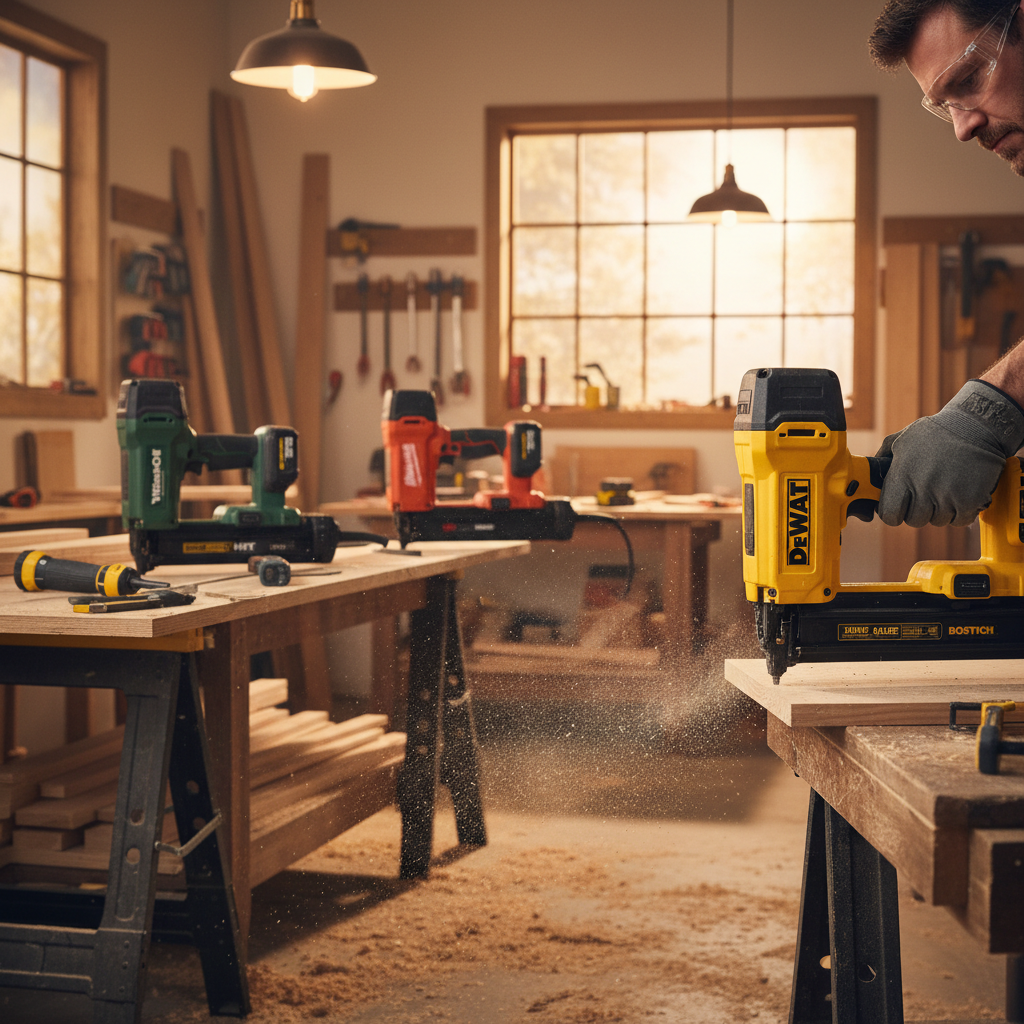
A framing nailer is a powerful pneumatic or cordless tool that drives full-size framing nails (8d, 10d, and 16d) at high speed for structural construction. It replaces the framing hammer for the majority of nail-driving tasks, dramatically increasing productivity. A skilled framer with a nailer can assemble walls, floors, and roofs many times faster than with a hammer alone.
Key Takeaways
- A framing nailer is a powerful pneumatic or cordless tool that drives full-size framing nails (8d, 10d, and 16d) at high speed for structural construction.
- It replaces the framing hammer for the majority of nail-driving tasks, dramatically increasing productivity.
- A skilled framer with a nailer can assemble walls, floors, and roofs many times faster than with a hammer alone.
- Framing nailers are used for wall framing (studs, plates, headers), floor joist installation, roof sheathing, subfloor attachment, deck framing, sheathing and siding, fence construction, building forms for concrete, and any structural nailing using 2x lumber and framing nails.
- Nail angle (21, 28, 30, or 33 degrees), nail length range (2 to 3-1/2 inches), full round head vs clipped head, depth adjustment, tool-free jam clearing, dry-fire lockout, contact (bump) and sequential trigger modes, magazine capacity, exhaust direction, and weight.
What It's Used For
Framing nailers are used for wall framing (studs, plates, headers), floor joist installation, roof sheathing, subfloor attachment, deck framing, sheathing and siding, fence construction, building forms for concrete, and any structural nailing using 2x lumber and framing nails.
Types & Variations
Pneumatic (air compressor powered, most common, lightest), Cordless/Gas (fuel cell + battery, fully portable), Battery-Only Cordless (lithium-ion, newest technology), 21-Degree (plastic strip collated, full round head), 28-30 Degree (paper/wire collated, clipped or offset head), and 15-Degree (coil nailer). Head styles: full round head (strongest, code-compliant everywhere) and clipped head (holds more nails per magazine).
Key Features to Look For
- Nail angle (21
- 28
- 30
- or 33 degrees)
- nail length range (2 to 3-1/2 inches)
- full round head vs clipped head
- depth adjustment
- tool-free jam clearing
- dry-fire lockout
- contact (bump) and sequential trigger modes
- magazine capacity
- exhaust direction
- and weight.
How to Use
1) Load a strip of framing nails into the magazine. 2) Connect the air hose (pneumatic) or insert the fuel cell and battery (cordless). 3) Set the depth adjustment for your nailing task. 4) Select trigger mode — sequential for precision, contact/bump for speed. 5) Press the safety tip against the wood and pull the trigger. 6) For toenailing, angle the nailer at approximately 45 degrees. 7) Follow standard nailing patterns (16d nails every 16 inches for sheathing, etc.).
⚠️ Safety Tips
Always wear safety glasses and hearing protection. Never point the nailer at anyone. Keep hands and feet clear of the nailing area — nails can penetrate through material. Use sequential trigger mode when precision matters and when working on ladders or scaffolding. Disconnect the air hose or remove the battery when not in use. Be aware that nails can ricochet off knots and metal. Never carry the tool with your finger on the trigger.
Maintenance
Oil pneumatic nailers daily through the air inlet (2-3 drops of pneumatic tool oil). Clean the magazine and feed mechanism regularly. Clear nail jams promptly. Inspect the contact trip and safety tip for wear. Check O-rings and seals periodically. Clean the exhaust port. For cordless, maintain the fuel cell and battery. Store in a dry location.
Price Range & Recommendations
Price Range: $150-$250 for pneumatic, $250-$400 for cordless gas (Paslode), $300-$500 for battery-only cordless (DeWalt, Milwaukee), $100-$200 for budget pneumatic.
Beginners should start with a pneumatic framing nailer — the Metabo HPT NR90AES1 ($180) is an industry workhorse, and the Bostitch F21PL offers excellent value with dual-trigger. Pair with a 6-gallon pancake compressor. Pros who need cordless freedom choose the DeWalt DCN692M1 or Milwaukee M18 FUEL 2745 for battery-powered framing without fuel cells, or the Paslode CF325XP for the original cordless framing nailer experience.
Top Brands
Related Tools
Frequently Asked Questions
Related Guides
Biscuit Joiner
Align panels and reinforce joints with a biscuit joiner. Compare DeWalt, Makita & Porter-Cable plate
Read guideBrad Nailer
Drive 18-gauge brads with precision using a brad nailer. Compare DeWalt, Milwaukee & Ryobi models. P
Read guideDovetail Jig
Cut perfect dovetails every time with a dovetail jig. Compare Porter-Cable, Leigh & MLCS models. Thr
Read guideFinish Nailer
Install trim like a pro with a finish nailer. Compare DeWalt, Milwaukee & Metabo HPT 15 & 16 gauge m
Read guide