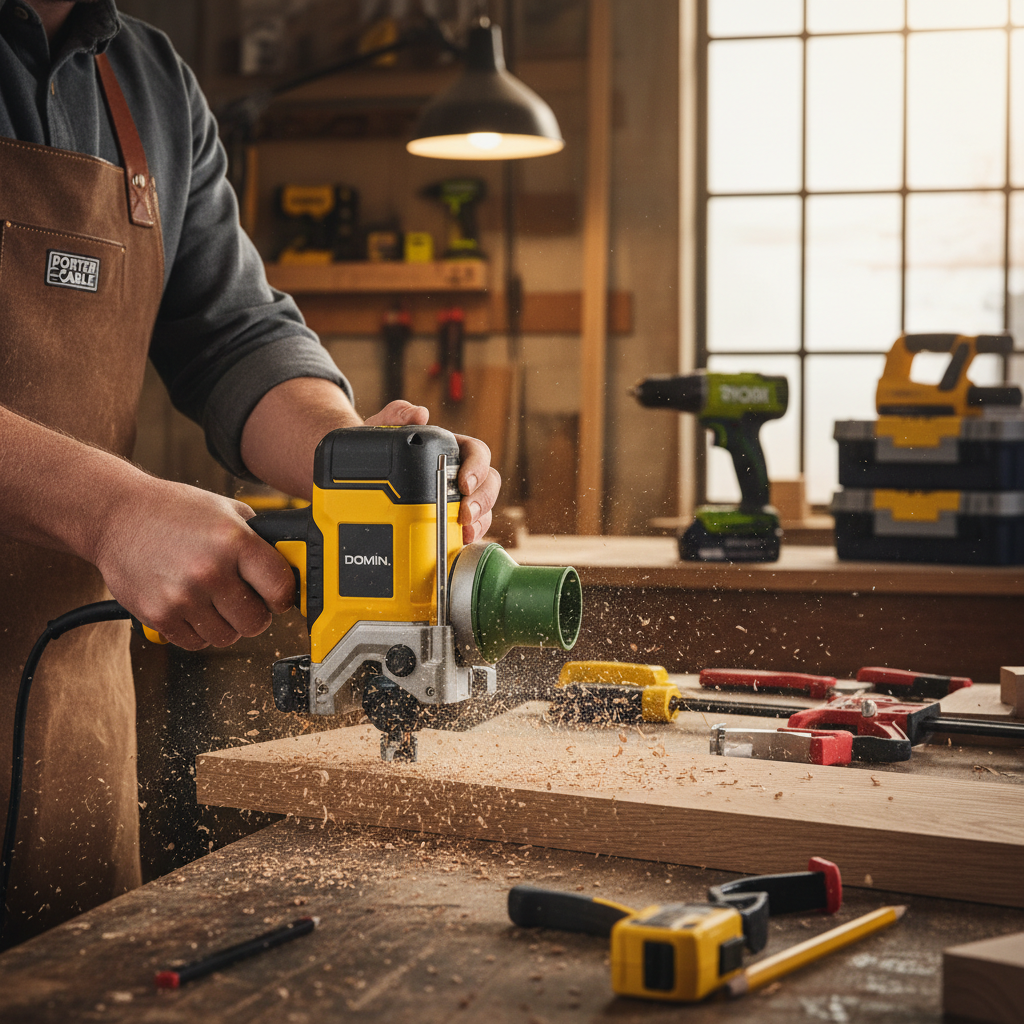
The Complete Guide to Biscuit Joiners (2026)
A biscuit joiner (plate joiner) cuts crescent-shaped slots in mating workpieces to accept compressed wood biscuits. When glue is applied, the biscuit swells inside the slots, creating a strong, perfectly aligned joint. Biscuit joiners are the fastest way to align edge joints, reinforce miter joints, and assemble cabinets and furniture with invisible fasteners.
Key Takeaways
- A biscuit joiner (plate joiner) cuts crescent-shaped slots in mating workpieces to accept compressed wood biscuits.
- When glue is applied, the biscuit swells inside the slots, creating a strong, perfectly aligned joint.
- Biscuit joiners are the fastest way to align edge joints, reinforce miter joints, and assemble cabinets and furniture with invisible fasteners.
- Biscuit joiners are used for aligning edge-glued panel joints, reinforcing miter joints in frames and cases, assembling face frames, joining shelf components, aligning cabinet parts during assembly, reinforcing butt joints in casework, and creating invisible joints in furniture and cabinetry.
- Fence adjustability (0-135 degrees), rack-and-pinion depth adjustment, blade size (4 inches standard), dust collection bag/port, anti-slip pins on the fence, positive detents at 0, 45, and 90 degrees, quick-lock fence, barrel grip comfort, and overall build quality.
What It's Used For
Biscuit joiners are used for aligning edge-glued panel joints, reinforcing miter joints in frames and cases, assembling face frames, joining shelf components, aligning cabinet parts during assembly, reinforcing butt joints in casework, and creating invisible joints in furniture and cabinetry.
Types & Variations
Standard Biscuit Joiner (4-inch blade, cuts #0, #10, #20 biscuits), Compact/Mini (smaller footprint), and Combination models with dust collection. Biscuit sizes: #0 (smallest, for narrow stock), #10 (medium), #20 (largest, for 3/4-inch and thicker stock). Some models also accept specialty biscuits and knockdown fittings.
Key Features to Look For
- Fence adjustability (0-135 degrees)
- rack-and-pinion depth adjustment
- blade size (4 inches standard)
- dust collection bag/port
- anti-slip pins on the fence
- positive detents at 0
- 45
- and 90 degrees
- quick-lock fence
- barrel grip comfort
- and overall build quality.
How to Use
1) Mark the biscuit locations on both mating pieces with a pencil. 2) Set the fence angle and height for your joint configuration. 3) Select the biscuit size and set the depth accordingly. 4) Align the center mark on the joiner with your pencil mark. 5) Turn on the tool and plunge the blade into the workpiece to cut the slot. 6) Repeat for all marks on both pieces. 7) Apply glue into the slots and on the biscuits. 8) Insert the biscuits and assemble the joint. 9) Clamp until the glue cures.
⚠️ Safety Tips
Wear safety glasses and hearing protection. Keep the retractable blade guard functioning properly. Hold the tool firmly during plunge cuts — the initial contact can kick. Keep hands behind the blade at all times. Disconnect power before changing blades. Clamp the workpiece securely; never hold it by hand while cutting.
Maintenance
Clean sawdust from the motor and blade housing after each use. Inspect the blade for dullness or chips and replace when needed. Check the fence for accuracy and adjust if it shifts. Clean the dust collection bag or port. Lubricate the plunge mechanism. Replace the blade guard spring if it weakens. Store in the carrying case.
Price Range & Recommendations
Price Range: $80-$150 for basic models, $150-$250 for mid-range (DeWalt, Makita), $200-$350 for premium models, $600-$800+ for Festool Domino (loose tenon — different but related concept).
Beginners should start with the DeWalt DW682K ($150 range) — it is reliable, accurate, and the best-selling biscuit joiner for good reason. The Porter-Cable 557 offers a more affordable alternative with the same capability. Pros who need the ultimate in joinery versatility will upgrade to the Festool Domino DF 500 ($1,000+), which cuts mortises for loose tenons that are significantly stronger than biscuits.
Top Brands
Related Tools
Frequently Asked Questions
Related Guides
Brad Nailer
Drive 18-gauge brads with precision using a brad nailer. Compare DeWalt, Milwaukee & Ryobi models. P
Read guideDovetail Jig
Cut perfect dovetails every time with a dovetail jig. Compare Porter-Cable, Leigh & MLCS models. Thr
Read guideFinish Nailer
Install trim like a pro with a finish nailer. Compare DeWalt, Milwaukee & Metabo HPT 15 & 16 gauge m
Read guideFraming Nailer
Speed up framing with a framing nailer. Compare DeWalt, Metabo HPT & Paslode models. Clipped vs roun
Read guide