The Complete Guide to Pocket Hole Jigs (2026)
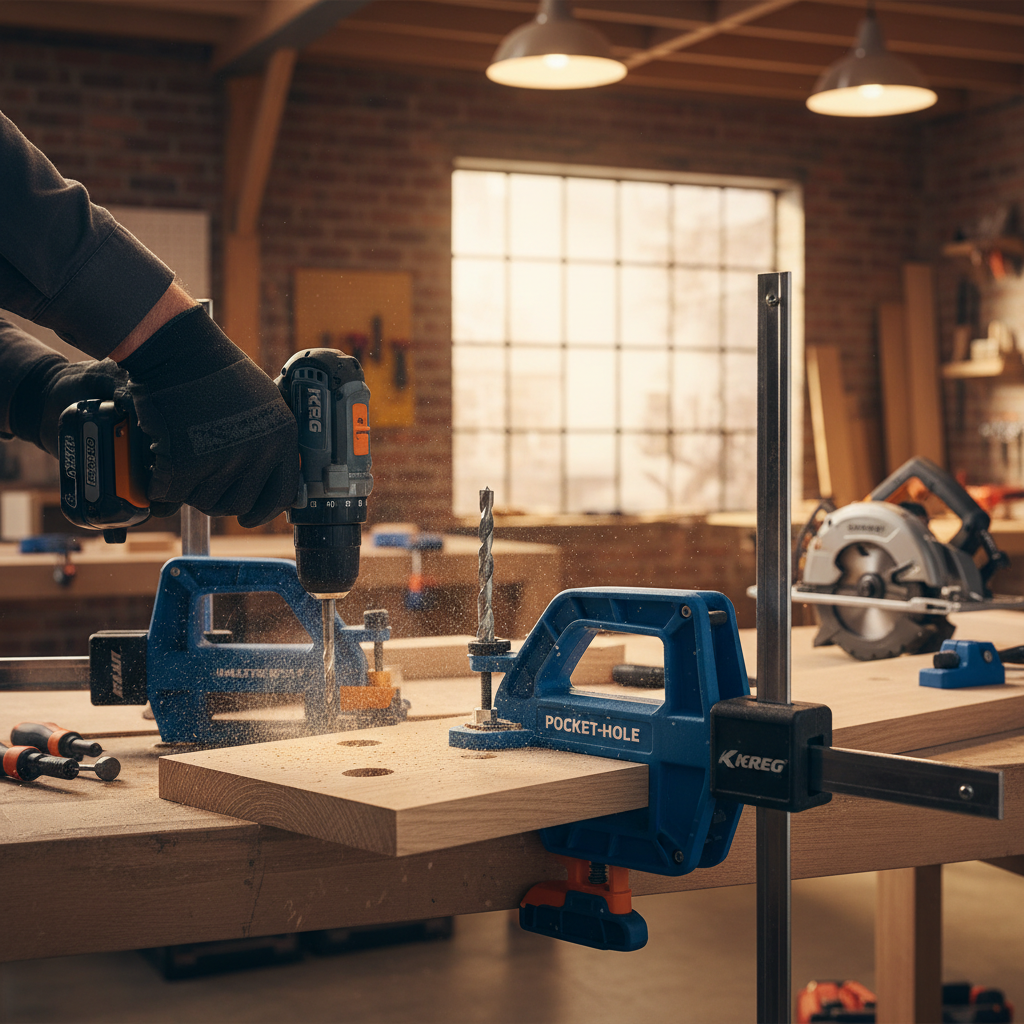
A pocket hole jig creates angled holes that accept self-tapping screws to join two pieces of wood together. This ingenious joinery system produces strong, fast joints without visible fasteners on the show face. Popularized by the Kreg Jig, pocket hole joinery is the fastest way to build face frames, cabinets, table aprons, bookcases, and countless other projects.
Key Takeaways
- A pocket hole jig creates angled holes that accept self-tapping screws to join two pieces of wood together.
- This ingenious joinery system produces strong, fast joints without visible fasteners on the show face.
- Popularized by the Kreg Jig, pocket hole joinery is the fastest way to build face frames, cabinets, table aprons, bookcases, and countless other projects.
- Pocket hole jigs are used for building face frames for cabinets, joining table tops to aprons, assembling bookcases and shelving, building bed frames and headboards, connecting rail-and-stile frames, attaching trim and molding, building picture frames, and any joint where speed and hidden fasteners are desired.
- Material thickness settings (1/2 to 1-1/2 inches), drill guide material (hardened steel), clamping mechanism, dust collection port, drill bit with depth collar, driver bit included, ability to join various thicknesses, portability vs bench-mounted, and availability of matching screws and plugs.
What It's Used For
Pocket hole jigs are used for building face frames for cabinets, joining table tops to aprons, assembling bookcases and shelving, building bed frames and headboards, connecting rail-and-stile frames, attaching trim and molding, building picture frames, and any joint where speed and hidden fasteners are desired.
Types & Variations
Mini Jig (portable, one-hole, clamps to workpiece), Standard Jig (Kreg K4/320, clamping base, most popular), Premium Jig (Kreg K5/520, improved clamping and chip collection), Benchtop System (Kreg 720PRO, mounted, production-oriented), and Foreman (semi-automated for production shops). Also available: specialty jigs for face frames, angles, and thick stock.
Key Features to Look For
- Material thickness settings (1/2 to 1-1/2 inches)
- drill guide material (hardened steel)
- clamping mechanism
- dust collection port
- drill bit with depth collar
- driver bit included
- ability to join various thicknesses
- portability vs bench-mounted
- and availability of matching screws and plugs.
How to Use
1) Set the drill guide and depth collar to match your material thickness using the jig's adjustment chart. 2) Clamp the workpiece into the jig with the pocket holes on the hidden face. 3) Drill the pocket holes using the stepped drill bit at high speed. 4) Apply wood glue to the joint face. 5) Clamp the pieces together with a face clamp or right-angle clamp. 6) Drive the pocket hole screws using a square-drive bit. 7) The screws pull the joint tight. 8) Fill pocket holes with plugs or caps if they will be visible.
⚠️ Safety Tips
Wear safety glasses when drilling — the stepped bit throws chips. Keep hands clear of the drill path. Use the clamp to secure the workpiece; never hold it by hand. Drive screws at moderate speed to avoid stripping. Be careful with pocket holes near the end of boards — they can split thin pieces. Use the correct screw length for your material thickness.
Maintenance
Clean the drill guide holes regularly with a brush. Inspect the stepped drill bit for dullness — replace when holes become ragged. Check the depth collar set screw for tightness. Clean the clamp pads. Apply paste wax to the jig body to prevent rust. Store in the carrying case with the drill bit protected.
Price Range & Recommendations
Price Range: $25-$50 for mini/portable jigs, $50-$100 for standard systems (Kreg 320), $100-$170 for premium systems (Kreg 520/720), $350-$600+ for production benchtop systems (Kreg Foreman).
Beginners should start with the Kreg 320 ($50 range) — it handles all basic pocket hole tasks with simple setup. It is the best value entry point. When you outgrow it, upgrade to the Kreg 720PRO ($140) for faster clamping, better dust collection, and a more robust base. Production shops will benefit from the Kreg Foreman DB210 for automated, repetitive pocket hole drilling.
Top Brands
Related Tools
Frequently Asked Questions
Related Guides
Cordless Drill
Find the perfect cordless drill for your needs. Compare DeWalt, Milwaukee & Makita 12V-20V models. T
Read guideDoweling Jig
Perfect dowel joints every time with a doweling jig. Compare Wolfcraft, Jessem & Dowelmax systems. A
Read guideDrill Press
Achieve perfect holes every time with a drill press. Compare WEN, Jet & Delta benchtop and floor mod
Read guideHammer Drill
Drill into concrete, brick & masonry with confidence. Compare DeWalt, Bosch & Milwaukee hammer drill
Read guide