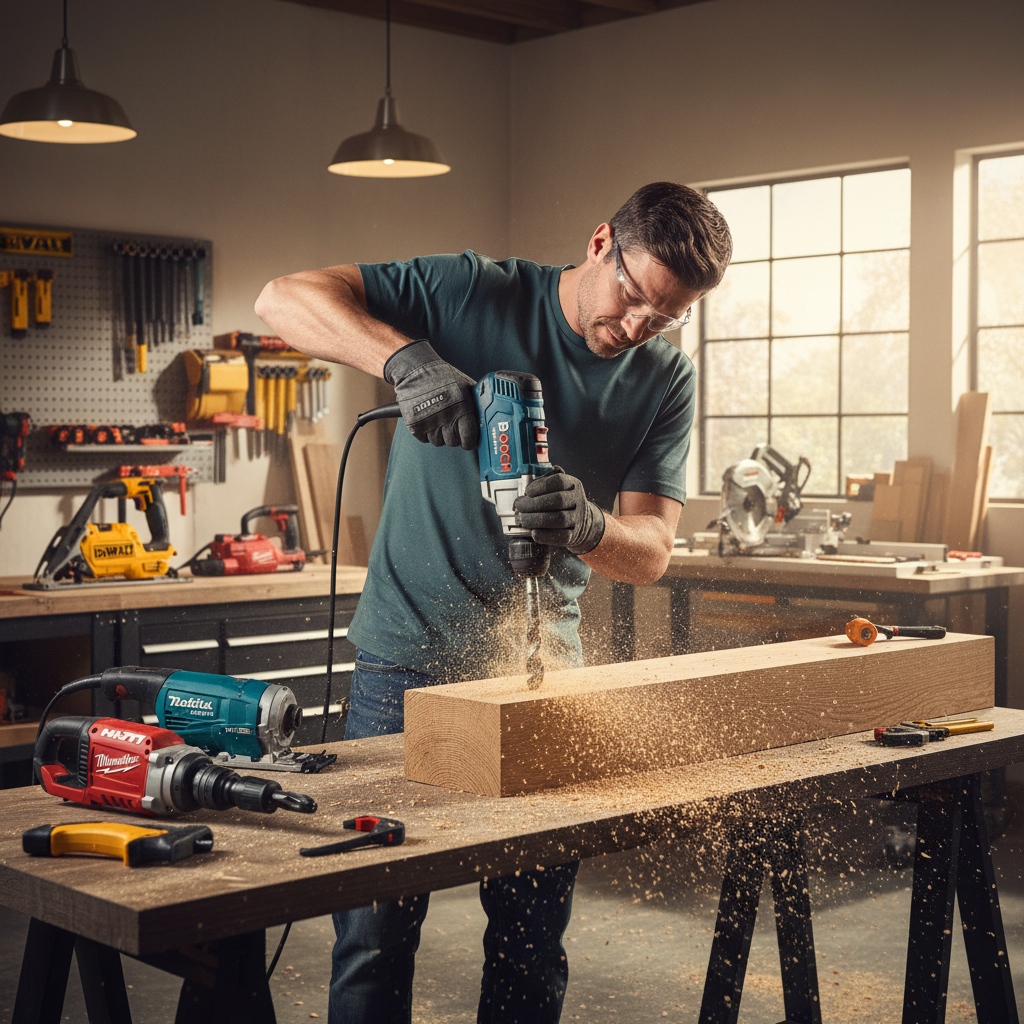
The Complete Guide to Hammer Drills (2026)
A hammer drill combines rotary drilling with a hammering action to bore through concrete, brick, block, stone, and other masonry materials. The rapid pulsing action breaks up the material while the rotation clears the debris, making quick work of holes that would be nearly impossible with a standard drill. Essential for anchoring, mounting, and any work involving masonry.
Key Takeaways
- A hammer drill combines rotary drilling with a hammering action to bore through concrete, brick, block, stone, and other masonry materials.
- The rapid pulsing action breaks up the material while the rotation clears the debris, making quick work of holes that would be nearly impossible with a standard drill.
- Essential for anchoring, mounting, and any work involving masonry.
- Hammer drills are used for drilling holes in concrete, brick, and block for anchors and fasteners, installing concrete screws (Tapcons), mounting TV brackets and shelving to masonry walls, running electrical conduit through concrete, installing handrails and ledger boards, and drilling into stone or tile with the hammer function disabled.
- Chuck type (keyed, keyless, SDS-Plus, SDS-Max), blow energy (ft-lbs for SDS), BPM (blows per minute), variable speed, mode selector (drill/hammer-drill/chisel), depth rod, auxiliary handle, vibration control, dust collection attachment, and battery platform for cordless.
What It's Used For
Hammer drills are used for drilling holes in concrete, brick, and block for anchors and fasteners, installing concrete screws (Tapcons), mounting TV brackets and shelving to masonry walls, running electrical conduit through concrete, installing handrails and ledger boards, and drilling into stone or tile with the hammer function disabled.
Types & Variations
Standard Hammer Drill (uses standard chuck, adds hammer to a regular drill), SDS-Plus Rotary Hammer (dedicated masonry tool, 3-function: drill, hammer-drill, chisel), SDS-Max Rotary Hammer (heavy-duty for large holes), Cordless Hammer Drill/Driver Combo (versatile, hammer mode for light masonry), and Demolition Hammers (chisel only, no rotation).
Key Features to Look For
- Chuck type (keyed
- keyless
- SDS-Plus
- SDS-Max)
- blow energy (ft-lbs for SDS)
- BPM (blows per minute)
- variable speed
- mode selector (drill/hammer-drill/chisel)
- depth rod
- auxiliary handle
- vibration control
- dust collection attachment
- and battery platform for cordless.
How to Use
1) Select the correct masonry bit for the hole size needed. 2) Mark the drilling location and use a center punch on smooth surfaces. 3) Set the tool to hammer-drill mode. 4) Attach the depth rod to control hole depth. 5) Hold the auxiliary handle firmly with one hand. 6) Start at low speed to establish the hole, then increase speed. 7) Apply steady, moderate pressure — let the hammer action do the work. 8) Periodically withdraw the bit to clear dust. 9) Switch to drill-only mode for wood and metal.
⚠️ Safety Tips
Wear safety glasses, hearing protection, and a dust mask when drilling masonry. Use the auxiliary handle at all times — the bit can catch and torque the drill. Be aware of rebar in concrete — use a rebar cutter if encountered. Check for embedded electrical conduit and plumbing before drilling. Masonry dust is hazardous — use dust extraction when possible. Let the bit cool during extended drilling.
Maintenance
Clean the SDS chuck mechanism regularly with compressed air. Apply a thin film of grease to SDS bit shanks before inserting. Inspect masonry bits for worn carbide tips and replace when dull. Clean dust from motor vents. Check the mode selector for smooth operation. For corded models, inspect the power cord. Store in the carrying case.
Price Range & Recommendations
Price Range: $50-$120 for standard hammer drill/drivers, $100-$250 for cordless hammer drill combo kits, $150-$350 for SDS-Plus rotary hammers, $300-$700+ for SDS-Max models.
Beginners can start with a cordless hammer drill combo like the DeWalt DCD996 or Milwaukee M18 FUEL 2904 — they function as a regular drill with an added hammer mode for occasional masonry work. For frequent masonry drilling, upgrade to an SDS-Plus rotary hammer like the Bosch GBH2-28L. Pros in concrete construction will want the Hilti TE 7-C or Bosch GBH18V-26DK for all-day rotary hammer performance.
Top Brands
Related Tools
Frequently Asked Questions
Related Guides
Cordless Drill
Find the perfect cordless drill for your needs. Compare DeWalt, Milwaukee & Makita 12V-20V models. T
Read guideDoweling Jig
Perfect dowel joints every time with a doweling jig. Compare Wolfcraft, Jessem & Dowelmax systems. A
Read guideDrill Press
Achieve perfect holes every time with a drill press. Compare WEN, Jet & Delta benchtop and floor mod
Read guideImpact Driver
Learn why every builder needs an impact driver. Compare Milwaukee, DeWalt & Makita models. Torque sp
Read guide