The Complete Guide to Dovetail Jigs (2026)
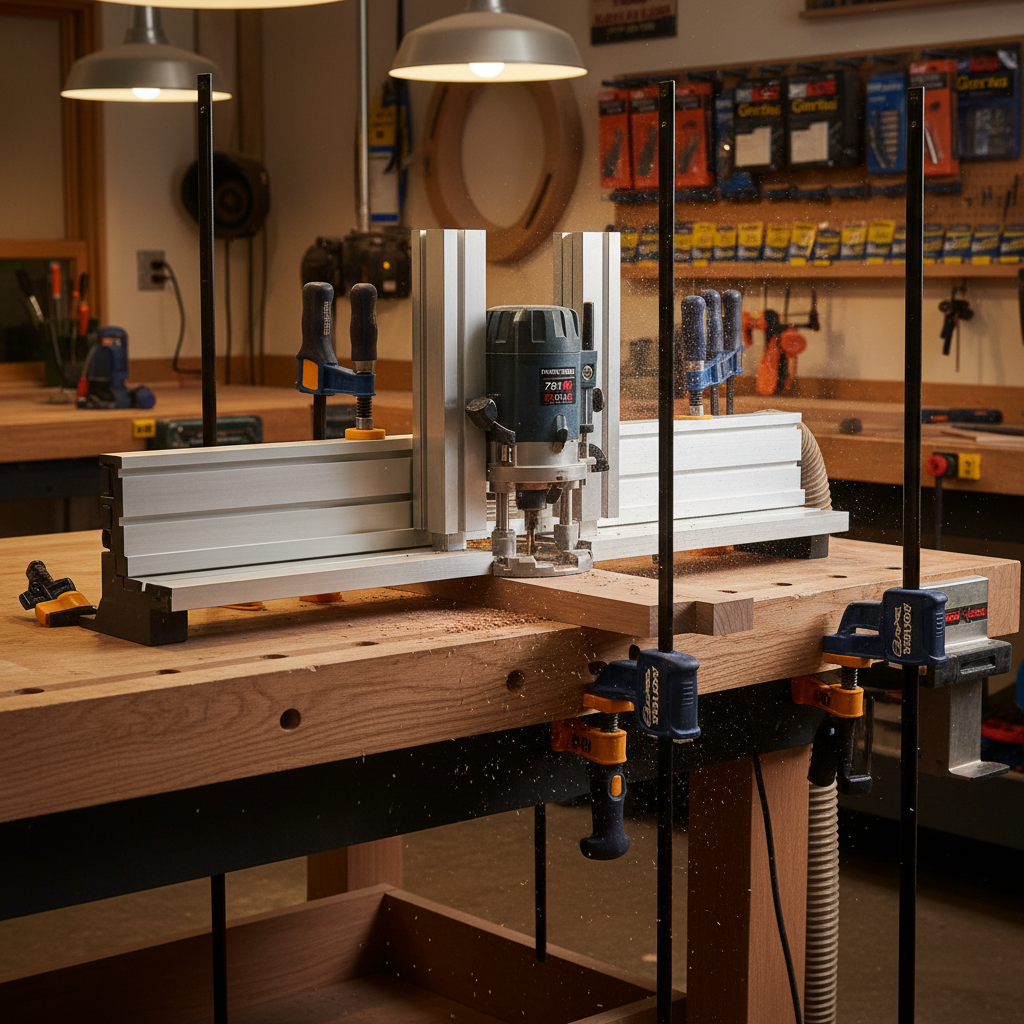
A dovetail jig is a template-based device that guides a router to cut perfectly fitting dovetail joints — one of the strongest and most attractive joints in woodworking. By securing two mating boards in the jig and running a router with a dovetail bit along the template fingers, you produce interlocking pins and tails that fit together with satisfying precision every time.
Key Takeaways
- A dovetail jig is a template-based device that guides a router to cut perfectly fitting dovetail joints — one of the strongest and most attractive joints in woodworking.
- By securing two mating boards in the jig and running a router with a dovetail bit along the template fingers, you produce interlocking pins and tails that fit together with satisfying precision every time.
- Dovetail jigs are used for cutting through dovetails for drawers and boxes, half-blind dovetails for drawer fronts, sliding dovetails for shelving, box joints (finger joints), and variably spaced dovetails for custom furniture.
- They turn a complex hand-cut joint into a repeatable, router-guided process.
- Joint types supported (half-blind, through, sliding, box), width capacity (12-24 inches), material thickness range, variable spacing capability, template finger material (aluminum preferred), clamping mechanism, router bit compatibility, micro-adjustment for fit, and included bits and guide bushings.
What It's Used For
Dovetail jigs are used for cutting through dovetails for drawers and boxes, half-blind dovetails for drawer fronts, sliding dovetails for shelving, box joints (finger joints), and variably spaced dovetails for custom furniture. They turn a complex hand-cut joint into a repeatable, router-guided process.
Types & Variations
Fixed-Finger (half-blind only, simplest, most affordable), Variable-Spacing (adjustable finger templates for custom layouts), Through-Dovetail (cuts pins and tails separately), Combination (half-blind, through, sliding, and box joints), and Compact (for small boxes and jewelry). Widths: 12, 16, and 24 inches.
Key Features to Look For
- Joint types supported (half-blind
- through
- sliding
- box)
- width capacity (12-24 inches)
- material thickness range
- variable spacing capability
- template finger material (aluminum preferred)
- clamping mechanism
- router bit compatibility
- micro-adjustment for fit
- and included bits and guide bushings.
How to Use
1) Set up the jig on a sturdy bench and clamp securely. 2) Install the correct dovetail bit and guide bushing in your router. 3) Adjust the template and bit depth according to the jig instructions. 4) Clamp the tail board vertically and the pin board horizontally (for half-blind). 5) Run the router along the template fingers, following each finger precisely. 6) Make a test joint in scrap wood to verify fit. 7) Adjust bit depth for tighter or looser fit. 8) Cut all joints once the setup is dialed in.
⚠️ Safety Tips
Clamp the jig firmly to the bench. Wear safety glasses, hearing protection, and a dust mask. Keep hands away from the router bit path. Feed the router against bit rotation. Check that boards are clamped securely before routing — loose boards produce dangerous kickback and ruined joints. Make test cuts in scrap before cutting project pieces.
Maintenance
Clean template fingers of sawdust and resin buildup. Check clamping bars for tightness. Lubricate the adjustment mechanisms. Inspect dovetail bits for dullness and replace when needed. Store with all parts assembled to prevent losing small components. Keep the template fingers free of dents that could affect joint quality.
Price Range & Recommendations
Price Range: $40-$80 for basic half-blind only (MLCS, General), $100-$200 for mid-range combination (Porter-Cable 4216), $200-$400 for premium variable-spacing, $400-$800+ for top-tier (Leigh D4R, Leigh Super).
Beginners should start with the Porter-Cable 4216 ($170 range) — it cuts half-blind, through, and sliding dovetails with an included bit set and guide bushings. It is the best value combination jig. The MLCS 9466 ($60) is a great budget option for half-blind only. Pros will invest in the Leigh D4R Pro or Leigh Super 24 for infinitely variable spacing, the widest material capacity, and the ability to create custom dovetail layouts.
Top Brands
Related Tools
Frequently Asked Questions
Related Guides
Biscuit Joiner
Align panels and reinforce joints with a biscuit joiner. Compare DeWalt, Makita & Porter-Cable plate
Read guideBrad Nailer
Drive 18-gauge brads with precision using a brad nailer. Compare DeWalt, Milwaukee & Ryobi models. P
Read guideFinish Nailer
Install trim like a pro with a finish nailer. Compare DeWalt, Milwaukee & Metabo HPT 15 & 16 gauge m
Read guideFraming Nailer
Speed up framing with a framing nailer. Compare DeWalt, Metabo HPT & Paslode models. Clipped vs roun
Read guide