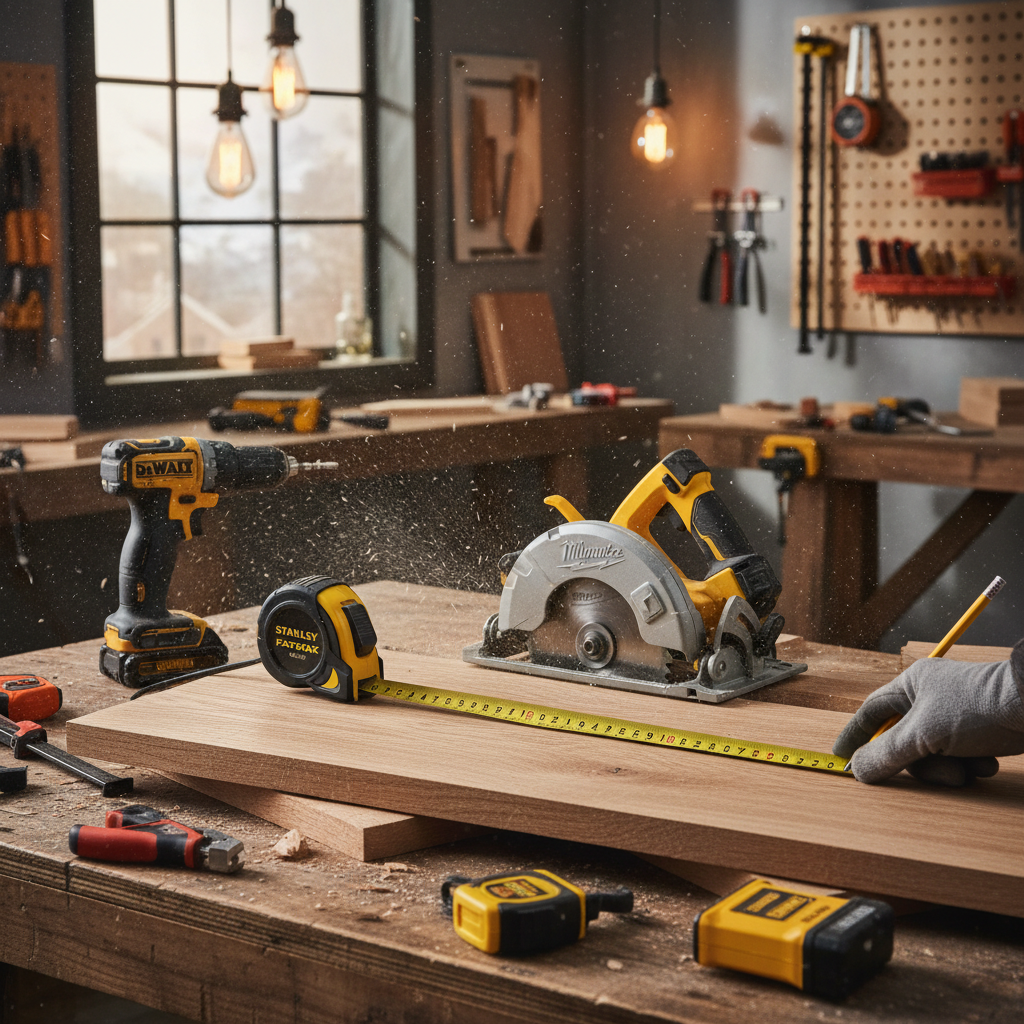
The Complete Guide to Tape Measures (2026)
The tape measure is the single most used tool on any job site or in any workshop. A retractable steel blade marked with precise measurements allows you to quickly measure lengths, widths, heights, and diameters. Modern tape measures feature improved standout, magnetic tips, and specialized markings that make layout and measuring faster and more accurate.
Key Takeaways
- The tape measure is the single most used tool on any job site or in any workshop.
- A retractable steel blade marked with precise measurements allows you to quickly measure lengths, widths, heights, and diameters.
- Modern tape measures feature improved standout, magnetic tips, and specialized markings that make layout and measuring faster and more accurate.
- Tape measures are used for measuring lumber lengths for cutting, laying out wall framing at 16-inch centers, measuring rooms for flooring and materials estimation, checking diagonal measurements for square, measuring pipe and conduit, marking out deck layouts, and virtually every task in construction, woodworking, and home improvement.
- Blade length (25 feet most versatile), blade width (1 inch to 1-3/16 inch), standout distance (how far the blade extends without buckling — 10+ feet preferred), hook accuracy (true zero), stud markings at 16 and 24 inches, magnetic hook, nylon-coated blade for durability, belt clip, and easy-to-read markings.
What It's Used For
Tape measures are used for measuring lumber lengths for cutting, laying out wall framing at 16-inch centers, measuring rooms for flooring and materials estimation, checking diagonal measurements for square, measuring pipe and conduit, marking out deck layouts, and virtually every task in construction, woodworking, and home improvement.
Types & Variations
Standard Retractable (16, 25, 30, 35 feet), Compact (12-16 feet for finish work), Long Tape (50-300 feet for surveying), Metric/Imperial (dual markings), Magnetic Tip (sticks to steel), Self-Marking (built-in pencil), Flat-Back Tape (for precise flat measurements), and Digital Tape Measures (electronic readout).
Key Features to Look For
- Blade length (25 feet most versatile)
- blade width (1 inch to 1-3/16 inch)
- standout distance (how far the blade extends without buckling — 10+ feet preferred)
- hook accuracy (true zero)
- stud markings at 16 and 24 inches
- magnetic hook
- nylon-coated blade for durability
- belt clip
- and easy-to-read markings.
How to Use
1) Hook the end tab over the edge of the material or press it against an inside corner. 2) Extend the tape along the surface to the desired measurement. 3) Read the measurement at the mark or edge. 4) For inside measurements, butt the case against the wall and add the case length (usually printed on the case). 5) For transferring measurements, use a pencil to mark at the exact measurement point. 6) The hook tab has a slight play — this is intentional to compensate for the hook's thickness on inside vs outside measurements. Never bend or adjust it.
⚠️ Safety Tips
Be careful with blade retraction — a fast-retracting blade can cut fingers. Control the retraction speed with your thumb on the lock. Wear eye protection when extended tape may snap back. Do not use a tape measure near live electrical wires (steel blade conducts electricity). Replace tapes with damaged hooks — they produce inaccurate measurements.
Maintenance
Keep the blade clean and dry to prevent rust. Wipe with a light oil if the blade gets wet. Do not let the blade snap back at full speed — control the retraction to extend the life of the spring. Replace tapes with bent or loose hooks. Store in a dry location. Periodically check accuracy against a known standard (like a precision ruler).
Price Range & Recommendations
Price Range: $5-$15 for basic tape measures, $15-$30 for quality 25-foot (Stanley FatMax, Milwaukee), $25-$40 for premium magnetic or self-marking, $30-$60 for specialty long tapes.
Beginners should start with a Stanley FatMax 25-foot ($20 range) or Milwaukee 25-foot ($20) — both have excellent standout, durability, and readability. FastCap models are popular with woodworkers for their flat reading and precise markings. Pros often carry a Milwaukee STUD 25-foot for its 17-foot standout and EXO360 blade coating, plus a compact 12-16 foot tape for finish work in tight spaces.
Top Brands
Related Tools
Frequently Asked Questions
Related Guides
Chalk Line
Snap perfect straight lines with a chalk line reel. Compare Tajima, Irwin & Stanley models. Chalk ty
Read guideCombination Square
Master the combination square for precise layout and marking. Compare Starrett, iGaging & Empire mod
Read guideFraming Square
Use a framing square like a master carpenter. Compare Swanson, Stanley & Johnson models. Rafter tabl
Read guideLaser Level
Find the perfect laser level for your project. Compare Bosch, DeWalt & Huepar self-leveling laser le
Read guide