Wood Screws Guide: Types, Sizes & How to Choose the Right One
Understanding Wood Screw Anatomy
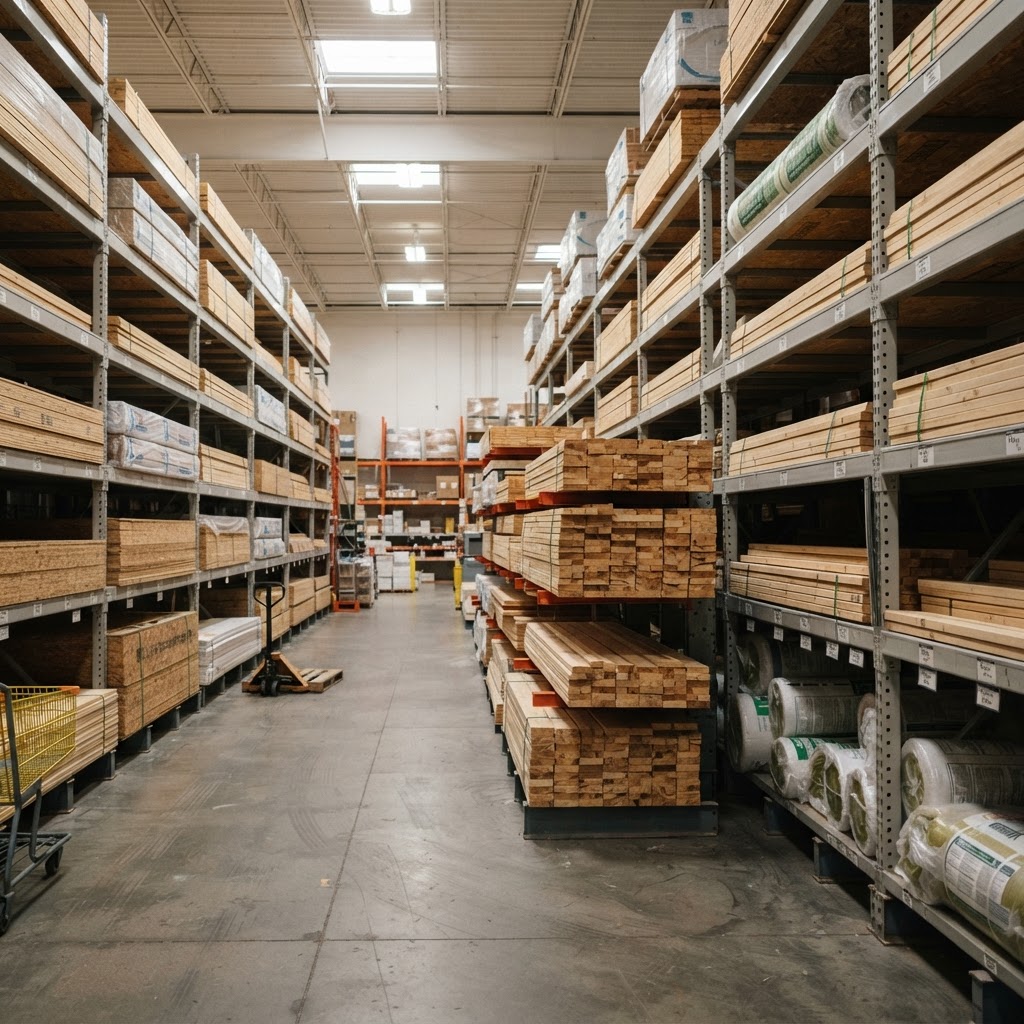
Before selecting screws for your project, it helps to understand the basic parts of a wood screw and how each element affects performance. Every wood screw consists of five key components that work together to create a strong, reliable fastening.
Head
The head is the top of the screw that remains visible (or flush with the surface) after driving. It provides the bearing surface against the wood and determines whether the screw sits above the surface, flush, or below it. The head shape you choose affects both appearance and function.
Drive
The drive is the recess or shape in the head where your screwdriver or drill bit engages. Different drive types offer varying levels of torque transfer, cam-out resistance, and ease of use.
Shank
The shank is the smooth, unthreaded portion just below the head. On wood screws, the shank allows the top piece of wood to slide freely while the threads pull the bottom piece tight — this clamping action is what makes screws superior to nails for drawing two pieces firmly together.
Threads
The threads are the helical ridges that grip the wood fibers and create pullout resistance. Wood screw threads are coarser and more aggressive than machine screw threads, designed to cut into wood grain. Thread pitch, angle, and depth all affect holding power.
Point
The point is the tip of the screw that initiates penetration into the wood. Standard wood screws have a gimlet point (sharp, tapered). Self-drilling screws have a specialized cutting point that eliminates the need for pilot holes in softwoods. Some structural screws feature a saw-tooth or auger-style point for driving through dense lumber.
Wood Screw Head Types
The head type determines how the screw sits relative to the wood surface, its appearance, and its suitability for different applications.
Flat Head (Countersink)
The most common head type for wood screws. Flat heads have a conical underside that seats flush with or slightly below the wood surface when driven into a countersunk hole. This creates a clean, unobtrusive fastening and allows the surface to accept filler, plugs, or a smooth finish. Flat head screws are the default choice for cabinetry, furniture, trim, and any application where a flush or hidden fastener is desired.
Pan Head
Pan head screws have a slightly rounded, low-profile head that sits above the wood surface. They provide a larger bearing surface than flat heads, distributing pressure over a wider area. Pan heads are commonly used with washers for fastening thin materials, sheet goods, and hardware where countersinking isn't possible or desired.
Round Head
Round head screws have a dome-shaped head that protrudes prominently above the surface. They were historically the most common wood screw head type and are still used for decorative applications, antique furniture restoration, and situations where the screw head is meant to be visible.
Trim Head
Trim head screws feature a very small, low-profile head — often barely larger than the screw shaft. They leave a tiny hole that's easy to fill and are designed specifically for finish work, trim installation, and applications where the smallest possible head is desired. They're popular for baseboards, crown molding, and interior trim.
Washer Head (Wafer Head)
Washer head screws have a built-in wide, flat flange around the head that acts like an integrated washer. This large bearing surface prevents the head from pulling through thin or soft materials. They're commonly used for fastening plywood, OSB, and sheet goods, and are popular in cabinet and furniture assembly.
Drive Types
The drive type affects how much torque you can transfer to the screw, how easily the bit stays engaged, and how prone the screw is to cam-out (the bit slipping out of the drive recess under torque).
Phillips (#2 Cross)
The most widely recognized drive type, featuring a cross-shaped recess. Phillips drives are inexpensive and universally available, but they are designed to cam out under excessive torque — a feature originally intended to prevent over-driving but now considered a disadvantage. Phillips screws are adequate for light-duty fastening but frustrating for heavy-duty applications. They remain common in drywall screws and inexpensive wood screw assortments.
Square Drive (Robertson)
The square drive, invented by Canadian P.L. Robertson, uses a square recess that provides excellent cam-out resistance and allows one-handed driving (the screw stays on the bit). Square drive screws are extremely popular in Canada and increasingly common in the United States, especially in deck and cabinet applications. They offer a major upgrade over Phillips for most woodworking tasks.
Star Drive (Torx)
Star drive (Torx) screws feature a six-pointed star recess that provides the best torque transfer and cam-out resistance of any common drive type. The bit fits deeply into the recess and distributes force evenly across six contact points. Star drive has become the standard for premium construction screws, structural screws, and deck screws. If you're buying new screws for a project, star drive is the best choice for performance.
Combination Drives
Some screws feature combination drive recesses that accept multiple bit types — most commonly a square/Phillips combo. These offer convenience when the exact bit isn't at hand but don't perform as well as a dedicated drive type with either bit. They're common in economy screw assortments.
Hex Head
Hex head screws (and hex washer head screws) use a hexagonal head driven with a wrench or socket. They provide excellent torque transfer for large, heavy-duty fasteners. Hex heads are standard for lag screws and are common in structural timber connections, ledger board attachment, and heavy equipment mounting.
Screw Materials
The material a screw is made from determines its strength, corrosion resistance, appearance, and cost. Choosing the wrong material for your environment can lead to fastener failure, staining, and structural problems.
Steel (Plain and Zinc-Plated)
Plain steel screws are the least expensive option and are adequate for interior applications in dry environments. Zinc-plated steel screws add a thin layer of corrosion resistance suitable for indoor use and mildly damp conditions, but they are not rated for exterior use and will eventually rust in outdoor applications. Most economy screw assortments are zinc-plated steel.
Stainless Steel
Brass
Brass screws are valued for their warm golden appearance and excellent corrosion resistance. They are softer than steel and not suitable for structural applications, but they are the traditional choice for fine woodworking, boat building, antique furniture, and decorative hardware. Always drill pilot holes when using brass screws — their soft metal is prone to snapping if driven without one.
Silicon Bronze
Silicon bronze screws are the gold standard for marine applications and boat building. They offer superior corrosion resistance in saltwater environments, excellent strength, and an attractive appearance that weathers to a dark patina. They are expensive and typically only used in boat construction and high-end outdoor furniture.
Coated and Ceramic
Many modern construction screws feature proprietary coatings — ceramic, polymer, or epoxy-based — that provide excellent corrosion resistance at a lower cost than stainless steel. Brands like GRK, SPAX, and GripRite offer coated screws rated for exterior use and compatible with pressure-treated lumber. These are the most popular choice for deck building and outdoor construction.
Wood Screw Sizing System
Gauge (Diameter)
The gauge number indicates the screw's shaft diameter. Higher numbers mean thicker screws. The most common gauges for woodworking are #6 through #14:
| Gauge | Shaft Diameter | Head Diameter (Flat) | Typical Use |
|---|---|---|---|
| #4 | 0.112" (2.8mm) | 0.225" | Small hinges, light hardware, crafts |
| #6 | 0.138" (3.5mm) | 0.279" | Light-duty fastening, trim, small hinges |
| #8 | 0.164" (4.2mm) | 0.322" | General woodworking, cabinets, furniture, most common size |
| #9 | 0.177" (4.5mm) | 0.348" | Construction screws, general framing |
| #10 | 0.190" (4.8mm) | 0.373" | Heavy-duty woodworking, structural, deck screws |
| #12 | 0.216" (5.5mm) | 0.438" | Heavy structural, lag alternatives, thick stock |
| #14 | 0.242" (6.1mm) | 0.507" | Very heavy duty, structural timber connections |
Length
Screw length is measured from the surface of the wood to the tip. For flat head (countersink) screws, this means the total length including the head, since the head sits flush or below the surface. For pan head and round head screws, the length is measured from under the head to the tip.
Common lengths range from 1/2 inch to 6 inches, with 1", 1-1/4", 1-5/8", 2", 2-1/2", and 3" being the most frequently used sizes.
Choosing the Right Length
A good rule of thumb is that the screw should penetrate the bottom piece by at least twice the thickness of the top piece, or at minimum 1 inch. For example, when fastening 3/4" stock to another piece, a screw length of 1-1/2" to 2" is appropriate (3/4" through the top piece plus 3/4" to 1-1/4" into the bottom piece).
Specialty Screw Types
Beyond standard wood screws, several specialty types are designed for specific applications. Knowing which screw to reach for saves time and produces better results.
Deck Screws
Deck screws are designed specifically for deck construction and outdoor applications. They feature corrosion-resistant coatings or stainless steel construction, aggressive threads for superior holding power in treated lumber, and often a star (Torx) or square drive. Most are #9 or #10 gauge, 2-1/2" to 3" long. Premium deck screws include features like self-drilling points, thread-cutting nibs to reduce splitting, and color matching for popular composite and treated lumber colors. They're also the screw of choice for deck railings and fence construction.
Drywall Screws
Despite their name and intended purpose, drywall screws are often misused as general-purpose wood fasteners. They feature a bugle head (a concave shape that seats in drywall without tearing the paper face), fine or coarse threads, a Phillips drive, and hardened but brittle steel construction. Important warning: Drywall screws should never be used for structural wood connections. Their hardened steel is brittle and prone to snapping under lateral (shear) loads, and they lack corrosion resistance for any moisture exposure.
Lag Screws (Lag Bolts)
Lag screws are heavy-duty fasteners with a hex head driven by a wrench or socket. They range from 1/4" to 3/4" in diameter and up to 16" long, making them the choice for heavy structural connections: ledger boards, beam connections, deck posts, and heavy equipment mounting. Lag screws always require a pilot hole — both a shank clearance hole through the top piece and a thread pilot hole in the bottom piece.
Pocket Hole Screws
Pocket hole screws are designed specifically for use with pocket hole jigs (like the Kreg system). They feature a flat-bottom head that seats in the pocket hole, a self-drilling point, coarse threads for softwood or fine threads for hardwood, and a square drive. They're the go-to fastener for face frame joints, cabinet assembly, and quick furniture builds.
Structural Screws
Structural screws (like GRK RSS, Simpson Strong-Tie SDWS, and SPAX PowerLags) are engineered to replace lag screws and through-bolts in many applications. They feature hardened steel construction with a special coating, a washer head or integrated flange, a self-drilling point that eliminates pilot holes, and code-approved load ratings. These screws are faster to install than lag bolts and provide comparable or superior holding power.
Cabinet Screws
Cabinet screws feature a washer head or truss head that provides a large bearing surface, preventing the screw from pulling through the thin back panels and face frames of cabinets. They're typically #8 gauge, 2-1/2" to 3" long, and are used to mount cabinets to wall studs.
Pilot Hole Sizing Chart
Drilling the correct pilot hole is one of the most important steps in using wood screws effectively. A properly sized pilot hole prevents wood splitting, allows the screw to seat fully, and actually increases holding power by preventing fiber damage around the threads.
| Screw Gauge | Softwood Pilot Hole | Hardwood Pilot Hole | Countersink Bit | Shank Clearance Hole |
|---|---|---|---|---|
| #4 | 1/16" | 5/64" | 1/4" | 7/64" |
| #6 | 5/64" | 3/32" | 5/16" | 9/64" |
| #8 | 3/32" | 7/64" | 3/8" | 11/64" |
| #9 | 3/32" | 1/8" | 3/8" | 3/16" |
| #10 | 7/64" | 1/8" | 7/16" | 3/16" |
| #12 | 1/8" | 9/64" | 1/2" | 7/32" |
| #14 | 9/64" | 5/32" | 9/16" | 1/4" |
When Pilot Holes Are Essential
- Always: Near the end or edge of a board (within 2" of the end or 1" of the edge)
- Always: In hardwoods (oak, maple, walnut, cherry, ash)
- Always: With large-gauge screws (#10 and above)
- Always: With brass screws (they snap easily without pilot holes)
- Always: In thin stock (under 1/2" thick)
- Recommended: In all applications for the best results
Screws vs. Nails vs. Bolts: When to Use Each
Understanding when to reach for screws versus nails or bolts is a fundamental skill. Each fastener type has strengths and weaknesses that make it ideal for specific situations.
| Factor | Screws | Nails | Bolts |
|---|---|---|---|
| Pullout Resistance | Excellent | Poor | Excellent (with nut) |
| Shear Strength | Moderate | Excellent | Excellent |
| Installation Speed | Moderate | Fast (nail gun) | Slow |
| Disassembly | Easy (reversible) | Difficult | Easy |
| Clamping Force | Excellent | None | Excellent |
| Cost | Moderate | Low | High |
| Best For | Decking, cabinets, furniture, trim | Framing, sheathing, joist hangers | Heavy structural, through-connections |
Key takeaway: Use screws when you need pullout resistance, clamping force, or the ability to disassemble. Use nails when shear strength and speed matter most (framing, sheathing). Use bolts for the heaviest structural connections where both pullout and shear resistance are critical.
Exterior vs. Interior Screws
Using interior screws outdoors is one of the most common — and most costly — mistakes in construction and woodworking. Here's what you need to know.
Interior Screws
Standard zinc-plated steel screws are rated for indoor use only. In dry interior environments, they perform well and are the most cost-effective choice. However, even in interior applications with occasional moisture — like bathrooms, kitchens, and basements — consider upgrading to coated or stainless steel screws.
Exterior Screws
For any outdoor application, you need screws specifically rated for exterior use. This means stainless steel (grade 305 or 316), ceramic-coated, or polymer-coated screws from reputable manufacturers. Look for labeling that specifically states "exterior" or "outdoor" rated.
Pressure-Treated Lumber Compatibility
Modern pressure-treated lumber uses ACQ (Alkaline Copper Quaternary) preservatives that are highly corrosive to standard steel and even some zinc-plated fasteners. When fastening pressure-treated lumber, you must use screws rated for ACQ-treated wood — typically stainless steel or screws with a coating specifically tested for ACQ compatibility. Using non-rated screws in treated lumber will result in rapid corrosion, black staining around the fastener, and eventual joint failure.
Preventing Wood Splitting
Wood splitting around screws is frustrating but largely preventable with the right techniques.
- Always drill pilot holes when screwing near edges and ends, working with hardwoods, or using large-gauge screws
- Keep screws away from edges: Maintain at least 1/4" from the edge and at least 2" from the end of a board
- Don't overtighten: Stop driving as soon as the screw is seated. Power drills and impact drivers make it easy to overdrive, which splits the wood and reduces holding power
- Use the right screw size: An oversized screw in thin stock will split the wood no matter what else you do
- Wax the screw: Running the screw threads through a bar of wax or a cake of beeswax reduces friction and makes driving easier, which reduces splitting forces. This is especially helpful with dense hardwoods
- Stagger your screws: When using multiple screws along a board, don't place them all on the same grain line. Offset them slightly to avoid creating a split plane along the grain
- Choose self-drilling points: Modern construction screws with thread-cutting nibs and saw-tooth points are specifically designed to reduce splitting compared to traditional gimlet-point screws
- Avoid end-grain screwing: Screws driven into end grain have very poor holding power and are prone to splitting the wood. If you must fasten into end grain, use long screws, always drill a pilot hole, and consider reinforcing with epoxy or a cross-grain dowel
Screw Selection Quick Reference
Here's a quick reference for the most common project types and the recommended screw specifications:
| Project | Screw Type | Size | Material |
|---|---|---|---|
| Cabinet assembly | Pocket hole or wood screw | #8 x 1-1/4" | Zinc-plated steel |
| Mounting cabinets to wall | Cabinet screw (washer head) | #8 x 2-1/2" | Zinc-plated steel |
| Deck boards | Deck screw (star drive) | #9 x 2-1/2" or 3" | Coated or stainless |
| Fence pickets | Deck screw (star drive) | #8 x 1-5/8" | Coated or stainless |
| Drywall to studs | Drywall screw | #6 x 1-1/4" (1/2" drywall) | Phosphate-coated steel |
| Trim and baseboard | Trim head screw | #7 x 2" | Zinc or coated |
| Furniture joinery | Wood screw | #8 x 1-1/4" to 2" | Zinc-plated or brass |
| Ledger board | Structural or lag screw | 1/2" x 4" lag or structural equiv. | Hot-dip galvanized or stainless |
| Joist hanger | Structural connector screw | Manufacturer specified | Per manufacturer spec |
Common Mistakes to Avoid
Using Drywall Screws for Everything
This is the most widespread screw mistake in DIY. Drywall screws are cheap and available everywhere, which makes them tempting as a universal fastener. However, their brittle steel construction means they snap under shear loads and have no corrosion resistance. Use them for hanging drywall — and nothing else.
Skipping Pilot Holes
The few seconds it takes to drill a pilot hole can save you from a split board, a snapped screw, or a weak joint. Always drill pilot holes in hardwoods, near edges and ends, and with large-gauge screws.
Using Interior Screws Outdoors
Standard zinc-plated screws will rust within months of outdoor exposure, causing ugly staining and eventual joint failure. Always use exterior-rated screws for outdoor projects.
Overtightening
Impact drivers and powerful drills make it easy to overdrive screws, which strips the wood around the threads and actually reduces holding power. Stop driving as soon as the head is fully seated. For critical applications, switch to a clutch-equipped drill with an adjustable torque setting.
Wrong Screw for Treated Lumber
ACQ-treated lumber corrodes standard and zinc-plated fasteners aggressively. Using the wrong screws in treated lumber leads to black staining, fastener deterioration, and potential structural failure. Always check that your screws are rated for ACQ-treated wood.
Final Thoughts
Choosing the right screw is one of the most important decisions in any woodworking or construction project, yet it's often an afterthought. By understanding screw anatomy, head types, drive types, materials, and sizing, you can select the perfect fastener for every application — ensuring strong, lasting joints and professional results.
For most general woodworking, #8 gauge star-drive flat-head screws in the appropriate length and material are an excellent default choice. For outdoor projects, invest in quality coated or stainless steel deck screws. And always remember: a pilot hole takes ten seconds but prevents problems that can ruin your project.
Ready to tackle your next project? Check out our guides on wood dowels, wood joint types, and how to build a deck for more expert building advice.
Frequently Asked Questions
Lumberama Team
Building Materials Experts
Contributor to Lumberama’s reference library. Read our editorial standards and source methodology.
Continue researching decking
Where readers of this article usually go next.
Related Articles
Wainscoting Guide: Types, Cost & Installation Ideas
Add classic charm and protection to your walls.

Trim & Baseboard Guide: Types, Cost & Installation
Finish your rooms with the perfect trim.
Crown Molding Guide: Types, Cost & Installation
Add elegance to any room with crown molding.