Walnut Wood: Properties, Uses, Grades & Buying Guide
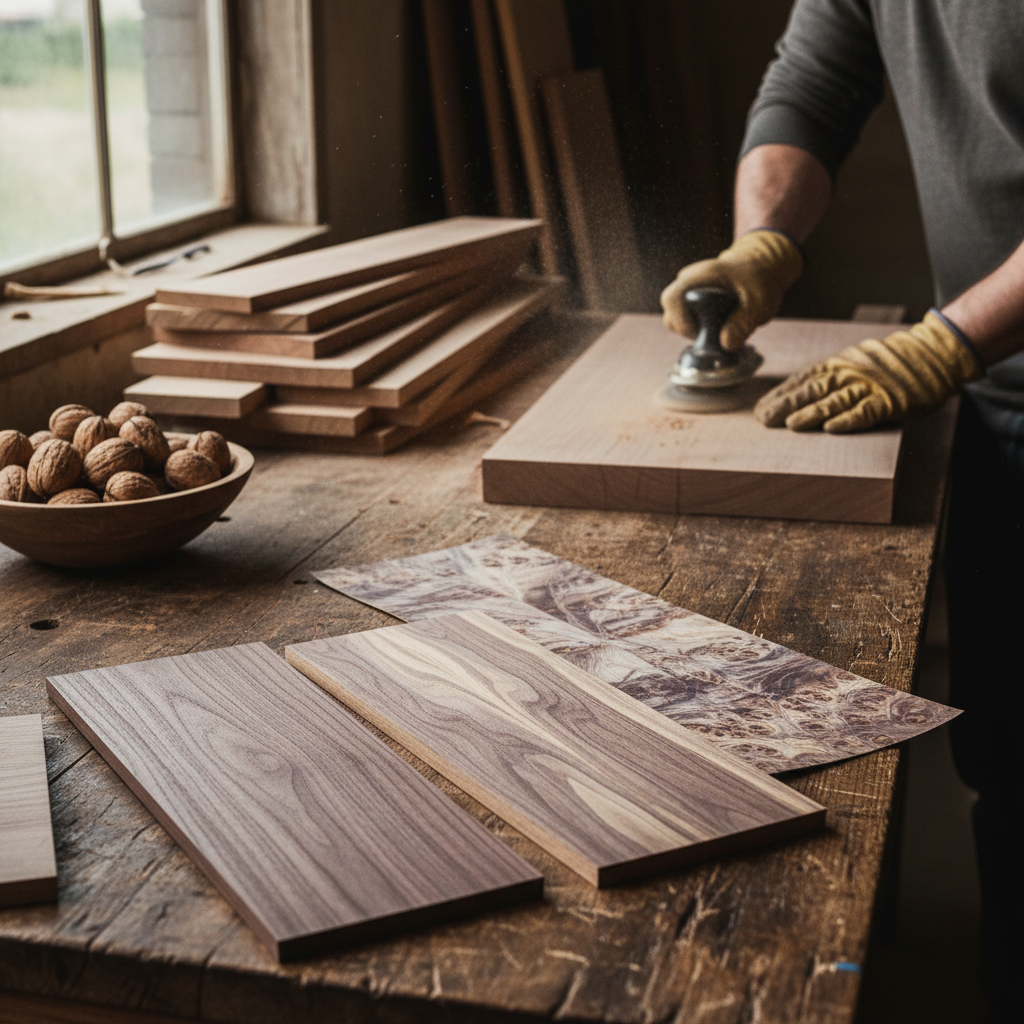
Species Profile
Scientific name: Juglans nigra (American black walnut). Not to be confused with English walnut (Juglans regia), which is grown primarily for nuts, or Claro walnut (a California variety prized for figured grain).
Range: Eastern United States from Minnesota to Texas, concentrated in Missouri, Iowa, Indiana, and Ohio. The Midwest produces the best walnut lumber — slower growth means tighter grain and richer color.
Heartwood color: Rich chocolate brown to dark purplish-brown. Freshly cut walnut can be very dark. UV exposure lightens walnut over time (opposite of most woods, which darken). The color eventually stabilizes at a warm medium brown.
Sapwood: Creamy white to pale yellow. Sharp contrast with heartwood. Sapwood is often steamed at the mill to darken it ("steamed walnut"), blending it closer to heartwood color. Unsteamed sapwood is valued by some makers for its contrast.
Physical Properties
Janka hardness: 1,010 lbf. Medium-hard — softer than oak (1,290) and maple (1,450) but harder than cherry (950). Hard enough for furniture and light-duty flooring.
Weight: 38 lbs/cubic foot (air-dried). Medium weight. Furniture is substantial without being excessively heavy.
Grain: Usually straight, occasionally wavy. Pores are semi-ring-porous (visible but not as prominent as oak). Takes an excellent natural finish — the grain has enough character to be interesting without being overwhelming.
Stability: Good. Walnut is moderately stable with medium shrinkage rates (tangential 7.8%, radial 5.5%). Properly dried walnut doesn't move excessively.
Workability
Walnut is considered the most pleasant hardwood to work. It machines beautifully with sharp tools — clean cuts on the table saw, smooth surfaces from the planer, crisp edges from the router. It rarely chips or tears. Hand tools love it — walnut planes to a glass-smooth surface with minimal effort. It glues well with PVA, sands evenly through all grits, and holds screws without splitting (though pre-drilling near edges is still recommended).
The only workability caution: walnut dust is a known respiratory irritant and allergen. Always wear a dust mask or respirator when machining walnut. Some people develop skin reactions from prolonged contact with walnut dust.
Finishing
Natural finish (oil or clear coat): Walnut looks stunning under a simple clear finish. Danish oil, tung oil, or water-based polyurethane brings out the depth of the grain without altering the color. This is the most popular finish for walnut furniture.
Avoid dark stains: Walnut is already dark. Adding stain muddies the color and hides the beautiful natural grain. If you want darker, use a boiled linseed oil base coat (which deepens the brown) followed by a clear top coat.
UV protection: Walnut lightens with UV exposure (the opposite of cherry, which darkens). If you want to preserve the original dark chocolate color, use a finish with UV inhibitors or keep pieces out of direct sunlight.
Grades and Pricing
FAS (First and Seconds): The highest standard grade. Clear, wide boards with minimal defects. 83-100% clear on the worst face. $10-$16/BF for 4/4. The standard grade for fine furniture.
Select: Similar to FAS but slightly more character (small knots, some sapwood). $8-$14/BF. Excellent value for furniture — most of the defects can be cut around.
No. 1 Common: More knots and character. 66% clear yield. $6-$10/BF. Good for smaller parts, rustic furniture, and projects where you can work around defects.
Live edge/slab: Large slabs with natural bark edge for tables and countertops. Priced by the slab: $200-$2,000+ depending on size, figure, and quality.
Figured walnut: Crotch, burl, and curl figure command premium prices. Crotch walnut: $15-$30/BF. Burl: $25-$50+/BF. Highly sought after for statement pieces.
Common Uses
Fine furniture (dining tables, desks, dressers, bed frames), cabinetry, gunstocks (walnut is THE gunstock wood), musical instruments (guitar backs and sides), turning, live-edge tables, cutting boards (when paired with maple for contrast), architectural millwork, and veneer.
Sustainability
American black walnut is sustainably harvested. It's a fast-growing species that regenerates well. Most walnut lumber comes from managed forestlands and small woodlot owners. The species is not threatened. Buying domestic walnut supports American forestry and rural landowners.
Frequently Asked Questions
Lumberama Editorial Team
Hardwood Species & Fine Woodworking Specialists
Contributor to Lumberama’s reference library. Read our editorial standards and source methodology.
Buying and sourcing resources
Where readers of this article usually go next.
Related Articles

Acacia Wood Guide: Properties, Uses, Durability & Care Tips
Complete guide to acacia wood — covering its properties, hardness, durability, common uses in furniture and flooring, sustainability, maintenance tips, and how it compares to teak and other hardwoods.

Poplar Wood: The Underrated Hardwood for Paint-Grade Projects
Poplar is America's cheapest true hardwood and one of the easiest to work. It's the go-to choice for paint-grade furniture, trim, and cabinetry. Here's why serious woodworkers keep poplar in their shops.

Birch Wood: Species Guide for Baltic Birch Plywood, Flooring & Furniture
Birch is two different things in the lumber world: birch plywood (the gold standard for woodworking) and birch hardwood (underrated and beautiful). Understanding the difference unlocks one of the best-value materials available.