Is Plywood Waterproof? Exterior vs. Exposure 1 Explained
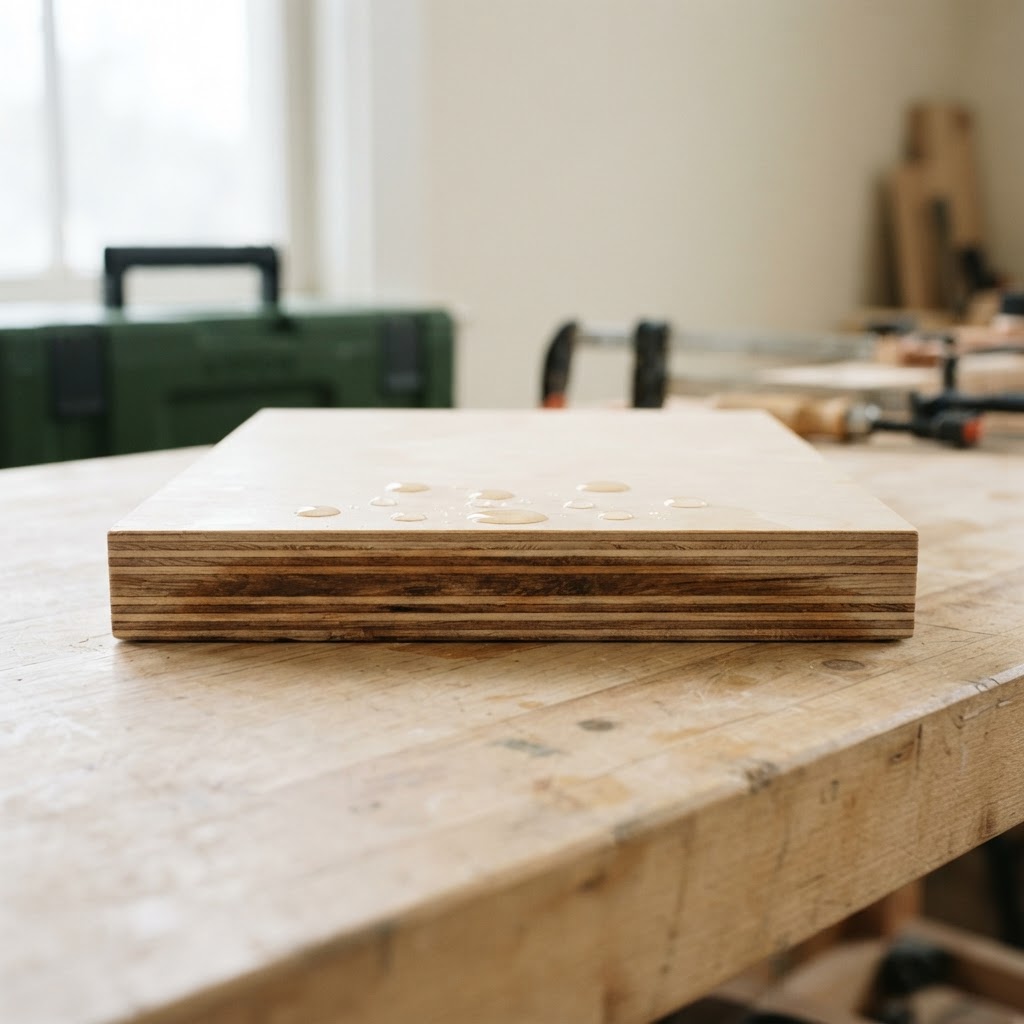
Quick answer: No ordinary plywood should be treated as permanently waterproof. Exterior-rated plywood has a bond classification suitable for long-term weather exposure, but its wood veneers still absorb moisture. Exposure 1 is intended for temporary construction exposure, not indefinite outdoor weathering.
That distinction comes from APA’s plywood selection guidance. Choose the panel for its intended service conditions, then design the finished assembly to shed water and dry. A can of sealer is not a substitute for the right panel specification.
Hero graphic: AI-generated editorial illustration of moisture exposure, not a product test.
Key takeaways
- Bond durability, surface appearance and decay resistance are different properties.
- Read the panel stamp instead of treating “CDX” or “marine” as a complete specification.
- Cut edges, penetrations and water-trapping details need attention even with an exterior-rated panel.
Exterior, Exposure 1 and marine plywood compared
| Description | What it tells you | What it does not promise |
|---|---|---|
| Exposure 1 | Bond durability for construction delays and temporary moisture exposure | Suitability for permanent exposure to weather |
| Exterior | Bond classification for repeated wetting and drying or long-term weather exposure | Immunity to water absorption, decay or neglected maintenance |
| Marine plywood | A specified marine panel standard may impose veneer and core-quality requirements | Automatic preservative treatment or a complete waterproof assembly |
| Preservative-treated plywood | Treatment intended for specified biological exposure conditions | Correct span rating, coating compatibility or approval for every wet application |
APA distinguishes Exterior from Exposure 1 in its bond-classification guidance. Marine labels require an additional question: which manufacturing standard and product documentation apply? Do not substitute an unverified “marine” sales description for the designer’s specified panel.
Does the X in CDX mean exterior?
Not reliably as a purchasing shortcut. APA identifies panels commonly called CDX among Exposure 1 products. Read the actual grade and exposure marking. A panel may tolerate getting rained on during construction while still needing protection in its completed roof or wall assembly.
The face grades describe veneer quality and permitted defects; they are not a complete description of outdoor durability. For the broader lettering system, see plywood grades explained. This article focuses on the moisture question, not on choosing the smoothest cabinet face.
How water damages plywood
Water can enter the face, exposed end grain, fastener penetrations and unprotected cut edges. Repeated exposure can produce swelling, raised grain and face checking. A durable glue bond does not prevent the wood itself from remaining wet long enough for decay conditions to develop.
A sheet lying flat with trapped water underneath faces a different problem from a vertical panel that drains freely. Edge trim can help or hurt: a detail that hides a cut edge but traps water against it is not meaningful moisture protection. Check the whole assembly, not only the visible face.
How to protect plywood for an outdoor project
- Identify the exposure: occasional splash, weather, soil contact or continuous immersion. These are not interchangeable uses.
- Specify the required panel grade, bond classification, thickness or performance category, and structural rating where relevant.
- Choose a coating, membrane or cladding system documented for that panel and application. Follow its preparation, moisture and cure requirements.
- Treat cut edges, drilled holes and field cuts as new vulnerable surfaces. Follow the system’s edge-sealing and detailing instructions.
- Provide drainage, appropriate flashing and drying paths. Avoid unsupported assumptions that a sealed top face protects the underside.
- Inspect the finished assembly and repair failed coatings or leaks before repeated wetting becomes persistent damage.
This is a selection and detailing workflow, not a universal waterproofing recipe. Follow the panel and finish manufacturers’ documents; roof decks, occupied balconies and other water-sensitive structural assemblies need application-specific design.
Choose by application, not by a “waterproof” label
Roof and wall sheathing
Use the specified structural panel and weather-resistive assembly. Temporary construction wetting does not authorize closing in saturated, damaged or deteriorated material. Verify condition and the required moisture limits before covering it.
Bathroom floors and tile assemblies
Exterior-bond plywood can be one part of an approved floor system, but it is not itself the shower waterproofing layer. Follow the tile-system manufacturer’s requirements for subfloor stiffness, underlayment, membrane and transitions. Do not improvise a shower pan by painting plywood.
Outdoor cabinets and furniture
Match the panel to the exposure and protect edges and joints. A design kept under cover can have different requirements from an uncovered horizontal surface. Ask whether the coating system is intended for standing water and whether the construction lets the panel dry.
Ground contact and marine work
These uses need more than an Exterior marking. Treatment, fasteners, coating systems and relevant design requirements must match the use. Review the water-resistant lumber guide for the difference between natural durability, treatment and water management.
When to dry, repair or replace a wet panel
Find and stop the moisture source first. Let an otherwise suitable panel dry under appropriate conditions, then evaluate swelling, separation, soft areas and fastener holding. A flat-looking surface is not proof that a load-bearing sheet remains sound. Have structural deterioration assessed rather than hiding it under paint or a new floor.
Do not plane a plywood face to remove swelling as though it were solid lumber; that can remove a thin face veneer and does not restore a damaged core. Our warped-wood repair guide explains why solid-board flattening methods do not transfer directly to laminated panels.
Plywood ordering checklist
- Application and exposure, including whether it is structural.
- Panel standard, grade, performance category and required span rating.
- Exterior or Exposure 1 bond classification explicitly stated.
- Required treatment and manufacturer documentation, if applicable.
- Coating or membrane compatibility and treatment of field-cut edges.
- Delivery storage conditions and inspection criteria.
If comparing bids, ask suppliers to quote this same description. A sourcing request is reviewed for specification fit, service area and current availability; it does not guarantee stock.
Sources and scope
- APA: plywood selection, bond classifications and structural ratings.
- APA: how to read a panel trademark stamp.
- USDA Forest Products Laboratory: wood and moisture.
This guidance does not establish a waterproofing warranty or replace a project-specific assembly specification.
Frequently Asked Questions
Lumberama Materials Team
Reference library
Contributor to Lumberama’s reference library. Read our editorial standards and source methodology.
Choose and plan your plywood
Where readers of this article usually go next.
Related Articles

How Much Does a 2x4 Weigh? Weight Chart by Length
A 2x4 does not have one fixed weight. Use actual dimensions and species density to estimate a load, then account for moisture before arranging pickup or delivery.

How Much Does a 2x4 Cost? What Actually Sets the Price
There is no single 2x4 price. Species, grade, length, treatment, quantity and delivery all move the number. Here is how to compare stud pricing like a buyer, not a browser.

How Much Lumber Does It Take to Build a House?
There is no fixed board-foot number for a house. Footprint, stories, roof design, framing method and engineered components all change the package. Here is how builders estimate it.