How Much Does a 2x4 Cost? What Actually Sets the Price
Short answer
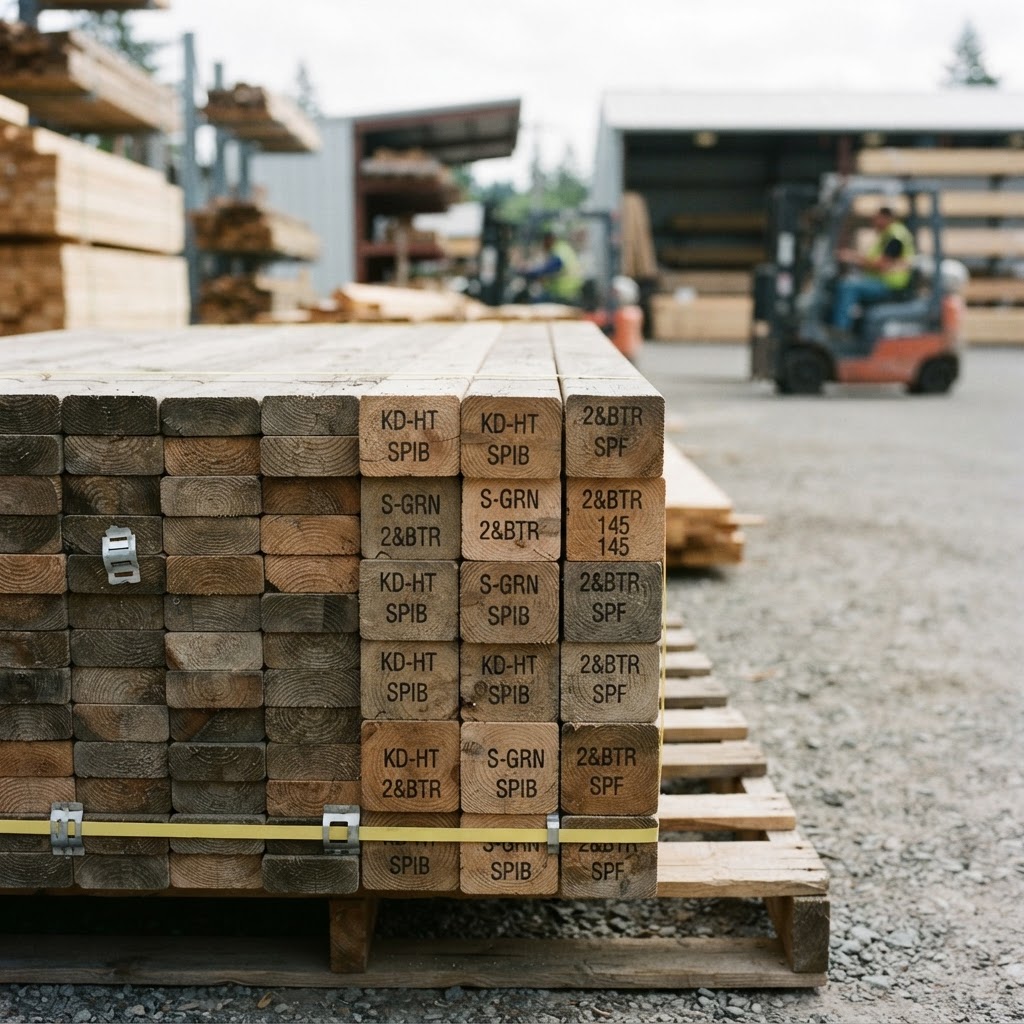
A 2x4 does not have one price. The shelf tag at a home center reflects one species, one grade, one length and one moment in a commodity market that moves weekly. For a framing package, the number that matters is the delivered cost per piece or per thousand board feet (MBF) for the exact specification you need.
A 2x4 is nominal. Surfaced dry, it measures 1-1/2 in. x 3-1/2 in. An 8 ft 2x4 contains 5.33 board feet, which is why mills and distributors quote framing lumber per MBF.
What moves the price of a 2x4
1. Species group
Most framing studs in the U.S. are SPF (spruce-pine-fir), Douglas fir-larch, Hem-fir or Southern yellow pine. Regional availability and freight distance usually matter more than the species itself. A species that is local to your market is often the least expensive option.
2. Grade
Common structural grades include Select Structural, No. 1, No. 2 and Stud grade. Stud grade is intended for vertical wall framing, while No. 2 is the usual all-purpose grade. Paying for a higher grade than the engineering requires is a common way to overspend.
3. Length
Precut studs (such as 92-5/8 in. and 104-5/8 in.) are priced for wall framing. Longer dimension lumber typically costs more per board foot because long, straight pieces are scarcer.
4. Treatment
Pressure-treated 2x4s cost more than untreated and are specified by use category, such as above-ground or ground contact. Confirm the treatment retention matches the application.
5. Quantity and packaging
Buying by the unit (a full banded bundle) is generally cheaper per piece than picking individual boards. Ask how many pieces are in a unit for your size and length.
6. Delivery and timing
Freight, minimum orders, boom or forklift unloading and lead time can change the real cost more than the per-piece price. Lumber quotes also carry short expiration windows because commodity prices move.
How to compare 2x4 quotes
- Write the full spec: size, species group, grade, length, moisture condition (KD or green) and treatment.
- Convert every quote to the same unit, either cost per piece or cost per MBF.
- Add delivery, fuel surcharges and unloading before comparing totals.
- Check the quote expiration date.
- Ask whether substitutions are allowed and how they will be disclosed.
Use the board foot calculator to convert piece counts into MBF so quotes line up.
Retail tag vs. contractor pricing
Retail prices are convenient for small purchases. For framing packages, lumberyards and distributors typically quote job-specific pricing based on the full takeoff, delivery location and timing. If you buy regularly, an account with a yard can also give you consistent quoting and delivery scheduling.
Bottom line
Before asking what a 2x4 costs, define exactly which 2x4 you need, how many and where it is going. That spec is what makes prices comparable.
Frequently Asked Questions
Lumberama Editorial
Lumber sourcing and specification
Contributor to Lumberama’s reference library. Read our editorial standards and source methodology.
Framing and structure resources
Where readers of this article usually go next.
Related Articles

How Much Is a Sheet of Plywood? Cost Factors by Type and Grade
A sheet of plywood can be a commodity sheathing panel or a premium cabinet panel. Here is what drives the price and how to compare panel quotes.

How Much Lumber Does It Take to Build a House?
There is no fixed board-foot number for a house. Footprint, stories, roof design, framing method and engineered components all change the package. Here is how builders estimate it.

Poplar vs Maple for Painted Trim: How to Buy for Finish Quality, Not Just Hardness
Paint-grade trim quality depends on much more than hardness. Compare exact species, milled profiles, surface preparation and usable yield before choosing poplar or maple.