Poplar vs Maple for Painted Trim: How to Buy for Finish Quality, Not Just Hardness
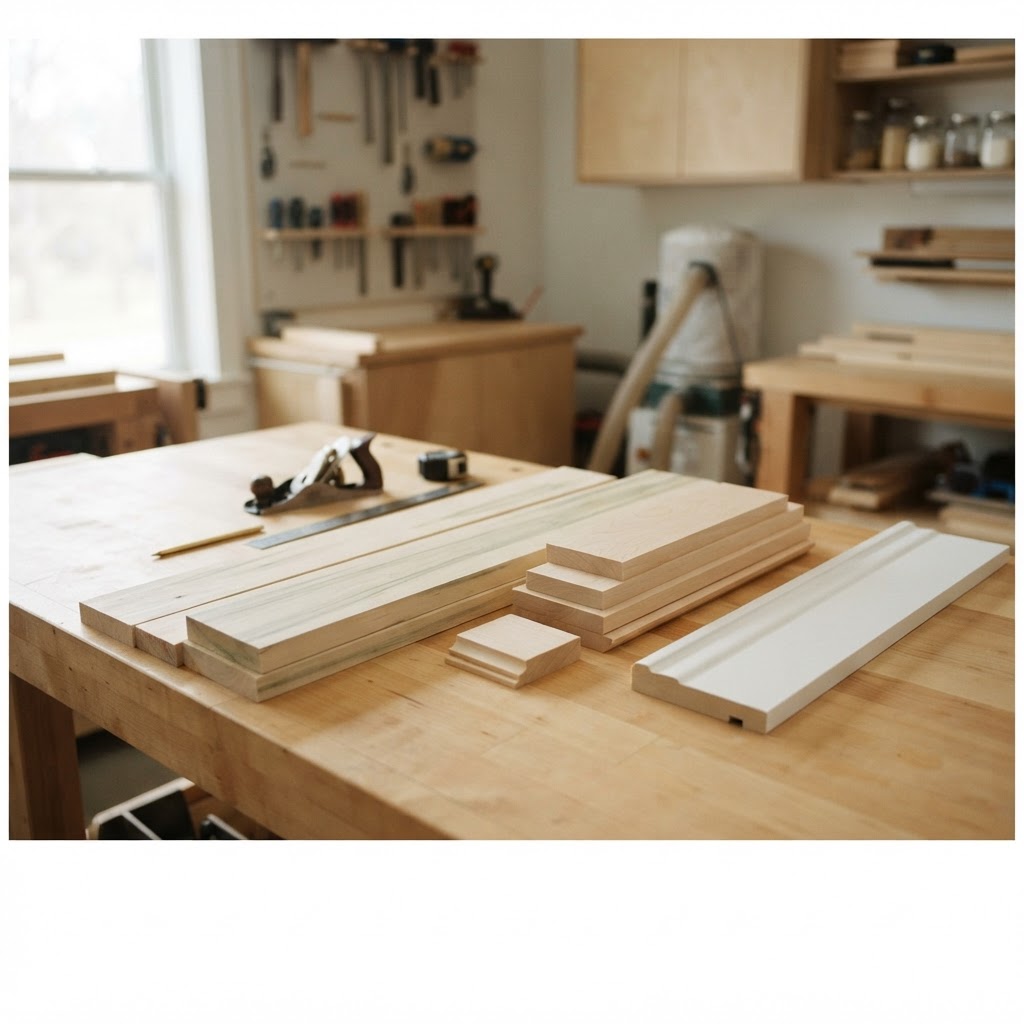
Poplar and maple are both considered for interior painted woodwork, but a species comparison can miss the practical reasons one trim order succeeds and another creates extra labor. The exact species, profile, surface quality and usable lengths often matter more than a hardness headline.
Use the poplar vs maple comparison for broader context. This article focuses on specifying a paint-grade order and comparing the finished result.
Identify the wood, not just the trade name
American yellow-poplar is commonly sold as poplar. Its pale wood can include greenish or darker coloration. For an opaque painted finish, color variation is a different purchasing issue from the pronounced appearance standards of clear-finished trim.
Maple is not one identical commercial material. Hard maple and soft maple groups differ, so ask which is supplied. Do not assign hard-maple performance to every molding labeled maple.
For either choice, define defects that would interfere with the finished piece: knots, checks, machining damage, unsuitable grain at a thin edge or visible joints. “Paint grade” by itself does not settle every acceptance criterion.
Start with the actual molding profile
A wide casing, a delicate edge molding and a broad flat baseboard do not present identical machining and installation demands. Ask for a profile drawing or sample with the finished dimensions.
Confirm whether stock is solid, finger-jointed or another assembly. Finger-jointed trim can provide useful lengths, but joint quality and the intended finish still matter. Do not compare a short random-length solid board offer directly with a ready-to-install long-length molding.
Where a thin profile must survive handling and fastening, inspect the actual sample rather than selecting from a species ranking alone.
Hardness is only one part of the decision
Hardness concerns resistance to indentation under a specified test. It does not measure every machining behavior, coating property, joint detail or installation outcome.
A harder product may be helpful in a location exposed to impacts, but it can also require different preparation or fastening practices. A smooth, properly milled poplar trim piece may produce a better painted result than a damaged or poorly prepared maple piece.
Choose for the location and the actual supplied product. Neither species name guarantees a flawless painted surface.
Specify preparation and the coating system
Ask whether the trim is bare, factory primed or factory finished. A primed product still needs the inspection and preparation called for by its coating instructions. Sanding requirements, damaged areas, exposed end grain and filled fastener holes affect appearance.
Test the proposed primer and topcoat on an offcut from the actual material. Check adhesion, sheen and the appearance of filled areas after the full system has cured as instructed. Do not assume that the same preparation works with every factory primer.
If the finish is transparent or lightly tinted rather than opaque, reassess the species choice using finished samples. A paint-grade color allowance may be unacceptable when the wood remains visible.
Compare usable yield and finished cost
- Consider a hypothetical order requiring 200 usable feet of a specific profile. One offer costs $2.50 per purchased foot but needs 240 feet to satisfy the cut schedule; its material total is $
- 6
- 0
- Another costs $3.00 per foot and needs 205 feet; its material total is $615.
The headline price differs by 20%, but the material totals differ by $15 before preparation, delivery and installation. These are illustrative figures, not real quotes or typical species pricing.
Calculate waste from your actual lengths, defect allowances and cut plan. Do not assume a fixed waste percentage makes every random-length order comparable.
Keep moisture and exposure in the specification
Interior trim can move with changes in moisture. Store and prepare it under the appropriate service conditions and follow the product and installer requirements. Paint does not eliminate dimensional movement.
Neither untreated poplar nor a generic maple molding should be selected for exterior or persistently wet service merely because it accepts paint. A bathroom trim location also deserves attention to leaks, ventilation and detailing rather than a promise of waterproof wood.
Use the moisture and acclimation guide to distinguish measured conditions from a fixed calendar rule.
A useful paint-grade order checklist
- Exact species or commercial group.
- Required profile and finished dimensions.
- Solid or finger-jointed construction.
- Length schedule and accepted joint locations.
- Defect and machining-quality limits.
- Bare, primed or finished surface condition.
- Intended service conditions and coating compatibility.
- Delivered quantity, inspection and substitution terms.
Approve a physical profile and finish sample before a large order. Retain it as the reference for inspection rather than relying on the catalog photograph.
Sources and scope
The American Hardwood Export Council species guide provides context for American yellow-poplar and maple groups. The USDA Wood Handbook moisture reference explains wood’s moisture-related behavior. Actual coating and fastening instructions must come from the product manufacturers.
The featured image is an AI-generated illustration, not a verified board sample or a coating-performance test.
Frequently Asked Questions
Lumberama Editorial Team
Source-based material and purchasing guidance
Contributor to Lumberama’s reference library. Read our editorial standards and source methodology.
Wood properties and behavior
Where readers of this article usually go next.
Related Articles

How Much Is a Sheet of Plywood? Cost Factors by Type and Grade
A sheet of plywood can be a commodity sheathing panel or a premium cabinet panel. Here is what drives the price and how to compare panel quotes.

How Much Does a 2x4 Cost? What Actually Sets the Price
There is no single 2x4 price. Species, grade, length, treatment, quantity and delivery all move the number. Here is how to compare stud pricing like a buyer, not a browser.

How Much Lumber Does It Take to Build a House?
There is no fixed board-foot number for a house. Footprint, stories, roof design, framing method and engineered components all change the package. Here is how builders estimate it.