Engineered Hardwood vs Solid Hardwood Flooring: Durability, Cost & Installation
Construction
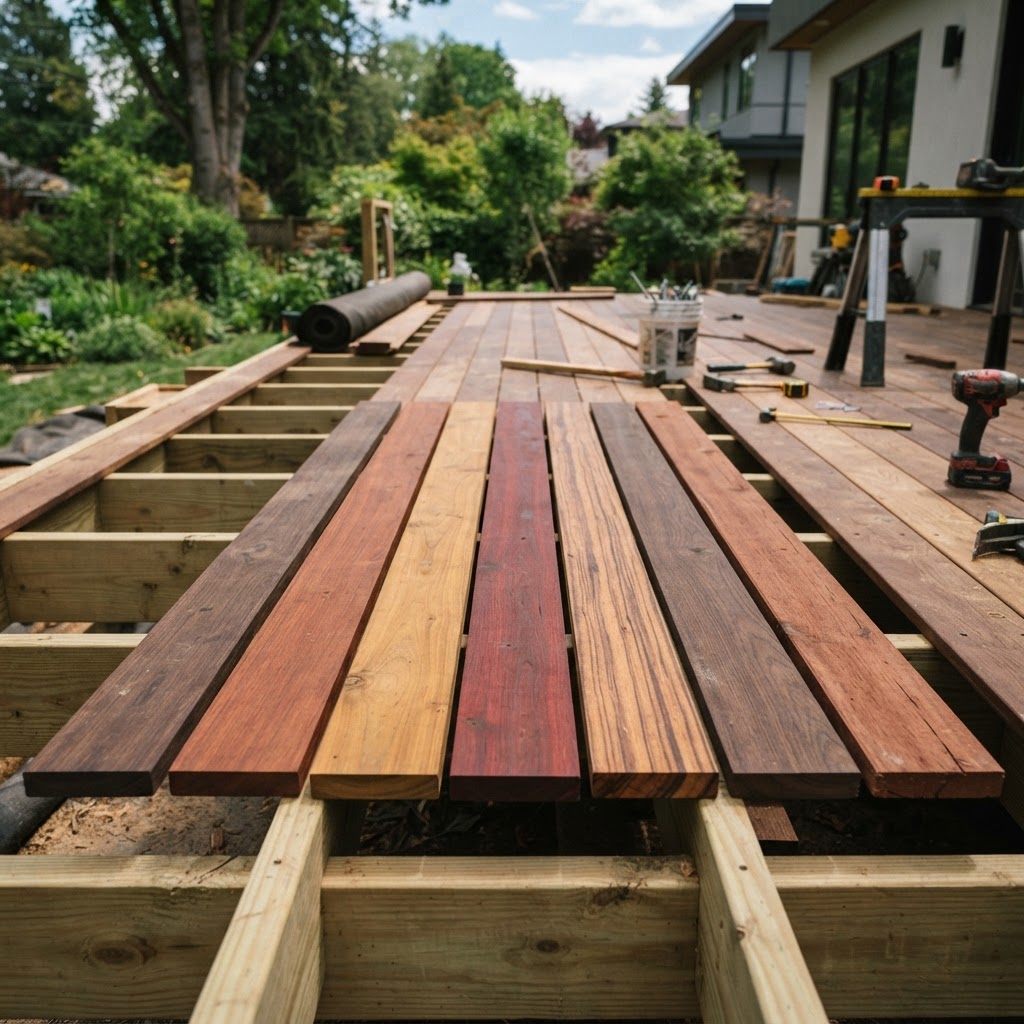
Solid hardwood: A single piece of wood, typically 3/4" thick, milled with a tongue-and-groove profile on all four edges. The entire board is the same species from top to bottom. Solid hardwood is the traditional flooring that's been used for centuries. It's milled from kiln-dried lumber and is available in virtually every domestic and exotic species.
Engineered hardwood: A thin layer of real hardwood (the wear layer) bonded to a multi-layer plywood or HDF (high-density fiberboard) core. The wear layer is the actual hardwood species you see and walk on. It ranges from 0.6mm (paper-thin veneer) to 6mm (thick enough to refinish multiple times). The core layers are arranged with alternating grain directions, which resists expansion and contraction caused by humidity changes.
Cost
Solid hardwood: $3-$12+ per square foot for materials (unfinished) or $5-$15+ per square foot (prefinished). Common domestic species like red oak and white oak are on the lower end; exotic species and wide-plank options are higher. Installation adds $3-$8 per square foot for professional nail-down installation.
Engineered hardwood: $3-$15+ per square foot for materials. Engineered flooring spans a wide price range: budget products with thin wear layers cost less than solid, while premium engineered floors with thick wear layers from European manufacturers can cost more. Installation costs are generally lower than solid because floating and glue-down methods are faster than nail-down.
Moisture Resistance
This is the primary advantage of engineered hardwood. The cross-laminated plywood core resists expansion and contraction significantly better than solid wood. Engineered hardwood can be installed in basements, over concrete slabs, and over radiant heating systems — all locations where solid hardwood is problematic.
Solid hardwood expands and contracts across its width as humidity changes seasonally. In dry climates or homes with forced-air heating (which creates very dry winter conditions), solid hardwood can develop visible gaps between boards. In humid climates or basements, solid hardwood can cup or buckle. This doesn't mean solid hardwood can't work in these environments — it can, with proper acclimation and humidity control — but engineered hardwood is more forgiving.
Installation
Solid hardwood: Nail-down installation to a wood subfloor is the standard method. The floor must be installed over a plywood or OSB subfloor (not directly over concrete). The subfloor must be level within 3/16" over 10 feet. Solid hardwood requires acclimation (sitting in the home for 3-7 days to adjust to the home's humidity level before installation).
Engineered hardwood: Three installation methods available. Floating installation (boards click or lock together and float over a foam underlayment without being attached to the subfloor) is the fastest and most DIY-friendly. Glue-down installation (boards are glued directly to a concrete slab or plywood subfloor) provides a solid feel with no hollow sound. Nail-down or staple-down installation (similar to solid hardwood) works over wood subfloors.
Refinishing
Solid hardwood: Can be sanded and refinished 3-5 times over its lifetime. Each refinish removes approximately 1/32" to 1/16" of wood. This is the major longevity advantage of solid hardwood — a solid floor can last 100+ years with periodic refinishing.
Engineered hardwood: Refinishing depends entirely on the wear layer thickness. Floors with a 4mm+ wear layer can be refinished 1-2 times. Floors with a 2mm wear layer can be lightly screened but not fully sanded. Floors with a 0.6mm-1mm wear layer cannot be refinished at all — once the finish wears through, the floor must be replaced. When shopping for engineered hardwood, always check the wear layer thickness. A 4mm or thicker wear layer is recommended for longevity.
Which Should You Choose
Choose solid hardwood when: installing on a wood subfloor above grade (first floor or upper floors), you want maximum longevity (100+ years with refinishing), you prefer the traditional thickness and feel, your home has good humidity control (40-60% RH year-round).
Choose engineered hardwood when: installing over concrete, in a basement, or over radiant heat, you want easier DIY installation (floating method), you live in a climate with extreme humidity swings, you want the look of exotic or wide-plank hardwood at a lower cost (wide planks in solid hardwood are expensive and prone to cupping).
Frequently Asked Questions
Lumberama Editorial Team
Hardwood Flooring & Installation Specialists
Contributor to Lumberama’s reference library. Read our editorial standards and source methodology.
Continue researching flooring
Where readers of this article usually go next.
Related Articles

Tree Removal Guide: Cost, When to Remove & DIY vs Pro
Make safe and informed tree removal decisions.
Countertop Guide: Granite vs Quartz vs Marble and More
Choose the right kitchen or bathroom countertop with this comprehensive comparison.

Pool Guide: Above Ground vs In-Ground Cost and Types
Learn about costs, types, and which pool is right for your home.