Article
Comparisons
Tree Removal Guide: Cost, When to Remove & DIY vs Pro
Lumberama Editorial Team, Arboriculture & Tree Service Specialists Nov 26, 2026 7 min read
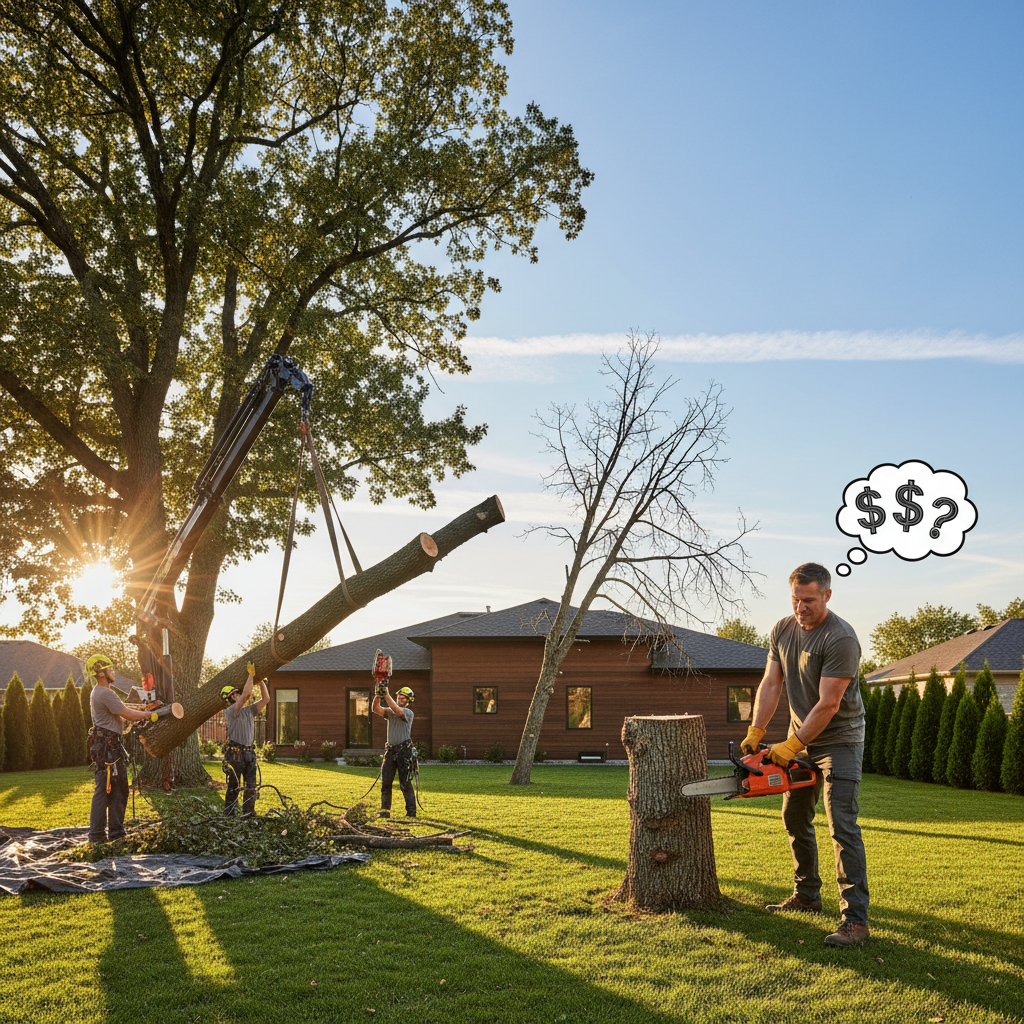
When to Remove a Tree
Safety concerns: Dead or dying tree (bare branches, no leaves, bark falling off). Leaning significantly (especially if lean has increased). Large dead branches over structures, walkways, or play areas. Root damage to foundation, driveway, or sewer lines. Storm-damaged trunk or major limbs.
Health signs: Fungus/mushrooms growing at base or on trunk (internal decay). Cavities or holes in the trunk. Bark falling off in large sections. Canopy dieback (more than 50% dead branches). Pest or disease infection that can't be treated.
Other reasons: Too close to the house (branches touching roof, roots in foundation). Blocking views, light, or air circulation. Making way for construction or landscaping. Invasive species (e.g., tree of heaven, Bradford pear).
When NOT to remove: A healthy tree that's messy (leaves, seeds). Minor storm damage (can be pruned). A tree you just don't like (consider the ecological and property value).
Cost
By tree size: Small (under 30 ft): $150-$500. Medium (30-60 ft): $400-$1,200. Large (60-80 ft): $800-$2,000. Very large (80+ ft): $1,500-$4,000+.
Factors affecting cost: Location (near structures, power lines = more expensive). Condition (dead, leaning = more dangerous and costly). Access (tight spaces require more labor). Species (hardwoods weigh more than softwoods). Emergency removal (storm damage): add 50-100% premium.
Stump removal: Stump grinding: $100-$400 per stump ($2-$4 per inch of diameter). Chemical removal: $10-$20 (slow, takes 4-6 weeks). Manual removal (digging): $200-$600 (labor-intensive).
Additional costs: Permit: $50-$200 (required in many areas). Wood removal/hauling: $50-$200. Log splitting (if keeping firewood): often included.
DIY vs Professional
DIY is appropriate for: Small trees (under 20 ft). No structures, power lines, or fences nearby. You have proper equipment (chainsaw, safety gear). Tree can fall in a clear direction.
Hire a professional when: Tree is over 20-30 ft tall. Near power lines (NEVER attempt this yourself). Near structures or fences. Dead, hollow, or leaning unpredictably. You don't have experience with chainsaws. Multiple trees or tight access.
Professional process: Assessment and estimate. Climbing or crane (for large trees). Sectional removal (pieces lowered on ropes). Cleanup and hauling. Optional stump grinding.
Finding a professional: ISA Certified Arborist preferred. Licensed and insured (verify). Get 3 quotes. Ask for references. Avoid door-to-door tree services after storms (often scams). Check reviews on Google, Angi, or HomeAdvisor.
Frequently Asked Questions
By size: small (under 30 ft): $150-$500. Medium (30-60 ft): $400-$1,200. Large (60-80 ft): $800-$2,000. Very large (80+ ft): $1,500-$4,000+. National average: $700-$1,500. Stump grinding: add $100-$400. Emergency removal (storm): add 50-100% premium. Factors: location near structures or power lines. Access difficulty. Tree condition (dead trees can be more dangerous). Multiple trees often get a discount.
Often yes. Many cities and counties require permits for tree removal, especially for: trees over a certain diameter (often 6-8 inches). Heritage or protected species. Trees in front yards or public rights-of-way. Trees in historic districts. How to check: call your local building or planning department. Check your city's website for tree ordinances. Ask your HOA (if applicable). Penalties: removing a protected tree without a permit can result in fines of $500-$25,000+ and may require planting replacement trees. Exception: dead or hazardous trees often have an expedited or waived permit process.
Small trees (under 20 ft, clear fall zone): yes, with proper equipment and caution. Requirements: chainsaw (and experience using one). Safety gear (chaps, helmet, face shield, gloves, steel-toe boots). Clear fall zone (1.5x the tree's height in the direction of fall). No power lines, structures, or fences in the fall zone. A plan and escape route. NEVER attempt: trees near power lines (call the utility company or a professional). Trees over 30 ft. Dead or hollow trees (unpredictable fall direction). Trees leaning toward a structure. Risk: tree removal is one of the most dangerous activities. An estimated 100+ fatalities per year in the US are related to tree work. When in doubt, hire a professional.
Tree trimming/pruning: removing specific branches. Done to shape the tree, remove dead wood, improve light, or clear structures. Cost: $200-$1,000 per tree. Frequency: every 3-5 years for most trees. Tree can remain healthy. Tree removal: cutting down the entire tree. Done when the tree is dead, dangerous, or unwanted. Cost: $150-$4,000+ per tree. Stump removal is separate. Permanent (tree is gone). Always start with trimming if the tree might be salvageable. Have an ISA Certified Arborist evaluate the tree before deciding to remove it.
Lumberama Editorial Team
Arboriculture & Tree Service Specialists
Contributor to Lumberama’s reference library. Read our editorial standards and source methodology.
Explore related resources
Where readers of this article usually go next.
Related Articles

Comparisons
Countertop Guide: Granite vs Quartz vs Marble and More
Choose the right kitchen or bathroom countertop with this comprehensive comparison.
Lumberama Editorial Team Nov 5, 2026 10 min

Comparisons
Pool Guide: Above Ground vs In-Ground Cost and Types
Learn about costs, types, and which pool is right for your home.
Lumberama Editorial Team Nov 3, 2026 11 min

Comparisons
Retaining Wall Guide: Types, Cost & DIY vs Professional
Build a retaining wall that lasts with this comprehensive guide covering all types and costs.
Lumberama Editorial Team Oct 25, 2026 11 min