The Complete Guide to Wood Lathes (2026)
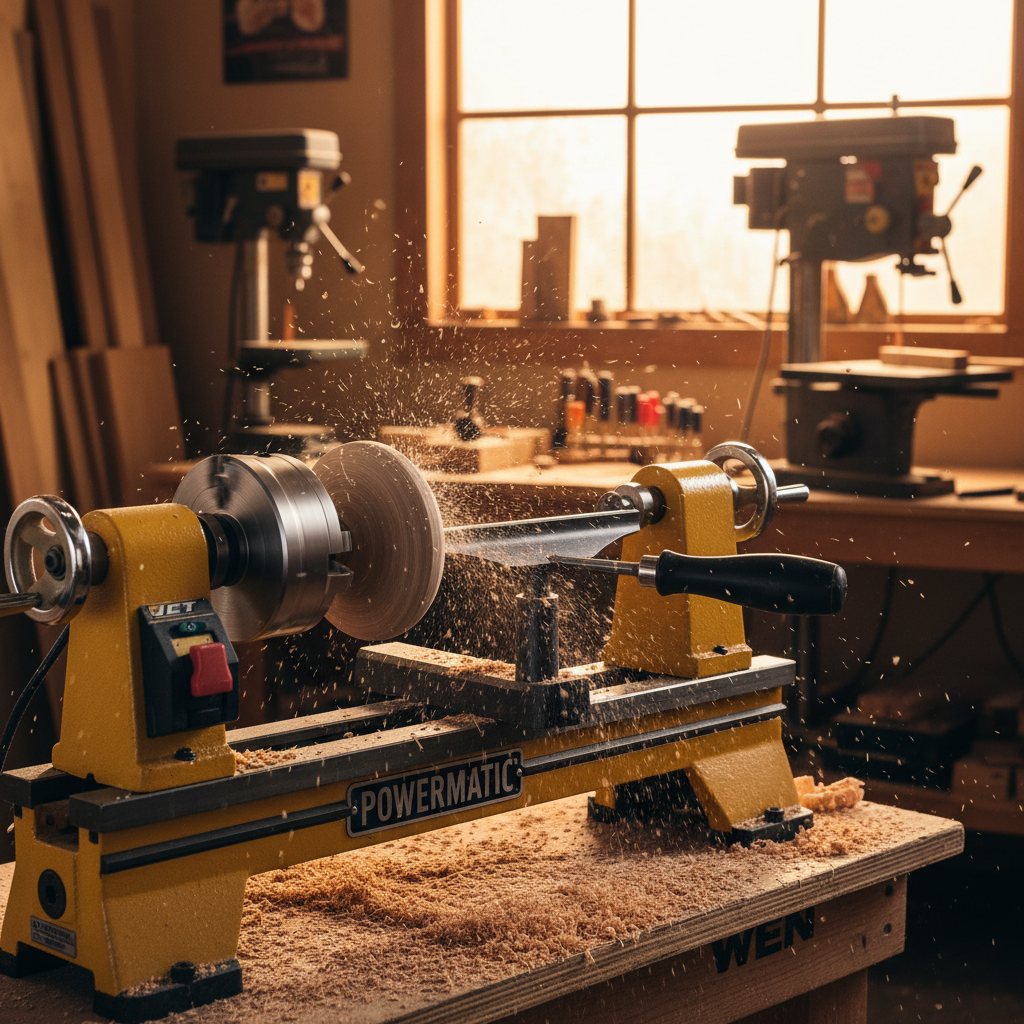
A wood lathe spins a workpiece on a horizontal axis while you shape it with hand-held cutting tools. This ancient woodworking method produces beautiful rounded objects — bowls, spindles, pens, table legs, and decorative pieces — that cannot be made any other way. Wood turning is part craft, part art, and one of the most rewarding branches of woodworking.
Key Takeaways
- A wood lathe spins a workpiece on a horizontal axis while you shape it with hand-held cutting tools.
- This ancient woodworking method produces beautiful rounded objects — bowls, spindles, pens, table legs, and decorative pieces — that cannot be made any other way.
- Wood turning is part craft, part art, and one of the most rewarding branches of woodworking.
- Wood lathes are used for turning bowls and vessels, making spindle components (table legs, staircase balusters, bedposts), pen turning, making rolling pins and kitchen utensils, hollow forms and vases, decorative finials and knobs, ornamental goblets and platters, and segmented turning projects.
- Swing over bed (max workpiece diameter), distance between centers (max length), variable speed control (500-4,000 RPM), motor power (1/2 to 2 HP), headstock spindle thread (1x8 TPI standard), indexing feature, live center in tailstock, banjo and tool rest quality, bed material (cast iron preferred), and spindle lock.
What It's Used For
Wood lathes are used for turning bowls and vessels, making spindle components (table legs, staircase balusters, bedposts), pen turning, making rolling pins and kitchen utensils, hollow forms and vases, decorative finials and knobs, ornamental goblets and platters, and segmented turning projects.
Types & Variations
Mini Lathe (10-12 inch swing, for pens and small projects), Midi Lathe (12-16 inch swing, most versatile home shop size), Full-Size (16-20 inch, heavy bowls and large spindles), and Pen Lathe (compact, dedicated to pen turning). Key specs: swing (max diameter) and distance between centers (max spindle length).
Key Features to Look For
- Swing over bed (max workpiece diameter)
- distance between centers (max length)
- variable speed control (500-4
- 000 RPM)
- motor power (1/2 to 2 HP)
- headstock spindle thread (1x8 TPI standard)
- indexing feature
- live center in tailstock
- banjo and tool rest quality
- bed material (cast iron preferred)
- and spindle lock.
How to Use
1) Select and prepare your blank — round it roughly for bowl turning, square for spindle turning. 2) Mount the blank between centers (spindle) or on a faceplate/chuck (bowl). 3) Set the tool rest close to the blank without touching. 4) Start at a slow speed and increase as the blank becomes round. 5) Use the correct tool — roughing gouge to round, spindle gouge for details, bowl gouge for bowls, skew chisel for smooth cuts. 6) Keep the tool rest close to the work. 7) Cut with the bevel of the tool rubbing the wood (bevel-rubbing technique). 8) Finish with sandpaper while the lathe spins.
⚠️ Safety Tips
Always wear a full face shield (not just safety glasses) — turning blanks can fly apart. Remove loose clothing, jewelry, and tie back long hair. Never leave the lathe running unattended. Check that the blank is securely mounted before starting. Start at the slowest speed with new or unbalanced blanks. Stand to the side when starting the lathe. Never use sandpaper with your fingers — wrap it around a pad. Check tool rest position before restarting.
Maintenance
Keep the bed ways clean and waxed. Lubricate the tailstock quill and banjo clamp. Check headstock bearings for play or noise. Clean the spindle threads. Inspect the tool rest for nicks (which will catch tools) and smooth with a file. Wax all bare metal to prevent rust. Check belt tension and alignment on variable-speed models.
Price Range & Recommendations
Price Range: $100-$250 for mini lathes, $300-$700 for midi lathes, $700-$1,500 for full-size, $1,500-$4,000+ for premium heavy-duty lathes.
Beginners should start with a midi lathe — the WEN 3424T ($300) or Rikon 70-220VSR ($400) offer excellent variable-speed control and enough capacity for bowls and spindles. Add a basic turning tool set and a 4-jaw chuck. Pros will want the Jet 1221VS midi for its robust build, or step up to a Laguna Revo 18|36 or Robust American Beauty for large-capacity, vibration-free turning.
Top Brands
Related Tools
Frequently Asked Questions
Related Guides
Biscuit Joiner
Align panels and reinforce joints with a biscuit joiner. Compare DeWalt, Makita & Porter-Cable plate
Read guideBrad Nailer
Drive 18-gauge brads with precision using a brad nailer. Compare DeWalt, Milwaukee & Ryobi models. P
Read guideDovetail Jig
Cut perfect dovetails every time with a dovetail jig. Compare Porter-Cable, Leigh & MLCS models. Thr
Read guideFinish Nailer
Install trim like a pro with a finish nailer. Compare DeWalt, Milwaukee & Metabo HPT 15 & 16 gauge m
Read guide