The Complete Guide to Electric Hand Planers (2026)
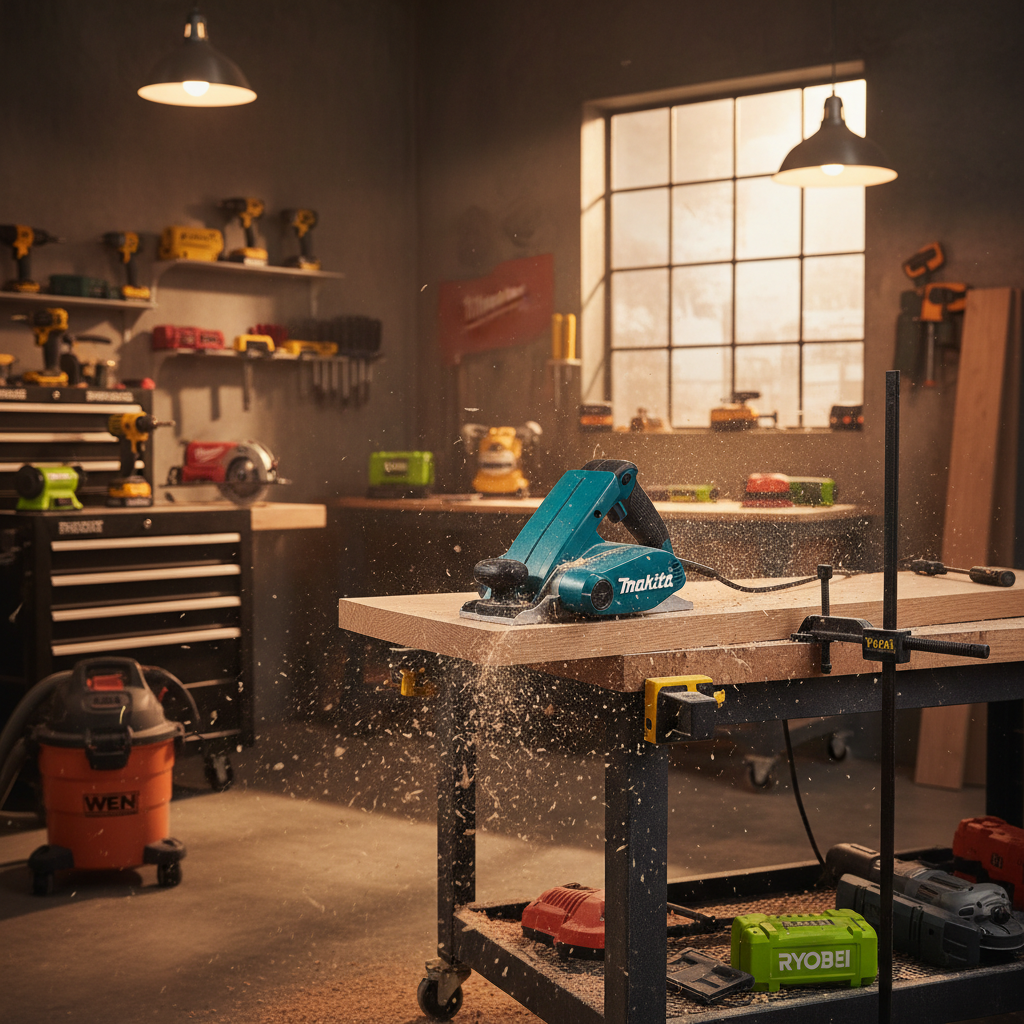
An electric hand planer is a portable power tool that shaves thin layers of wood using a spinning cutterhead with two or three blades. It combines the stock removal capability of a bench planer with the portability of a hand tool, making it invaluable for fitting doors, chamfering edges, flattening warped boards, and trimming material where a stationary planer cannot go.
Key Takeaways
- An electric hand planer is a portable power tool that shaves thin layers of wood using a spinning cutterhead with two or three blades.
- It combines the stock removal capability of a bench planer with the portability of a hand tool, making it invaluable for fitting doors, chamfering edges, flattening warped boards, and trimming material where a stationary planer cannot go.
- Electric hand planers are used for trimming doors to fit frames, chamfering and beveling edges, reducing board thickness on site, flattening warped or twisted boards, smoothing rough-sawn lumber, trimming edge banding flush, planing stud faces for drywall alignment, and removing high spots on large surfaces like timber frame beams.
- Cutting width (3-1/4 inch standard), maximum depth of cut per pass (up to 1/8 inch), RPM (10,000-17,000), number of blades (2 or 3), blade material (HSS or carbide), rabbeting depth capacity, kickstand, dust ejection direction (switchable), V-groove in front shoe for chamfering, and parallel fence for edge jointing.
What It's Used For
Electric hand planers are used for trimming doors to fit frames, chamfering and beveling edges, reducing board thickness on site, flattening warped or twisted boards, smoothing rough-sawn lumber, trimming edge banding flush, planing stud faces for drywall alignment, and removing high spots on large surfaces like timber frame beams.
Types & Variations
Standard Electric Planer (3-1/4 inch width, most common), Wide-Body Planer (4-3/8 to 6-3/4 inch for larger surfaces), Cordless (battery-powered portability), Rebating/Rabbeting Planer (exposed blade for cutting rabbets), and Heavy-Duty models with spiral cutterheads for smoother finish.
Key Features to Look For
- Cutting width (3-1/4 inch standard)
- maximum depth of cut per pass (up to 1/8 inch)
- RPM (10
- 000-17
- 000)
- number of blades (2 or 3)
- blade material (HSS or carbide)
- rabbeting depth capacity
- kickstand
- dust ejection direction (switchable)
- V-groove in front shoe for chamfering
- and parallel fence for edge jointing.
How to Use
1) Set the depth of cut — start shallow (1/64 inch) and increase as needed. 2) Clamp the workpiece securely. 3) Check grain direction — always plane with the grain to avoid tearout. 4) Place the front shoe on the workpiece with the blade not yet contacting. 5) Start the planer and let it reach full speed. 6) Push forward steadily, applying slight downward pressure on the front shoe at the start and the rear shoe at the end. 7) Maintain consistent speed and pressure for an even cut. 8) Take multiple light passes rather than one heavy pass.
⚠️ Safety Tips
Keep both hands on the handles at all times — never reach underneath. The cutterhead spins at very high speed and will cause severe injury. Always plane with the grain to prevent kickback. Secure the workpiece firmly. Wear safety glasses and hearing protection. Let the cutterhead stop completely before setting the planer down — use the kickstand. Disconnect power before changing blades.
Maintenance
Inspect blades for nicks and dullness regularly — sharpen or replace as needed. Reversible HSS blades can be flipped for a fresh edge. Keep the shoe plates waxed for smooth sliding. Clean dust from the motor and cutterhead housing. Check the belt drive (if applicable) for wear. Store with the depth set to zero to protect the blades. Keep blades oiled to prevent rust.
Price Range & Recommendations
Price Range: $60-$120 for basic 3-1/4 inch corded, $100-$200 for mid-range, $150-$300 for premium corded, $150-$300 for cordless, $200-$500 for wide-body models.
Beginners should start with the DeWalt DW680K ($120 range) or Makita KP0810 ($140 range) — both are smooth, accurate, and easy to control. For cordless convenience, the Milwaukee M18 2623 is an excellent option. Pros will choose the Makita 1806B 6-3/4-inch wide planer for large surfaces, or the Festool EHL 65 EQ for unmatched precision and dust extraction.
Top Brands
Related Tools
Frequently Asked Questions
Related Guides
Belt Sander
Tame rough lumber with a belt sander. Compare Makita, DeWalt & Porter-Cable models. Belt sizes, spee
Read guideBenchtop Planer
Thickness rough lumber to perfection with a benchtop planer. Compare DeWalt DW735, Makita 2012NB & W
Read guideDrum Sander
Flatten and thickness-sand like a pro with a drum sander. Compare SuperMax, Jet & Performax models.
Read guidePalm Sander
Get smooth results with a quarter-sheet palm sander. Compare Makita, DeWalt & Black+Decker models. B
Read guide