Material selection & project planning
Best Decking for Full Sun: Wood, Composite & PVC
Yes, composite decking can get hot in direct sunlight. So can wood and PVC. For a sunny deck, compare the exact collection and color alongside shade, maintenance and site conditions. No material name alone guarantees a comfortable barefoot surface.
Lumberama editorial guide · Published November 5, 2026
Before you choose
- Compare specific colors and products, not brand-wide temperature rankings.
- A cooler-than claim is relative to stated test conditions, not a maximum surface temperature.
- Shade planning and physical samples belong in the material decision.
| Material | Selection considerations | Do not assume |
|---|---|---|
| Natural wood | Species, finish color, weathering, care and exposure | That wood cannot become uncomfortably hot |
| Capped composite | Exact cap/color, published comparisons and installation requirements | That every product from one brand performs alike |
| PVC | Exact collection, color and the scope of its cooling claim | That PVC always stays cooler than all wood or composite |
Why deck surfaces heat up
Sunlight, color, exposure duration, wind and the surrounding building all affect the surface. A dark board in a sheltered sunny corner is a different situation from a pale sample under an open pergola. Reflections from nearby glazing can also produce localized heating; ask the manufacturer how to address that exposure.
Dark colors generally absorb more sunlight, but the actual formulation matters. Compare samples of the intended products rather than selecting from a screen or assuming every light gray board behaves the same way.
How wood, composite and PVC differ
Natural wood offers species and finish choices, but maintaining a chosen color requires a care plan. Weathering or refinishing can alter the appearance and the way a surface responds to sun. Consider splinters, inspection and maintenance alongside heat, especially where children or pets use the deck.
Composite and PVC collections differ in their caps, colors and formulations. Manufacturers may publish product-specific heat comparisons. Those results do not establish a universal ranking across every board, every color or every site. Evaluate each proposed alternative using its own documentation.
Read cooling claims with their footnotes
Ask what product and color were tested, what comparator was used, and whether the result describes a maximum difference or a typical result. An “up to” difference is not a promised reduction on your deck and is not the same as a safe-touch temperature.
TimberTech’s own heat guidance says all decking products get hot in the sun and recommends considering lighter colors for hotter climates. Manufacturer testing is useful for understanding a named offer, but this guide does not provide independent laboratory measurements or a guaranteed barefoot-comfort ranking.
Evaluate samples at the actual site
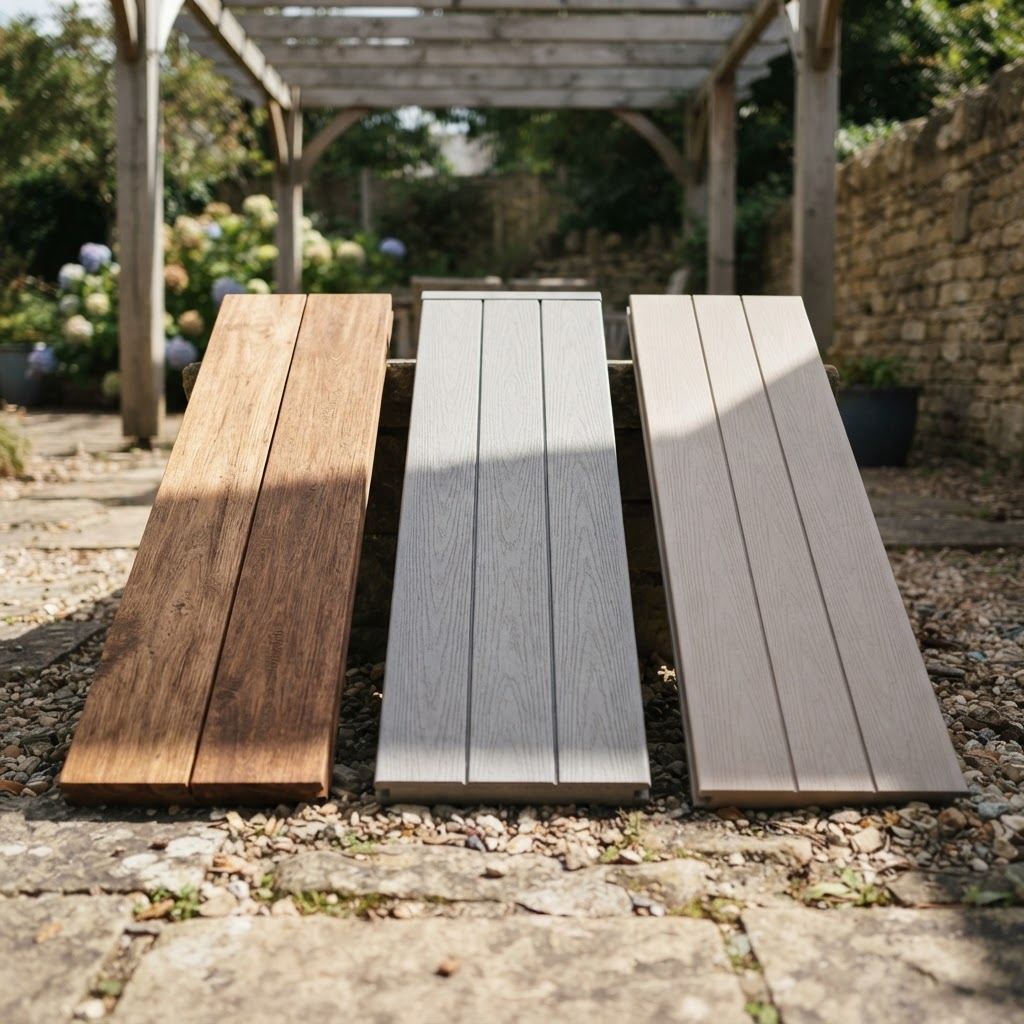
Place samples of the intended colors side by side on comparable supports in the proposed location. Observe them through the periods when the space will be used, including full sun and shade. Keep exposure and orientation consistent if comparing surface-temperature readings.
A handheld infrared reading is only a rough field comparison: instrument settings and surface emissivity can affect the result. Small samples also do not reproduce every condition of an installed deck. Do not use touch-testing to expose a child, pet or anyone with reduced sensation to a potentially hot surface.
Plan shade and maintenance before ordering
A pergola, umbrella or other appropriate shade can change how usable the deck is. Consider the moving sun, wind loads and required approvals for shade structures. A decorative open structure may provide much less shade during the hottest use period than its appearance suggests.
Check the decking maker’s guidance before using rugs, mats or coatings. Incompatible materials can trap heat or moisture, stain the surface or affect warranty eligibility. Do not apply a paint or improvised “cooling” coating to a manufactured board without written approval.
Turn the comparison into an equivalent quote
Ask each supplier for the exact collection, color, profile and available lengths, plus compatible fasteners, fascia, stair details and care documents. Record which physical sample was approved. If an alternative is proposed, repeat the sample and document review rather than accepting a brand-name substitution.
Compare installed scope and ongoing care, not only the price per board. This guide does not claim current stock, measured temperature performance or a universal best product.
Project specification checklist
- Exact product collection, color and profile
- Sun exposure and intended time of use
- Physical samples evaluated in comparable site conditions
- Cooling-claim footnotes and named comparators
- Shade plan and glazing-reflection review where relevant
- Approved rugs, maintenance products and warranty documents
Frequently Asked Questions
Sources and scope
Sources consulted November 5, 2026. Manufacturer guidance applies to its named products; local requirements and documents can change. This guide is not a site-specific design, product certification or live stock/price statement.
Continue planning
Prepare a comparable material request
Use the checklist to describe the exact product and assembly. Sourcing requests are subject to human review of specification fit, service area, current availability and permission to respond; supplier matching and quotes are not guaranteed.
Request a sourcing review