Redwood vs Cedar for Outdoor Projects: Detailed Species Comparison
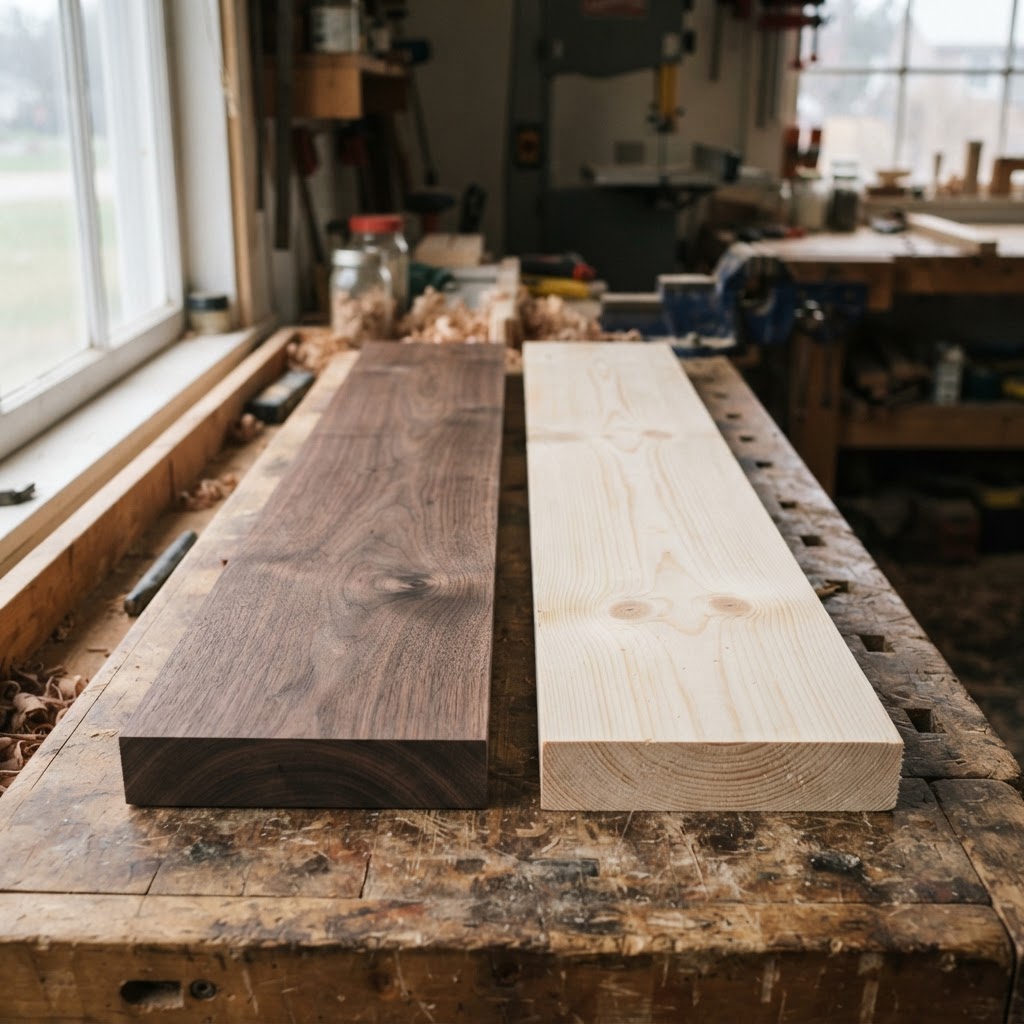
Redwood vs Cedar for Outdoor Projects: Detailed Comparison
Redwood and cedar are the two most celebrated naturally durable softwoods in North America, and for good reason. Both resist rot and insects naturally, accept finishes beautifully, and weather to attractive gray tones when left untreated. But they're not identical, and the differences matter for specific applications.
Species Overview
Western Red Cedar (Thuja plicata)
- Primary range: Pacific Northwest coast, BC, Canada
- Color: Pinkish-red to light brown heartwood; lighter sapwood
- Weight: Very light — approximately 23 lbs/cu ft
- Janka hardness: 350 lbf (very soft)
- Availability: Widely available throughout North America
- FSC availability: Yes, FSC-certified WRC is increasingly available
California Redwood (Sequoia sempervirens)
- Primary range: Northern California coast (limited to a narrow coastal strip)
- Color: Distinctive reddish-brown to deep red/brown
- Weight: Light — approximately 28 lbs/cu ft
- Janka hardness: 450 lbf (soft, slightly harder than cedar)
- Availability: More limited, primarily available in western US
- Sustainability concern: Significant old-growth protection issues; most commercial redwood is second-growth
Durability Comparison
Decay Resistance
Both species owe their durability to natural extractives in the heartwood:
Cedar: Contains thujaplicin and other terpenoids that inhibit fungal decay. Western red cedar heartwood is rated Class 2–3 durability (15–25 years above grade in most conditions).
Important caveat: Only the heartwood (the darker inner wood) has significant decay resistance in both species. The sapwood (lighter outer wood) of both species is not decay-resistant and will rot as quickly as untreated pine.
In practice: For decking and fencing, both species should specify "all-heart" grade to ensure minimal sapwood. Budget grades of both species contain significant sapwood and will underperform expectations.
Dimensional Stability
Cedar slightly better. Cedar's very low density correlates with lower shrinkage coefficients — it moves less with humidity changes than most species, including redwood. Both are good; cedar is marginally better.
Appearance
Color
Cedar: More variation. Ranges from pale straw-yellow to deep reddish-brown. Clear cedar can be beautifully consistent; lower grades show significant color variation.
Redwood: More consistent deep red-to-brown color. The distinctive color is immediately recognizable and many consider it more attractive.
Grain
Cedar: Straight grain with fine, even texture. Looks cleaner but has less character.
Redwood: Typically straight grain but may have more figure and character. Older second-growth redwood has beautiful grain patterns.
Weathering
Both weather to a silver-gray when left unfinished. This natural silver is attractive in the right context. Redwood's silver tends to be slightly warmer in tone; cedar's slightly cooler.
Cost Comparison
Prices vary significantly by region, but general patterns:
Western Red Cedar:
- 2x6x16 deck board: $25–45 (regional)
- 1x6 fence picket (6 ft): $4.50–6.50
- 4x4x8 post: $22–32
Redwood:
- 2x6x16 deck board: $35–60 (where available)
- 1x6 fence picket (6 ft): $6–$9 (where available)
- 4x4x8 post: $30–50
Typical premium: Redwood runs 20–40% more than cedar where both are available.
Availability impact: In the western US (California especially), redwood can be competitive with cedar. East of the Rockies, redwood availability drops dramatically and prices rise accordingly.
Sustainability
Cedar: Better sustainability profile overall.
Western red cedar is harvested from a much larger geographic range than redwood. BC, Canada produces enormous quantities of second-growth WRC. FSC-certified cedar is increasingly available. The resource, while not unlimited, is considerably more abundant than redwood.
Redwood: More complex sustainability story.
Old-growth coastal redwood is one of the world's most threatened forest ecosystems, with over 95% of original old-growth already logged. Save-the-Redwoods League and related organizations have made significant conservation progress, but old-growth redwood is still harvested from some private lands.
Second-growth redwood is a different story — many private timberlands in northern California are managed sustainably and certified. Look specifically for FSC-certified second-growth redwood to make the most responsible choice.
When to Choose Cedar
1. East of the Rockies: Availability and cost strongly favor cedar
2. Fencing: Cedar is the preferred fencing material for most of North America
3. Sustainability priority: More reliably sustainable sourcing
4. Weight-sensitive applications: Cedar's lower weight is significant for furniture and structures where weight matters
5. Budget: Cedar is typically less expensive
When to Choose Redwood
1. Western US, especially California: Where redwood is more readily available and often price-competitive
2. Appearance priority: Redwood's distinctive color and consistency are genuinely beautiful
3. Slightly higher durability applications: Old-growth or premium second-growth redwood heartwood outperforms cedar in long-term durability
4. Historical authenticity: If you're restoring a California home with original redwood, matching is important
For Both Species: Specify All-Heart
The most important specification for either species is all-heart grade — lumber cut from only the heartwood, with no sapwood included. Both cedar and redwood sapwood lack the natural durability of heartwood and will rot in outdoor applications within 5–10 years.
At retail, many "cedar" and "redwood" boards contain significant sapwood. Look carefully at the lighter-colored portions of any board — those are sapwood. For critical outdoor applications, specify all-heart or inspect boards carefully before purchase.
---
Certification disclaimer: FSC certification applies only to products and supply chains specifically certified under the applicable FSC program. References to FSC-certified products on Lumberama do not mean that Lumberama itself is FSC certified, or that all products, suppliers, or materials listed on Lumberama are FSC certified. Verify certification and availability for the specific product and supplier before purchase.
Frequently Asked Questions
Sarah Chen
Wood Scientist
Contributor to Lumberama’s reference library. Read our editorial standards and source methodology.
Continue researching decking
Where readers of this article usually go next.
Related Articles

Tree Removal Guide: Cost, When to Remove & DIY vs Pro
Make safe and informed tree removal decisions.

Countertop Guide: Granite vs Quartz vs Marble and More
Choose the right kitchen or bathroom countertop with this comprehensive comparison.

Pool Guide: Above Ground vs In-Ground Cost and Types
Learn about costs, types, and which pool is right for your home.