Article
Woodworking & Lumber
Pocket Door Guide: Types, Cost, Installation & Pros and Cons
Lumberama Editorial Team, Interior Door & Carpentry Specialists Aug 9, 2026 9 min read
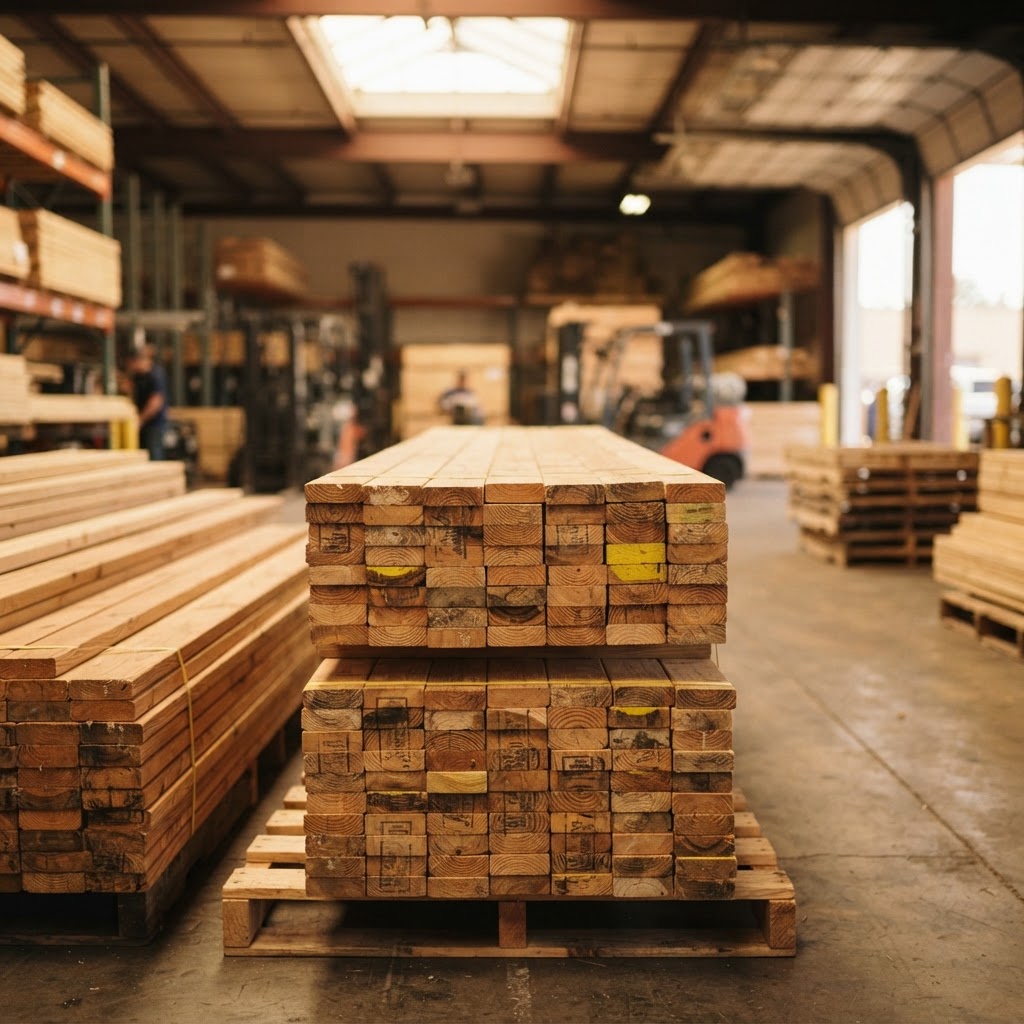
How Pocket Doors Work
Basic concept: Door slides into a cavity inside the wall. Completely hidden when open (no door swing). Hangs from overhead track on rollers. Runs on a steel split-stud frame inside the wall.
Components: Pocket door frame (steel split studs). Overhead track and rollers. Door slab (wood, glass, or composite). Pull handle (recessed flush). Privacy lock (optional). Floor guide (keeps door aligned).
Standard sizes: Width: 24, 28, 30, 32, and 36 inches. Height: 80 inches standard (96 available). Requires wall cavity: door width x 2 + 3 inches minimum.
Types
Single pocket door: One door slides into one wall cavity. Most common residential type. Standard for bathrooms, closets, pantries.
Double pocket door: Two doors slide into opposite walls. Creates wide opening (up to 72+ inches). Great for: living/dining room dividers, wide closets.
Converging pocket doors: Two doors slide into the same wall cavity (one behind the other). Less common, requires thicker wall.
Glass pocket doors: Frosted, clear, or textured glass panel. Allows light transfer between rooms. Modern, contemporary look. Cost: $300-$1,500+ for glass slab.
Barn-style pocket door: Rustic wood door on pocket hardware. Combines barn door aesthetics with space savings. Requires pocket frame (not surface-mounted track).
Cost
New construction (easiest): Pocket door frame kit: $100-$300. Door slab: $100-$500 (hollow core to solid wood). Hardware and track: included in frame kit. Installation labor: $300-$600. Total: $500-$1,400.
Retrofit into existing wall: More complex (must open wall, relocate wiring/plumbing if present). Frame kit: $100-$300. Door slab: $100-$500. Installation labor: $800-$2,000+. Drywall repair: $200-$400. Total: $1,200-$3,200+.
Compared to standard door: Standard interior door installed: $200-$600. Pocket door (new construction): $500-$1,400. Pocket door (retrofit): $1,200-$3,200. Premium pocket door (glass): $1,000-$3,000+ (new construction).
Hardware upgrades: Soft-close mechanism: $50-$150. Premium rollers: $30-$80. Designer pulls/handles: $20-$100.
Pros and Cons
Pros: Saves floor space (no door swing arc). Clean, modern look when open. Great for small rooms and tight spaces. Invisible when open. Increases usable wall and floor space.
Cons: More expensive than standard doors (especially retrofit). Wall cavity cannot have electrical outlets, switches, or plumbing. Less sound insulation than solid standard door. Can be noisy (rattling) with cheap hardware. Harder to repair if track fails. Not as airtight as standard doors.
Common problems: Door comes off track (usually cheap hardware). Rattling (add bumpers or adjust guides). Hard to open (dirty track or misaligned rollers). Won't stay closed (adjust catch or lock). Wall damage over time (from door rubbing).
Installation Tips
New construction: Install pocket frame before drywall. Use premium frame kit (Johnson, Hafele) not builder-grade. Add soft-close mechanism during install. Plan electrical and plumbing around pocket cavity. Use solid-core door for durability (worth the upgrade).
Retrofit: Check wall for wiring, plumbing, and ducts before cutting. Non-load-bearing walls only (or add header for load-bearing). Open drywall on one side to install frame. Expect 1-2 days for professional installation. Drywall and paint repair adds time and cost.
Hardware quality matters: Builder-grade kits ($50-$100): lightweight, noisy, prone to problems. Mid-grade (Johnson 1500): $100-$200, smooth operation. Premium (Hafele, Eclisse): $200-$400+, heavy-duty, quiet, soft-close.
Frequently Asked Questions
In new construction, a pocket door costs $500-$1,400 total (frame kit $100-$300, door slab $100-$500, labor $300-$600). Retrofitting into an existing wall costs $1,200-$3,200+ because the wall must be opened and rebuilt. Glass pocket doors cost $1,000-$3,000+ in new construction. Compare to a standard interior door at $200-$600 installed. Can you put a pocket door in an existing wall?
Yes, but it's more complex and costly than new construction. The wall must be opened, any electrical wires or plumbing rerouted, and a pocket frame installed. The wall must be non-load-bearing (or a header must be added). Expect $1,200-$3,200+ total and 1-2 days of professional work plus drywall repair and painting. Are pocket doors worth it?
Yes for small spaces where a swinging door wastes floor space — bathrooms, closets, pantries, laundry rooms, and tight hallways. They're also great for wide openings between rooms (double pocket doors). The main trade-offs are higher cost, no electrical outlets on that wall section, and slightly less sound insulation than standard doors. What are common pocket door problems?
The most common issues are: door coming off track (usually from cheap hardware), rattling when closed (add bumpers or adjust floor guide), difficulty opening (dirty track or misaligned rollers), and won't stay closed (adjust catch mechanism). Most problems are prevented by using quality hardware (Johnson 1500 or Hafele instead of builder-grade) and soft-close mechanisms.
Lumberama Editorial Team
Interior Door & Carpentry Specialists
Contributor to Lumberama’s reference library. Read our editorial standards and source methodology.
Explore related resources
Where readers of this article usually go next.
Related Articles
Woodworking & Lumber
Wainscoting Guide: Types, Cost & Installation Ideas
Add classic charm and protection to your walls.
Lumberama Editorial Team Nov 28, 2026 7 min

Woodworking & Lumber
Trim & Baseboard Guide: Types, Cost & Installation
Finish your rooms with the perfect trim.
Lumberama Editorial Team Nov 28, 2026 7 min
Woodworking & Lumber
Crown Molding Guide: Types, Cost & Installation
Add elegance to any room with crown molding.
Lumberama Editorial Team Nov 27, 2026 7 min