Maple vs Cherry Cabinets: How to Compare Quotes Before You Buy
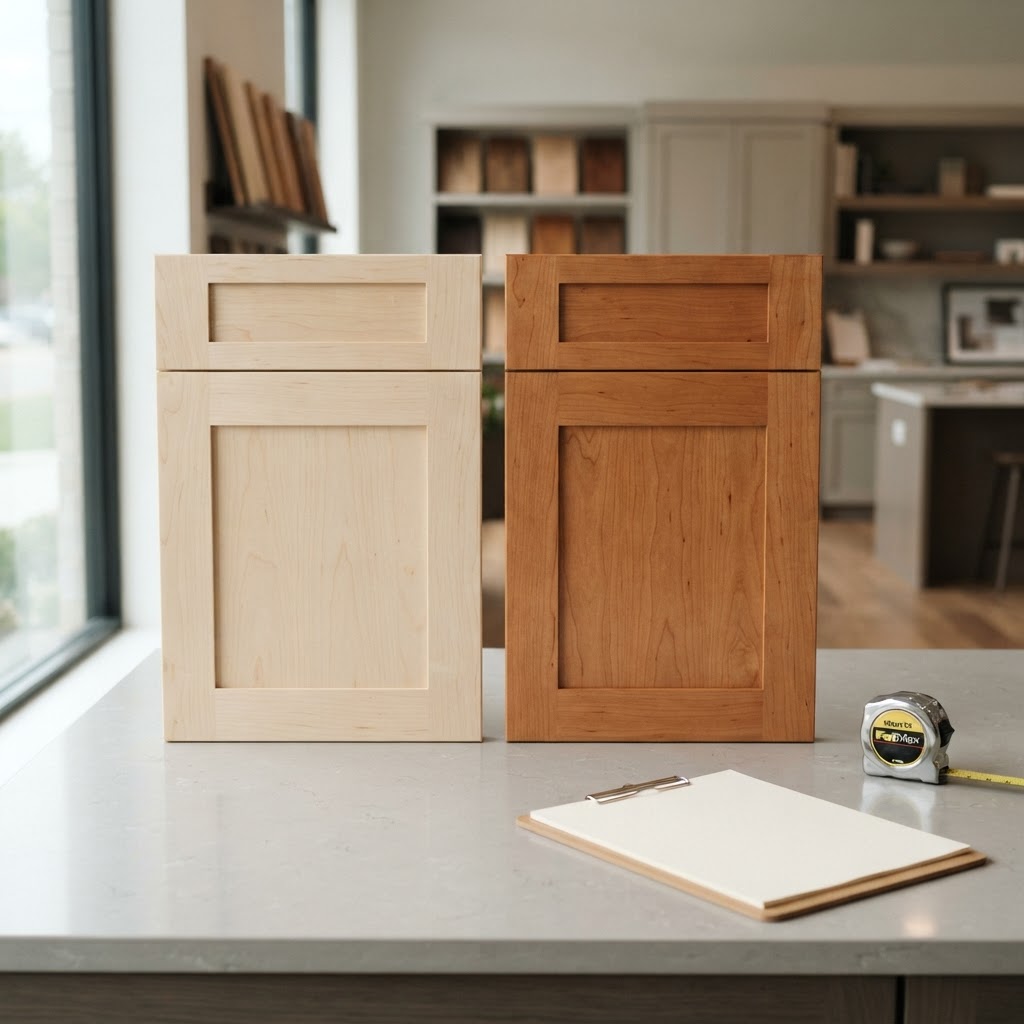
Maple and cherry can both make attractive kitchen cabinets. The difficult part is deciding whether two quotes describe the same cabinet, with a different wood species, or two entirely different products. Before paying a species premium, make the construction, finish and installation scope comparable.
This article focuses on the purchase decision. For broader material properties, start with the maple vs cherry comparison.
Start with the exact species and visible parts
“Maple” can describe hard maple or commercially grouped soft maples. Ask which is supplied rather than treating the trade name as a complete specification. Cherry cabinets usually mean American black cherry, but verify the description on the order.
Also identify where the named wood appears. Doors, drawer fronts, face frames, exposed end panels, interior shelves and cabinet boxes need not use the same material. A cabinet with cherry fronts and plywood boxes is not inherently a misleading product; it becomes a problem when the quote suggests solid cherry throughout without documenting the actual construction.
Compare color using the actual finish
Maple generally provides a light background, while cherry offers warmer tones and changes color with exposure and age. A newly finished cherry sample is not a promise that every door will retain exactly that shade. Natural variation within either species also matters.
Approve a sample finished with the actual proposed coating and sheen. Place it in the kitchen beside the countertop and flooring, under both daylight and artificial lighting. Ask whether sapwood, mineral streaks, darker boards or other visible variation are permitted. Photographs alone are a poor basis for a tightly controlled color expectation.
Separate door design from species
A slab door, a five-piece framed door and a veneered panel are different assemblies. Their costs reflect machining, panel construction and finishing as well as timber. Compare the same style, thickness, edge profile and hardware preparation.
Solid wood changes dimension as moisture changes. A correctly built cabinet can accommodate that movement; a species label cannot fix a poorly designed assembly. Veneer over a suitable core may be a deliberate stability choice rather than a cheaper imitation. Request the actual panel and core specification instead of ranking everything marked “solid” above everything marked “veneer.”
Check what the quote includes
Use a common schedule of cabinets and exposed surfaces for every bidder. At minimum, confirm:
- Cabinet counts, sizes and door style.
- Named wood on each visible component.
- Box, shelf and drawer construction.
- Hinges, drawer slides and accessories.
- End panels, fillers, toe kicks and moldings.
- Finish system, color approval and sheen.
- Delivery, installation, adjustment and cleanup.
- Treatment of damaged pieces and approved substitutions.
A lower headline total can omit finished ends or installation. An apparently expensive cherry quote may include accessories missing from the maple proposal.
A simple apples-to-apples cost example
Imagine two offers for the same kitchen: $12,000 for maple and $13,500 for cherry. The $1,500 difference is meaningful only if the scope is equivalent.
- If the cherry offer includes $900 of installation omitted from the maple offer, the comparable maple total becomes $12,
- 9
- 0
- The remaining difference is $600, not $1,
- 5
- 0
- These figures are hypothetical arithmetic, not current market prices or a typical species premium.
Ask suppliers to itemize changes where possible. When comparing a factory cabinet line, species availability and the manufacturer’s pricing structure may matter more than raw board-foot prices.
Match the purchase to your priorities
For a painted kitchen, prioritize the specified paint-ready construction, preparation and finish quality. An expensive natural-color species may add little value if it will be covered by an opaque coating.
For a clear-finished kitchen, approved samples, grain matching and accepted color variation deserve more attention. Cherry may suit a warmer palette, while a maple product may suit a lighter one. Neither is the automatic winner for every kitchen.
Near sinks and dishwashers, maintain the finish, address leaks and follow the cabinet maker’s care instructions. A finish is not a substitute for managing water exposure.
Before you sign
Keep the approved sample, component schedule and written substitution rules with the order. Confirm lead time and when final measurements occur. Ask what happens if the delivered color range differs from the agreed sample standard.
Use the lumber quote specification checklist for the same principle in other purchases: describe the product clearly before comparing prices.
Sources and scope
This is source-based purchasing guidance, not a laboratory cabinet test or a live price survey. The American Hardwood Export Council species guide provides material context. Product construction, finish and warranty requirements must come from the actual cabinet manufacturer.
The featured image is an AI-generated illustration, not a verified species sample or a supplier’s cabinet product.
Frequently Asked Questions
Lumberama Editorial Team
Source-based material and purchasing guidance
Contributor to Lumberama’s reference library. Read our editorial standards and source methodology.
Buying and sourcing resources
Where readers of this article usually go next.
Related Articles

How Much Is a Sheet of Plywood? Cost Factors by Type and Grade
A sheet of plywood can be a commodity sheathing panel or a premium cabinet panel. Here is what drives the price and how to compare panel quotes.

How Much Does a 2x4 Cost? What Actually Sets the Price
There is no single 2x4 price. Species, grade, length, treatment, quantity and delivery all move the number. Here is how to compare stud pricing like a buyer, not a browser.

How Much Lumber Does It Take to Build a House?
There is no fixed board-foot number for a house. Footprint, stories, roof design, framing method and engineered components all change the package. Here is how builders estimate it.