Article
Siding & Exterior
House Wrap and Vapor Barrier Guide: Types, Cost & When You Need One
Lumberama Editorial Team, Building Envelope & Moisture Management Specialists Feb 22, 2026 9 min read
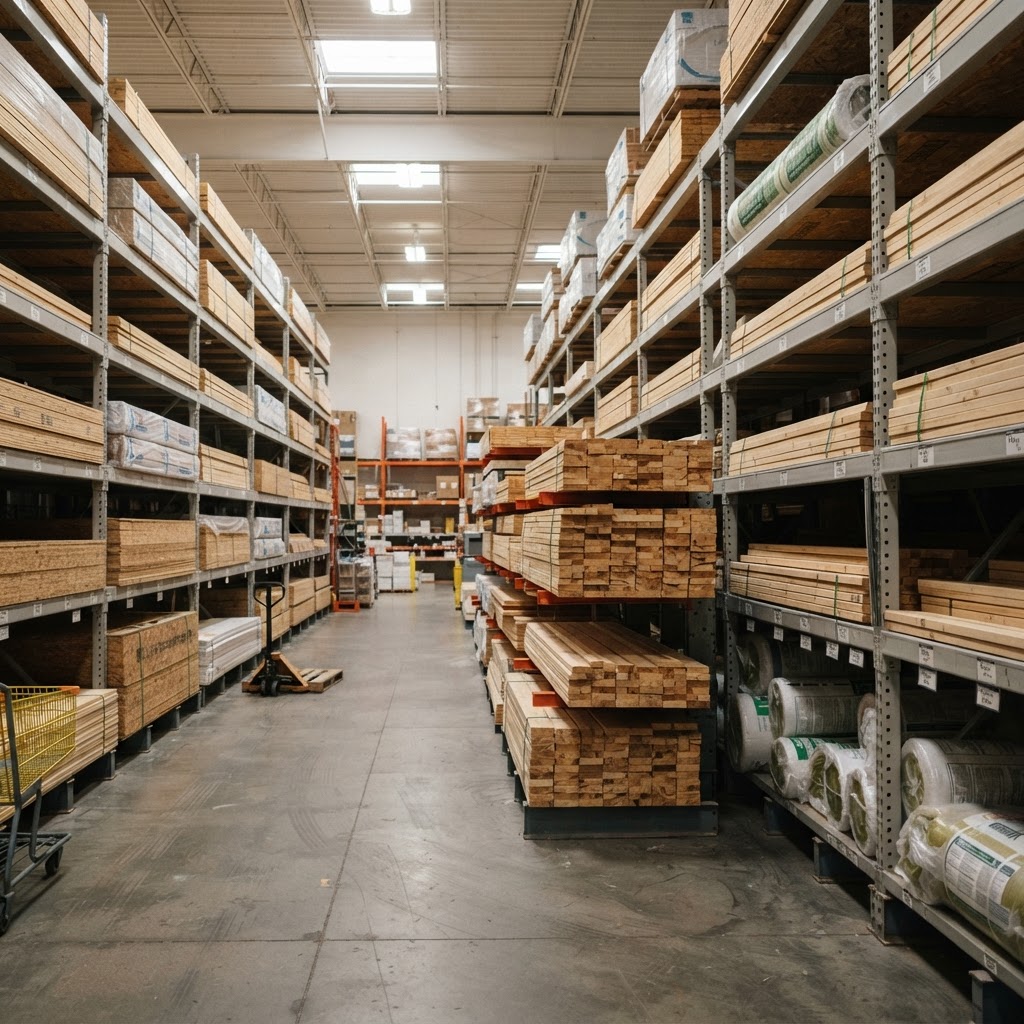
What Is House Wrap
Definition: House wrap (also called WRB — Weather-Resistant Barrier) is a synthetic material wrapped around the exterior sheathing of a house before siding is installed. It blocks liquid water from entering the wall while allowing water vapor to escape (breathable).
Why it matters: Without house wrap, rain driven by wind can penetrate siding and reach the wall sheathing and framing. Wet framing leads to mold, rot, and structural damage. House wrap also reduces air infiltration (drafts), improving energy efficiency by 10-20% in some homes.
How it works: The material has microscopic pores: small enough to block liquid water droplets, large enough to allow water vapor molecules to pass through. This allows the wall assembly to "breathe" — any moisture that gets inside the wall can dry to the exterior.
Not the same as a vapor barrier: House wrap is vapor-permeable (lets vapor through). A vapor barrier is vapor-impermeable (blocks vapor). They serve different purposes and are installed in different locations. Using the wrong one in the wrong location can trap moisture and cause damage.
Types of House Wrap
Woven synthetic (Tyvek, Typar): The most common and recognized type. Tyvek HomeWrap: the industry standard. High-density polyethylene fibers. Excellent water resistance and vapor permeability. UV resistant for up to 120 days (covers the time before siding is installed). Typar: similar product, slightly different fiber structure. Both cost: $0.10-$0.25 per square foot ($50-$75 per roll covering 150-200 sq ft).
Non-woven synthetic: Various brands including Barricade, VaproShield. Similar performance to woven. Some offer enhanced drainage features (crinkled or textured surface).
Fluid-applied WRB: A liquid coating rolled or sprayed directly onto the sheathing. Creates a seamless barrier with no seams to leak. Excellent for complex wall geometries. Cost: $0.50-$2.00 per square foot. More expensive but superior performance. Brands: Prosoco R-Guard, Henry Blueskin VP160 (self-adhered).
Integrated sheathing: ZIP System: structural sheathing with a built-in WRB. OSB panel with a factory-applied weather-resistant face. Seams are sealed with proprietary tape. Cost: $0.80-$1.20 per square foot (for the sheathing). Eliminates the separate house wrap step. Popular in new construction.
Vapor Barriers
What is a vapor barrier: A material that prevents water vapor from moving through a wall, floor, or ceiling assembly. Measured by permeance (perms): Class I vapor retarder (barrier): 0.1 perms or less. Polyethylene sheeting, foil-faced insulation. Class II vapor retarder: 0.1 to 1.0 perms. Kraft-faced insulation, some smart membranes. Class III vapor retarder: 1.0 to 10 perms. Some latex paints, certain building papers.
Where vapor barriers are needed: Crawlspace floor (over bare dirt): 6-mil polyethylene sheeting. Required by code in most areas. Prevents ground moisture from entering the crawlspace and home. Basement walls (interior): if insulating with fiberglass batts, a vapor barrier (poly sheeting or faced insulation) on the warm side prevents condensation inside the wall. Cold climates (Zone 5+): vapor barrier (or Class II retarder like kraft-faced insulation) on the interior (warm side) of exterior walls. Prevents warm moist interior air from condensing inside the cold wall cavity.
Where vapor barriers are NOT needed (and can cause harm): Hot humid climates (Southeast, Gulf Coast): installing a vapor barrier on the interior can trap moisture inside the wall. The vapor drive is from outside to inside in summer. Mixed climates: smart vapor retarders (like CertainTeed MemBrain) that adjust permeability based on humidity are the best solution. Exterior side of walls in cold climates: a vapor barrier here traps moisture inside the wall.
Cost
House wrap: Tyvek/Typar roll: $50-$75 per roll (9 ft x 150 ft = 1,350 sq ft). Per square foot: $0.04-$0.06 (material only). House wrap tape: $10-$20 per roll. Cap nails/staples: $5-$15 per box. For an average home (2,000 sq ft exterior wall area): Materials: $100-$300. Professional installation: $500-$1,500 (usually part of siding contract).
Vapor barrier (poly sheeting): 6-mil polyethylene: $30-$60 per roll (10 ft x 100 ft = 1,000 sq ft). Crawlspace vapor barrier (20-mil heavy duty): $0.10-$0.25 per square foot. Crawlspace encapsulation (full system with drainage and dehumidifier): $1,500-$15,000.
Fluid-applied WRB: Material: $0.50-$2.00 per square foot. Professional application: $1.00-$3.00 per square foot.
ZIP System sheathing: Panels: $0.80-$1.20 per square foot. ZIP tape: $15-$25 per roll. Cost premium over standard OSB + Tyvek: approximately $0.30-$0.50 per square foot.
Installation
House wrap installation: 1. Start at the bottom of the wall (overlapping courses shed water like shingles). 2. Roll out horizontally, keeping the printed side facing out. 3. Secure with cap nails or cap staples every 12-18 inches. 4. Overlap horizontal seams by at least 6 inches (upper course over lower). 5. Overlap vertical seams by at least 6 inches. 6. Tape all seams and overlaps with house wrap tape. 7. Cut an inverted "Y" at windows and doors. Fold flaps into the opening. 8. Integrate with window and door flashing (flashing overlaps house wrap at top, tucks under at bottom and sides — shingle-style water management).
Common mistakes: Seams not taped (water gets behind the wrap). Installed upside down or inside out (some wraps are directional). Not integrated properly with window/door flashing (the #1 cause of water intrusion in walls). Punctures or tears not sealed. Left exposed too long (UV degradation).
Crawlspace vapor barrier: 1. Clean the crawlspace floor (remove sharp debris). 2. Lay 6-20 mil poly sheeting over the entire floor. 3. Overlap seams by 12 inches and tape with poly tape. 4. Extend 6-12 inches up the walls and secure. 5. Seal around piers and columns with tape. For full encapsulation: seal the poly to the walls, insulate the walls, and install a dehumidifier.
Frequently Asked Questions
House wrap (WRB) is vapor-PERMEABLE: it blocks liquid water but lets water vapor pass through so walls can dry. It's installed on the exterior side of wall sheathing, under the siding. A vapor barrier is vapor-IMPERMEABLE: it blocks water vapor from moving through the assembly. It's installed on the warm side of insulation (interior in cold climates) or on crawlspace floors. Using the wrong one in the wrong location traps moisture and causes mold and rot. In cold climates, you want house wrap on the outside (lets vapor out) and a vapor retarder on the inside (prevents warm moist air from entering the wall cavity). How much does house wrap cost?
Tyvek or Typar house wrap: $0.04-$0.06 per square foot for materials ($50-$75 per roll covering 1,350 sq ft). For an average home with 2,000 sq ft of exterior wall area: materials cost $100-$300 including wrap, tape, and fasteners. Professional installation: $500-$1,500 (usually included in the siding installation contract). Premium alternatives: fluid-applied WRB costs $0.50-$2.00/sq ft, ZIP System sheathing (integrated WRB) costs $0.80-$1.20/sq ft. House wrap is inexpensive relative to its importance — it's one of the most critical layers of your home's building envelope. Do I need a vapor barrier in my crawlspace?
Yes. A vapor barrier on the crawlspace floor is required by building code in most areas. Bare dirt in a crawlspace releases significant moisture into the space, which rises into your home and causes: high humidity, mold growth, wood rot, musty odors, and increased energy costs. Install at minimum a 6-mil polyethylene sheet covering the entire floor, with seams overlapped 12 inches and taped. Extend 6-12 inches up the walls. For better performance, upgrade to 20-mil heavy-duty poly. Full crawlspace encapsulation ($1,500-$15,000) includes: heavy-duty vapor barrier sealed to the walls, wall insulation, sealed vents, and a dehumidifier — the most effective approach. Is Tyvek the best house wrap?
Tyvek HomeWrap is the industry standard and a reliable choice. It offers excellent water resistance, good vapor permeability, and 120-day UV resistance. However, several alternatives perform equally well: Typar (similar woven synthetic), ZIP System (integrated into the sheathing — no separate wrap needed, faster installation), and fluid-applied WRBs like Prosoco R-Guard (seamless, no tape seams to fail, best performance but most expensive). For most standard residential construction, Tyvek is the most cost-effective option at $0.04-$0.06/sq ft. For premium construction or complex wall geometries, fluid-applied WRB or ZIP System may be worth the extra cost.
Lumberama Editorial Team
Building Envelope & Moisture Management Specialists
Contributor to Lumberama’s reference library. Read our editorial standards and source methodology.
Continue researching siding
Where readers of this article usually go next.
Related Articles
Siding & Exterior
Window Treatment Guide: Blinds, Curtains & Shutters
Find the perfect window coverings with this comprehensive guide.
Lumberama Editorial Team Nov 8, 2026 10 min
Siding & Exterior
Exterior Painting Guide: Cost, Tips & Best Paint
Protect and beautify your home's exterior with this guide.
Lumberama Editorial Team Nov 7, 2026 9 min
Siding & Exterior
Siding Guide: Types, Cost, Pros & Cons
Choose the right siding material for your home with this comprehensive siding guide.
Lumberama Editorial Team Oct 31, 2026 10 min