Article
Flooring
Hardwood Floor Refinishing Guide: Cost, Process & Tips
Lumberama Editorial Team, Hardwood Floor Refinishing Specialists Nov 28, 2026 7 min read
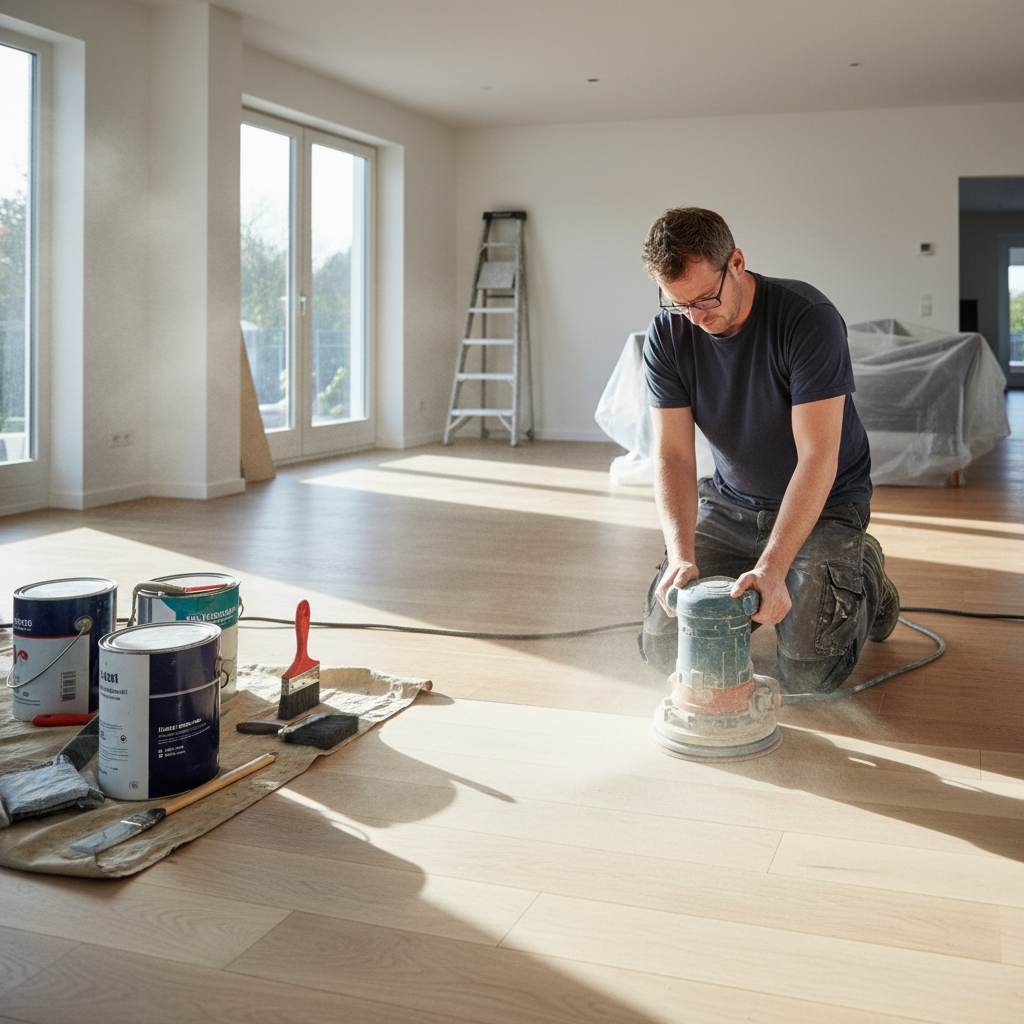
When to Refinish
Signs it's time: Scratches and wear marks visible. Finish is dull or worn through to bare wood. Gray or black spots (water damage). Boards are cupping or warping. You want to change the stain color.
Refinish vs replace: Refinish if: floors are structurally sound. Damage is surface-level. Boards are at least 3/4 inch thick (solid hardwood can be refinished 3-5 times). Replace if: boards are severely damaged, warped, or rotted. Engineered hardwood with a thin veneer (may only allow 1-2 refinishings). You want a completely different wood species or plank width.
Screen and recoat vs full refinish: Screen and recoat: light scuffing (screening) + new coat of finish. For floors with minor wear but intact finish. Cost: $1-$3/sq ft. Time: 1 day. Full refinish: sand down to bare wood, stain (optional), apply new finish. For floors with deep scratches, worn finish, or color change. Cost: $3-$8/sq ft. Time: 3-5 days.
Cost
Professional refinishing: Per sq ft: $3-$8 (full sand and refinish). Screen and recoat: $1-$3/sq ft. Average room (200 sq ft): $600-$1,600. Average home (1,000 sq ft): $3,000-$8,000.
Cost factors: Square footage. Condition (heavy repairs add cost). Stain (adds $1-$2/sq ft). Number of coats (2-3 coats typical). Dustless sanding (adds $0.50-$1/sq ft).
DIY cost: Drum sander rental: $50-$80/day. Edger rental: $30-$50/day. Sandpaper: $50-$100. Stain: $30-$50/gallon. Polyurethane: $40-$70/gallon. Total DIY (200 sq ft room): $200-$500. Savings: 50-70% vs professional.
Process
Steps: 1. Empty the room completely. 2. Remove baseboards and shoe molding. 3. Sand with drum sander (coarse grit, 36-40). 4. Sand with medium grit (60-80). 5. Sand with fine grit (100-120). 6. Edge sand along walls with edger. 7. Vacuum and tack cloth to remove all dust. 8. Apply stain if desired (let dry 24 hours). 9. Apply first coat of finish. 10. Light sand between coats (220 grit screen). 11. Apply second coat. 12. Optional: third coat for high-traffic areas. 13. Let cure (walk on in 24 hours, move furniture in 3-7 days, full cure in 30 days).
Finish types: Oil-based polyurethane: warm amber tone. Very durable. Strong odor. Dries 8-12 hours between coats. Water-based polyurethane: clear (no yellowing). Low odor. Dries 2-4 hours between coats. Slightly less durable than oil. Hardwax oil: natural matte look. Easy to spot-repair. Less protective. Popular in modern/European designs.
Frequently Asked Questions
Professional: $3-$8 per sq ft (full sand and refinish). Screen and recoat (light refresh): $1-$3/sq ft. Average room (200 sq ft): $600-$1,600. Average home (1,000 sq ft): $3,000-$8,000. DIY: $1-$3/sq ft ($200-$500 per room, including sander rental). National average: $4-$5 per sq ft. Adding stain: extra $1-$2/sq ft. Dustless sanding: extra $0.50-$1/sq ft. Best value: if your floors just need a refresh (light scratches, dull finish), a screen and recoat at $1-$3/sq ft saves significantly.
Yes, but it's a physical and detail-oriented project. Difficulty: intermediate to advanced. Time: 3-5 days per room (including dry time). Biggest challenges: drum sander technique (can gouge floors if not careful). Achieving even stain application. Dust control. Physical labor (sanding is exhausting). Tips for DIY success: practice with the sander on a closet floor first. Keep the sander moving (never stop on one spot). Sand with the grain. Multiple grits (36, 60, 100). Vacuum thoroughly between stain and finish. Use a quality applicator (lambswool or T-bar). When to hire a pro: large areas. Expensive or historic floors. If you want a perfect finish. Complex stain work.
Timeline: day 1: move furniture, remove baseboards, rough sanding. Day 2: finish sanding and edging. Day 3: stain (if desired), let dry 24 hours. Day 4: first coat of finish. Day 5: light sand and second coat. Total: 3-5 days (not counting furniture move-in). Drying/curing: walk on with socks: 24 hours. Replace furniture: 3-7 days. Place rugs: 2-4 weeks. Full cure: 30 days (avoid heavy wear). Oil-based poly: longer dry time between coats (8-12 hours). Water-based poly: faster (2-4 hours between coats).
Oil-based: appearance: warm amber/golden tone (darkens over time). Durability: very durable (slightly more than water-based). Dry time: 8-12 hours between coats. Full cure: 30 days. Odor: strong (ventilation required). Coats: 2-3. Cost: $40-$60/gallon. Water-based: appearance: clear, no yellowing. Shows the wood's true color. Durability: very good (close to oil-based). Dry time: 2-4 hours between coats. Full cure: 14 days. Odor: low. Coats: 3-4 (thinner per coat). Cost: $50-$80/gallon. Recommendation: oil-based for a warm, traditional look. Water-based for a natural, light look (and faster project timeline). Water-based is increasingly popular and performance has improved significantly.
Lumberama Editorial Team
Hardwood Floor Refinishing Specialists
Contributor to Lumberama’s reference library. Read our editorial standards and source methodology.
Continue researching flooring
Where readers of this article usually go next.
Related Articles

Flooring
Carpet Installation Guide: Types, Cost & What to Know
Choose the right carpet for every room.
Lumberama Editorial Team Nov 29, 2026 7 min

Flooring
Sunroom Guide: Types, Cost & Design Ideas
Add a bright and beautiful sunroom to your home.
Lumberama Editorial Team Nov 22, 2026 8 min

Flooring
Home Gym Guide: Setup, Equipment & Cost
Build your perfect home gym on any budget.
Lumberama Editorial Team Nov 21, 2026 8 min