Deck Stain Guide: Oil vs Water-Based, Solid vs Semi-Transparent & Application Tips
Why Stain Your Deck?
An unfinished wood deck exposed to sun, rain, and foot traffic deteriorates rapidly. UV radiation grays and degrades the surface, moisture causes swelling and cracking, and freeze-thaw cycles accelerate splitting. A quality deck stain protects against UV damage, repels water, prevents mildew, and extends the deck's life by years. The challenge is choosing the right product from hundreds of options and applying it correctly for lasting results.
Stain Opacity Levels
Transparent (clear) stains provide minimal UV protection and no color, showing the full natural grain and color of the wood. They last 1-2 years before reapplication. Best for: new premium decking where you want to show off the wood grain. Worst for: old, weathered, or damaged decks.
Semi-transparent stains add color while still showing the wood grain. They provide moderate UV protection and water resistance, lasting 2-3 years on horizontal surfaces. This is the most popular opacity for decks because it balances wood grain visibility with meaningful protection. Best for: decks in good condition where you want both color and visible grain.
Semi-solid stains hide most of the grain while showing some wood texture. They provide good UV and water protection, lasting 3-4 years. A good middle ground between semi-transparent and solid. Solid stains (sometimes called solid color stains) are essentially exterior paint with a flat or low-luster sheen. They completely hide the grain, provide maximum UV and water protection, and last 4-5 years on horizontal surfaces. Best for: old, weathered, damaged, or previously painted decks where you want to cover imperfections. They can peel and flake when they fail, unlike penetrating stains that simply fade.
Oil-Based vs Water-Based
Oil-based stains penetrate deeper into the wood, provide richer color, and tend to be more durable on horizontal surfaces subject to foot traffic and water pooling. They dry slowly (24-48 hours), which allows deeper penetration but means more time when the deck can't be used. Cleanup requires mineral spirits. Traditional favorites like Penofin, TWP (Total Wood Preservative), and Armstrong Clark are oil-based. They have higher VOC content, which restricts their availability in some states (California, parts of the Northeast).
Water-based stains (also called latex or acrylic stains) dry faster (2-4 hours), have lower VOC content, clean up with water, and resist mildew better than oil-based. Modern water-based formulas have closed the performance gap significantly. Top water-based brands: Benjamin Moore Arborcoat, Sherwin-Williams SuperDeck, Behr Premium, and Defy Extreme. They're available everywhere and meet all VOC regulations.
Surface Preparation
Preparation is 80% of the job. A stain applied to a poorly prepared surface will fail regardless of quality. For new wood: let pressure-treated lumber weather 2-4 weeks (or until water is no longer beading on the surface), then clean with a deck cleaner/brightener. For existing stained decks: clean thoroughly with a deck cleaner to remove dirt, mildew, and grayed wood fibers. If the old stain is peeling, strip it completely with a chemical stripper or pressure washer. Brighten with an oxalic acid-based brightener to restore the wood's natural pH and open the pores for stain absorption.
Pressure washing: use 1,200-1,500 PSI maximum with a fan tip (never a zero-degree tip) held 6-12 inches from the surface. Too much pressure damages the wood fibers, creating a fuzzy surface that doesn't accept stain evenly. Let the deck dry 24-48 hours after washing before staining.
Application
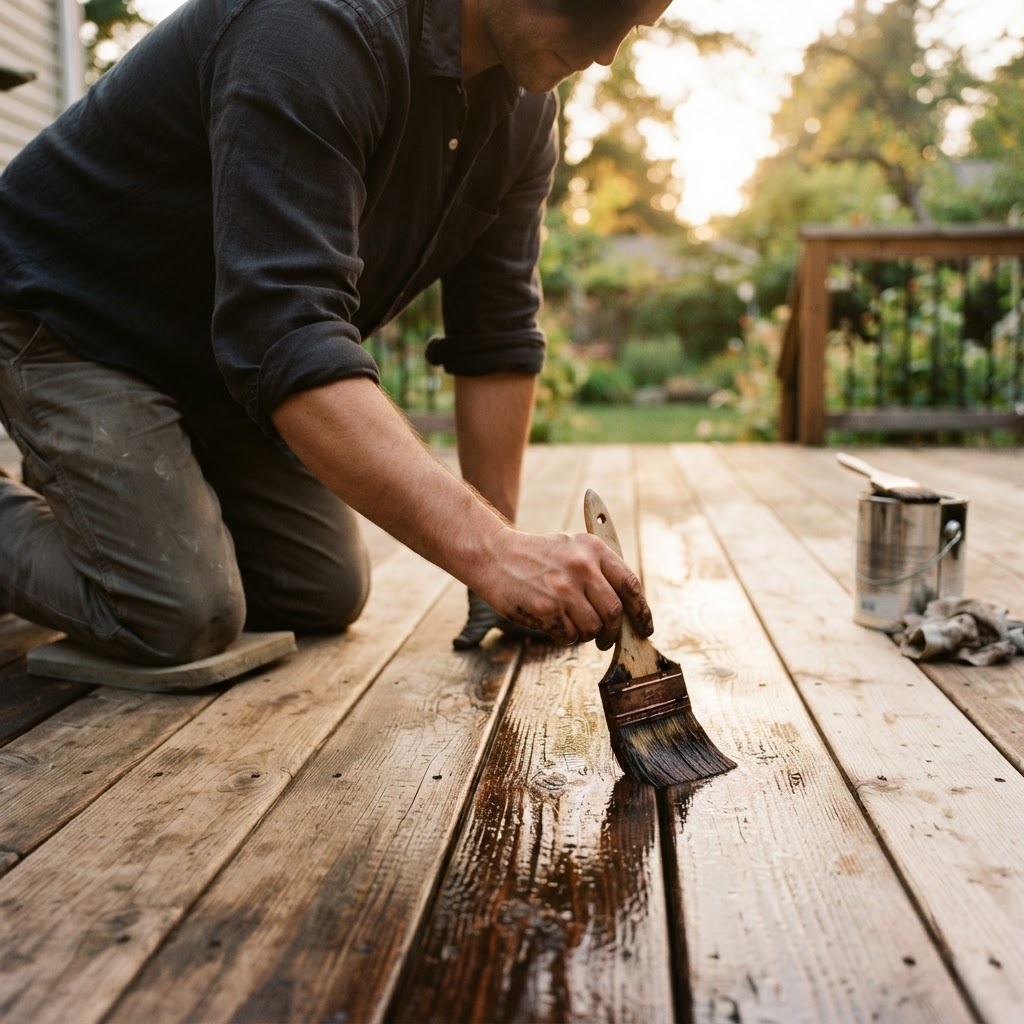
Apply when the temperature is between 50-90°F, humidity is below 80%, and no rain is forecast for 24-48 hours. Use a stain pad applicator, pump sprayer with back-brushing, or quality brush. Apply thin, even coats — two thin coats are better than one heavy coat. Work the stain into the wood grain. Maintain a wet edge to avoid lap marks. Stain boards along their length, never across. For the smoothest application on railings and balusters, use a stain-soaked rag or paint mitt.
Frequently Asked Questions
Lumberama Editorial Team
Exterior Finishing Experts
Contributor to Lumberama’s reference library. Read our editorial standards and source methodology.
Continue researching decking
Where readers of this article usually go next.
Related Articles

Tree Removal Guide: Cost, When to Remove & DIY vs Pro
Make safe and informed tree removal decisions.
Countertop Guide: Granite vs Quartz vs Marble and More
Choose the right kitchen or bathroom countertop with this comprehensive comparison.

Pool Guide: Above Ground vs In-Ground Cost and Types
Learn about costs, types, and which pool is right for your home.