8x8 Posts: Actual Size, Treatment Tags and What to Put on the Order
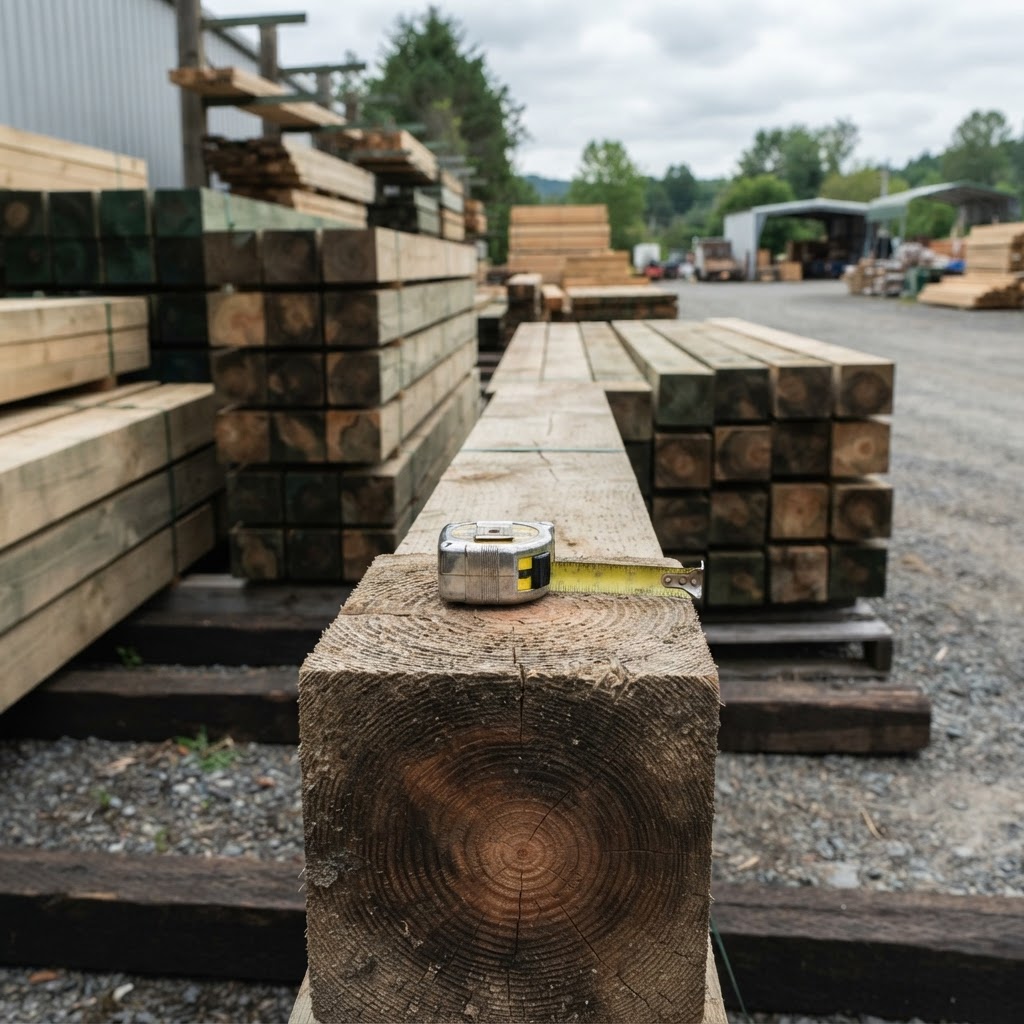
“8x8 post” describes a nominal timber size, not a complete promise about delivered dimensions, structural capacity or resistance to the intended exposure. A rough timber, a surfaced timber and a specialty milled post may all appear under similar catalog wording.
Before ordering, use the 8x8 lumber size reference as a starting point, then ask the supplier to confirm the actual product dimensions and condition in writing.
Nominal size and actual size are different questions
Nominal size is the commercial designation. Actual size describes the measurable section. Surfacing removes material, and size standards distinguish product categories and conditions. Do not automatically apply a dimension-lumber deduction to every large timber.
Request the actual width and thickness, not just “standard 8x8.” Confirm whether the stock is rough, surfaced or custom milled, and whether quoted measurements describe the condition at shipment. Measurements can change as timber loses moisture.
This is particularly important for close-fitting post bases, caps, wraps and joinery. A connector intended for one actual section may not fit another product with the same nominal label.
Measure where fit matters
For delivered stock, check several positions on the section and several posts from the order. Do not infer the whole batch from a single end measurement. Where a connector has a specified fit, compare the actual post and the manufacturer’s dimensions and fastening requirements.
Check supplied length too. A nominal length, overlength allowance and exact cut length are different promises. If a visible post must finish at a precise height after cutting and installation, include that requirement in the specification.
Record unacceptable variation before altering the material. Cutting first can make a return or correction harder to resolve.
Larger dimensions do not establish a safe load
An 8x8 post is not a universal substitute for a specified structural member. Species, grade, unsupported height, loads, bracing, connection details and the adopted code affect the design.
A decorative timber can look substantial without having the documented structural grade your project requires. Ask for the applicable grade or design documentation and have the responsible designer approve substitutions. This article supplies no load capacity, footing size or span approval.
Where a post supports a deck or roof, its connection and load path matter alongside its section. Increasing post size does not repair an inadequate footing or connection.
Read the treatment tag for the actual exposure
For AWPA-standardized preservative-treated wood, the use category, preservative, retention and quality information are important purchasing details. Ground-contact applications generally require UC4A or higher; more severe or critical applications may require a different specification.
A treatment label does not establish structural grade. Likewise, a structural grade does not prove ground-contact suitability. “Pressure treated” alone does not describe every exposure requirement.
Ask about field cuts and holes, and follow the applicable treatment and product instructions. For naturally durable wood, do not assume that sapwood shares the heartwood’s resistance or that the species replaces a required treatment specification.
Understand the quantity and billing basis
A nominal 8-inch by 8-inch timber that is 10 feet long contains 8 × 8 × 10 ÷ 12 = 53.33 nominal board feet. If a hypothetical delivered section measures 7.5 by 7.5 inches at the same length, its geometric volume is 46.875 board feet.
That second calculation describes physical volume. It does not automatically mean the supplier should bill on actual dimensions. The purchase may use nominal tally, a piece price or another stated convention. Agree on the billing basis before interpreting the difference as an overcharge.
Neither calculation establishes the weight of wet treated timber. Use the supplier’s handling information and suitable unloading equipment rather than planning a lift from an assumed dry density.
Put these details on the purchase order
- Quantity and required lengths.
- Species and applicable structural grade.
- Nominal designation and confirmed actual section.
- Rough, surfaced or custom-machined condition.
- Exposure and treatment requirements.
- Appearance expectations for visible faces.
- Hardware compatibility and approved substitutions.
- Delivery access, unloading and inspection arrangements.
Use the delivery inspection checklist to record what arrived. Resolve a mismatch before installing a post into a difficult-to-replace assembly.
Sources and scope
The NIST American Softwood Lumber Standard, PS 20 provides the size-standard framework. The AWPA homeowner reference explains treatment identification and use categories. Product-specific dimensions and engineered requirements govern the actual order.
The featured image is AI-generated and does not document a supplier’s post dimensions, grade or treatment.
Frequently Asked Questions
Lumberama Editorial Team
Source-based material and purchasing guidance
Contributor to Lumberama’s reference library. Read our editorial standards and source methodology.
Sizing and measurement resources
Where readers of this article usually go next.
Related Articles

How Much Is a Sheet of Plywood? Cost Factors by Type and Grade
A sheet of plywood can be a commodity sheathing panel or a premium cabinet panel. Here is what drives the price and how to compare panel quotes.

How Much Does a 2x4 Cost? What Actually Sets the Price
There is no single 2x4 price. Species, grade, length, treatment, quantity and delivery all move the number. Here is how to compare stud pricing like a buyer, not a browser.

How Much Lumber Does It Take to Build a House?
There is no fixed board-foot number for a house. Footprint, stories, roof design, framing method and engineered components all change the package. Here is how builders estimate it.