Timber Connector Plates Guide: Tie Plates, Gussets, and Mending Plates (2026)
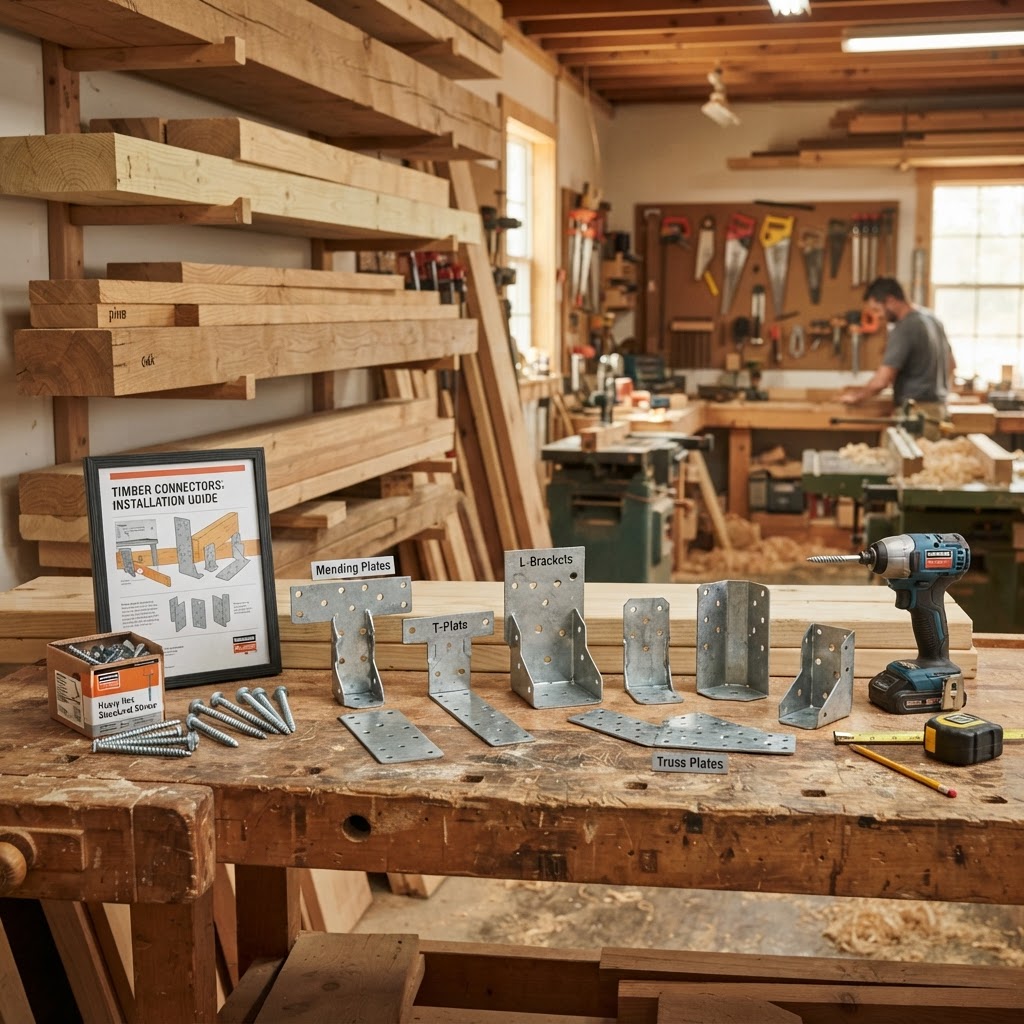
Timber connector plates reinforce wood joints and splice connections where dimensional lumber meets end-to-end or at angles. From simple mending plates for furniture repairs to heavy-duty gusset plates for roof trusses, these flat steel connectors add shear strength and prevent joint failure. This guide covers plate types, sizing, nail patterns, and proper installation for framing and general woodworking.
Key Takeaways
- Timber connector plates reinforce wood joints and splice connections where dimensional lumber meets end-to-end or at angles.
- From simple mending plates for furniture repairs to heavy-duty gusset plates for roof trusses, these flat steel connectors add shear strength and prevent joint failure.
- This guide covers plate types, sizing, nail patterns, and proper installation for framing and general woodworking.
- Connection type (butt splice, lap joint, T-connection, or angle brace), load requirements (shear and tension values), plate material and coating (galvanized for outdoor use), plate thickness (14-gauge to 20-gauge), nail or screw pattern and count, lumber dimensions, and whether the connection is exposed or concealed.
- Simpson Strong-Tie TP series tie plates are the standard for residential framing connections, available in dozens of sizes.
What to Consider
Connection type (butt splice, lap joint, T-connection, or angle brace), load requirements (shear and tension values), plate material and coating (galvanized for outdoor use), plate thickness (14-gauge to 20-gauge), nail or screw pattern and count, lumber dimensions, and whether the connection is exposed or concealed.
Product Comparison
Simpson Strong-Tie TP series tie plates are the standard for residential framing connections, available in dozens of sizes. Truss nail plates (gang nail plates) provide automated assembly for manufactured roof trusses. Heavy-duty gusset plates from MiTek handle high-load angle connections in exposed timber frames. Decorative connector plates from OZCO combine structural function with visible ironwork aesthetics.
Size Selection Guide
Mending plates: 3x6 inch for 2x4 splices, 3x8 inch for 2x6, and 5x8 inch for 2x8 and larger. Tie plates: T-shaped plates sized by the lumber width they connect. Gusset plates: sized by the angle and lumber dimensions of the connection. Always use plates on both sides of a butt splice for full strength. Check the manufacturer's load tables to verify the plate size meets your structural requirements.
Installation Tips
Center plates on the joint with equal plate coverage on each member. Fill every nail hole using the specified nail size (typically 10d x 1-1/2 inch connector nails). For critical structural connections, have the plate selection verified by an engineer or inspector. Clamp the joint tight before nailing to prevent gaps. On exterior connections, use hot-dipped galvanized plates and nails rated for the lumber treatment type.
Common Mistakes to Avoid
Using plates that are too small for the load, especially on butt splices that carry tension. Not filling all nail holes which drastically reduces the rated capacity. Using standard nails instead of connector-rated nails. Installing plates on only one side of a splice (both sides are needed for full capacity). Placing plates too close to the edge of the lumber causing nail splitting.
Budget Guide
Small mending plates (3x6 inch) cost $1-3 each. Medium tie plates run $2-5 each. Large gusset plates cost $5-15 each. Decorative connector plates range $8-25 each. Connector nails add $8-12 per pound. A typical deck or pergola project uses 8-15 plates at $25-75 total. Specialized truss plates for roof systems are priced per truss kit.
Frequently Asked Questions
Related Guides
Concrete Anchors for Wood Posts
Install wood posts on concrete with the right anchors. Compare wedge, sleeve, epoxy, and expansion a
Read guideJoist Hanger Guide
Complete joist hanger guide covering sizes, load ratings, and installation for deck and floor framin
Read guidePergola Hardware Kit Guide
Build a beautiful pergola with the right hardware kits. Compare post-to-beam brackets, rafter hanger
Read guidePost Bracket and Base Guide
Choose the right post brackets and bases for deck, fence, and pergola posts. Compare standoff, surfa
Read guide