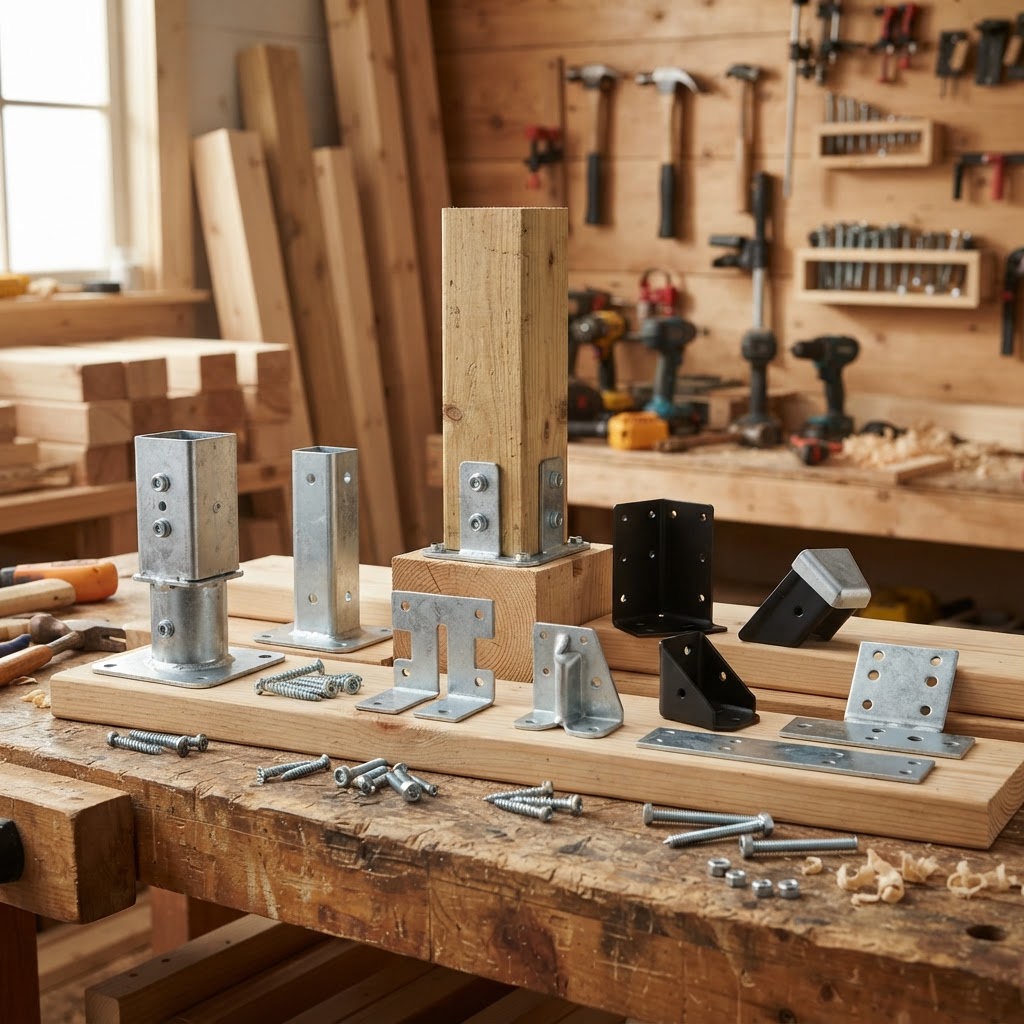
Post Bracket and Base Selection Guide for Deck & Fence Construction (2026)
Post brackets and bases anchor vertical posts to concrete footings, pads, or existing structures while protecting wood from ground moisture and rot. The right post base keeps your structure plumb, strong, and code-compliant for decades. This guide covers standoff bases, adjustable post anchors, surface-mount brackets, and embedded post bases for every application.
Key Takeaways
- Post brackets and bases anchor vertical posts to concrete footings, pads, or existing structures while protecting wood from ground moisture and rot.
- The right post base keeps your structure plumb, strong, and code-compliant for decades.
- This guide covers standoff bases, adjustable post anchors, surface-mount brackets, and embedded post bases for every application.
- Post size (4x4, 6x6, or custom), mounting surface type (concrete footing, slab, wood beam, or embedded), lateral and uplift load requirements, height adjustability needs, exposure to moisture and ground contact, material and coating (galvanized vs stainless), and local building code requirements for post-to-footing connections.
- Simpson Strong-Tie ABU series standoff bases lift the post 1 inch above concrete, preventing moisture wicking and rot.
What to Consider
Post size (4x4, 6x6, or custom), mounting surface type (concrete footing, slab, wood beam, or embedded), lateral and uplift load requirements, height adjustability needs, exposure to moisture and ground contact, material and coating (galvanized vs stainless), and local building code requirements for post-to-footing connections.
Product Comparison
Simpson Strong-Tie ABU series standoff bases lift the post 1 inch above concrete, preventing moisture wicking and rot. The PBS series adjustable post base allows 1 inch of height adjustment after concrete cures. Titan Post Anchors use a helical screw driven into the ground, eliminating concrete entirely. Simpson EPB series offers embedded bases that set into wet concrete for maximum rigidity.
Size Selection Guide
4x4 posts (actual 3.5 x 3.5 inches) use ABU44 or ABA44 bases. 6x6 posts (actual 5.5 x 5.5 inches) use ABU66 or ABA66 bases. For deck guardrail posts bolted to the rim joist, use DTT2Z or HD series tension ties instead of base plates. Check that your footing diameter exceeds the base plate footprint by at least 2 inches on each side.
Installation Tips
Set anchor bolts in wet concrete using a template to ensure exact post spacing. Allow concrete to cure 24-48 hours before loading. Use a plumb bob or laser level when positioning the post in the bracket. Tighten all nuts and bolts to specification. Apply sealant between the base plate and concrete to prevent water pooling.
Common Mistakes to Avoid
Setting anchor bolts crooked in the concrete making the base plate impossible to level. Choosing a base that buries the post end in contact with concrete causing hidden rot. Using undersized bases (4x4 base on a 6x6 post). Not using enough or the correct fasteners through the base into the post. Forgetting to check wind uplift requirements in your area.
Budget Guide
Standard galvanized post bases cost $8-15 each for 4x4 sizes and $12-25 for 6x6. Adjustable models add $5-10 per unit. Stainless steel versions run $20-40 each. Helical ground-screw systems like Titan cost $30-60 per anchor but eliminate concrete footing costs. Budget $1-3 per post for mounting hardware (bolts, washers, nuts).
Frequently Asked Questions
Related Guides
Concrete Anchors for Wood Posts
Install wood posts on concrete with the right anchors. Compare wedge, sleeve, epoxy, and expansion a
Read guideJoist Hanger Guide
Complete joist hanger guide covering sizes, load ratings, and installation for deck and floor framin
Read guidePergola Hardware Kit Guide
Build a beautiful pergola with the right hardware kits. Compare post-to-beam brackets, rafter hanger
Read guideTimber Connector Plates Guide
Guide to timber connector plates including tie plates, gusset plates, mending plates, and nail plate
Read guide