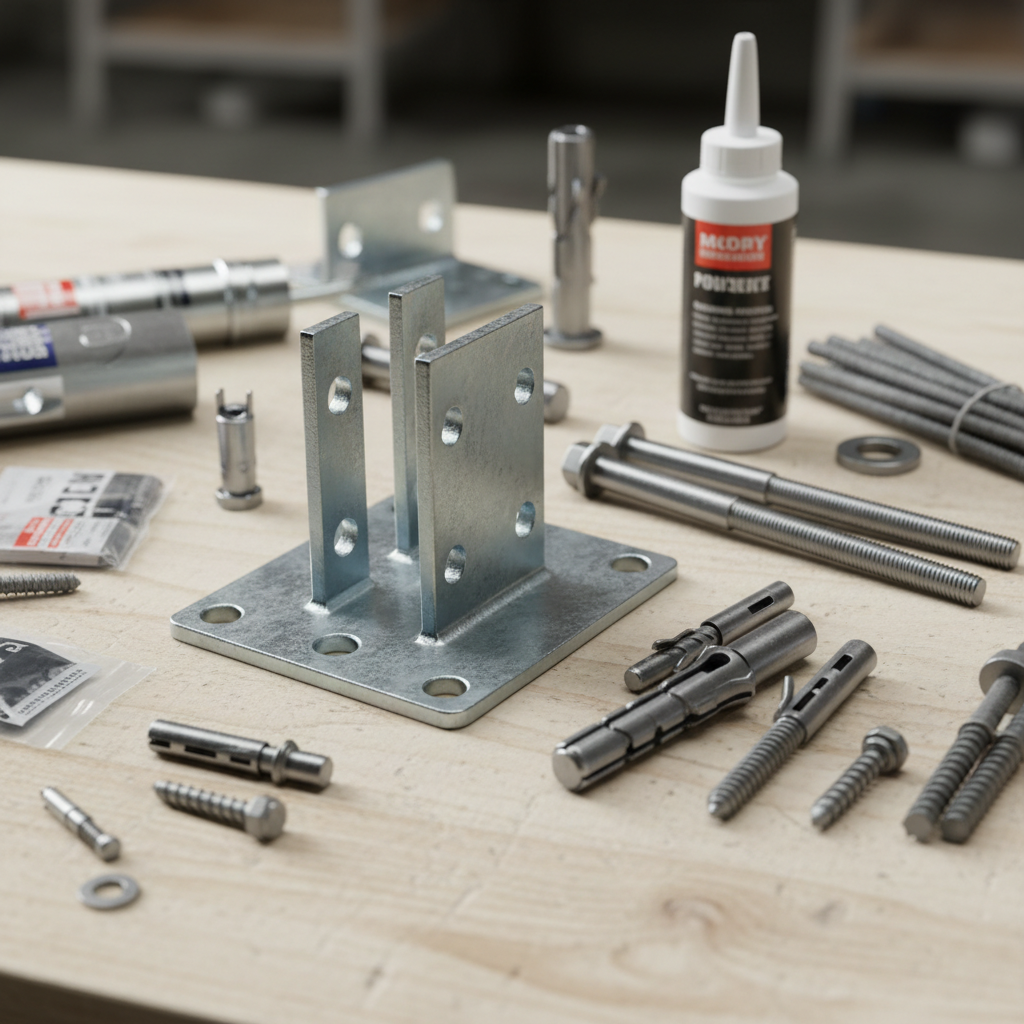
Concrete Anchors for Wood Posts: Types, Sizing, and Installation Guide (2026)
Anchoring wood posts to existing concrete slabs, footings, or walls requires mechanical or chemical anchors that provide reliable pullout and shear resistance. The right anchor type depends on your concrete condition, load requirements, and whether you need a removable or permanent connection. This guide covers wedge anchors, sleeve anchors, epoxy systems, and expansion bolts for post-mounting applications.
Key Takeaways
- Anchoring wood posts to existing concrete slabs, footings, or walls requires mechanical or chemical anchors that provide reliable pullout and shear resistance.
- The right anchor type depends on your concrete condition, load requirements, and whether you need a removable or permanent connection.
- This guide covers wedge anchors, sleeve anchors, epoxy systems, and expansion bolts for post-mounting applications.
- Concrete type and age (poured vs block, new vs weathered), concrete thickness and condition, required load capacity (uplift and lateral), anchor type (wedge, sleeve, drop-in, or epoxy), anchor diameter and embedment depth, post bracket hole pattern, spacing from concrete edges (minimum edge distance), and whether the connection needs to be removable.
- Red Head Trubolt wedge anchors provide the highest holding values in solid concrete and are the most common choice for post bases.
What to Consider
Concrete type and age (poured vs block, new vs weathered), concrete thickness and condition, required load capacity (uplift and lateral), anchor type (wedge, sleeve, drop-in, or epoxy), anchor diameter and embedment depth, post bracket hole pattern, spacing from concrete edges (minimum edge distance), and whether the connection needs to be removable.
Product Comparison
Red Head Trubolt wedge anchors provide the highest holding values in solid concrete and are the most common choice for post bases. Tapcon concrete screws offer easy installation with a standard drill and are ideal for lighter loads. Simpson Strong-Tie SET-XP epoxy anchors provide the strongest hold in cracked or questionable concrete. Hilti Kwik Bolt TZ expansion anchors are premium fasteners with consistent performance in both cracked and uncracked concrete.
Size Selection Guide
Use 1/2 inch diameter anchors for standard 4x4 post bases (matches the bolt holes in most post brackets). 5/8 inch anchors for 6x6 post bases or high-load applications. Minimum embedment depth is typically 2.5 to 3.5 inches depending on anchor type. Concrete must be at least 5-6 inches thick for standard post base anchors. Maintain minimum edge distance of 5 anchor diameters from any concrete edge.
Installation Tips
Drill the hole perpendicular to the concrete surface using a hammer drill with a carbide-tipped masonry bit. Drill 1/2 inch deeper than the required embedment. Clean the hole thoroughly with a blow-out bulb and wire brush — dust in the hole reduces holding capacity. For wedge anchors, insert and tap to depth, then tighten the nut to expand the wedge. For epoxy, inject from the bottom of the hole up to avoid air pockets.
Common Mistakes to Avoid
Drilling holes in concrete that is too thin or too close to edges causing blowout. Not cleaning dust from drilled holes reducing anchor capacity by 30% or more. Using a regular drill instead of a hammer drill resulting in wandering holes. Over-torquing expansion anchors which cracks the surrounding concrete. Setting anchors in wet concrete intended for wedge anchors (use wet-set anchors or epoxy for this).
Budget Guide
Tapcon screws cost $0.50-1.00 each for lighter-duty applications. Wedge anchors run $1.50-3.00 each for 1/2 inch diameter. Sleeve anchors cost $1.00-2.50 each. Epoxy anchor kits (cartridge plus screens) cost $20-40 and set 10-20 anchors. A hammer drill with masonry bits can be rented for $40-60 per day if you don't own one. Total anchoring cost for 6-8 deck posts runs $30-80.