White Pine Wood Guide 2026
Pinus strobus
Eastern White Pine is one of the most versatile and historically significant American softwoods. Its soft, easily worked wood has a warm cream color and fine, even texture that makes it the preferred choice for interior trim, molding, paneling, and cabinet interiors. White Pine was the timber that built colonial America, and it remains a staple of residential construction and millwork across the Northeast.
Wood Appearance
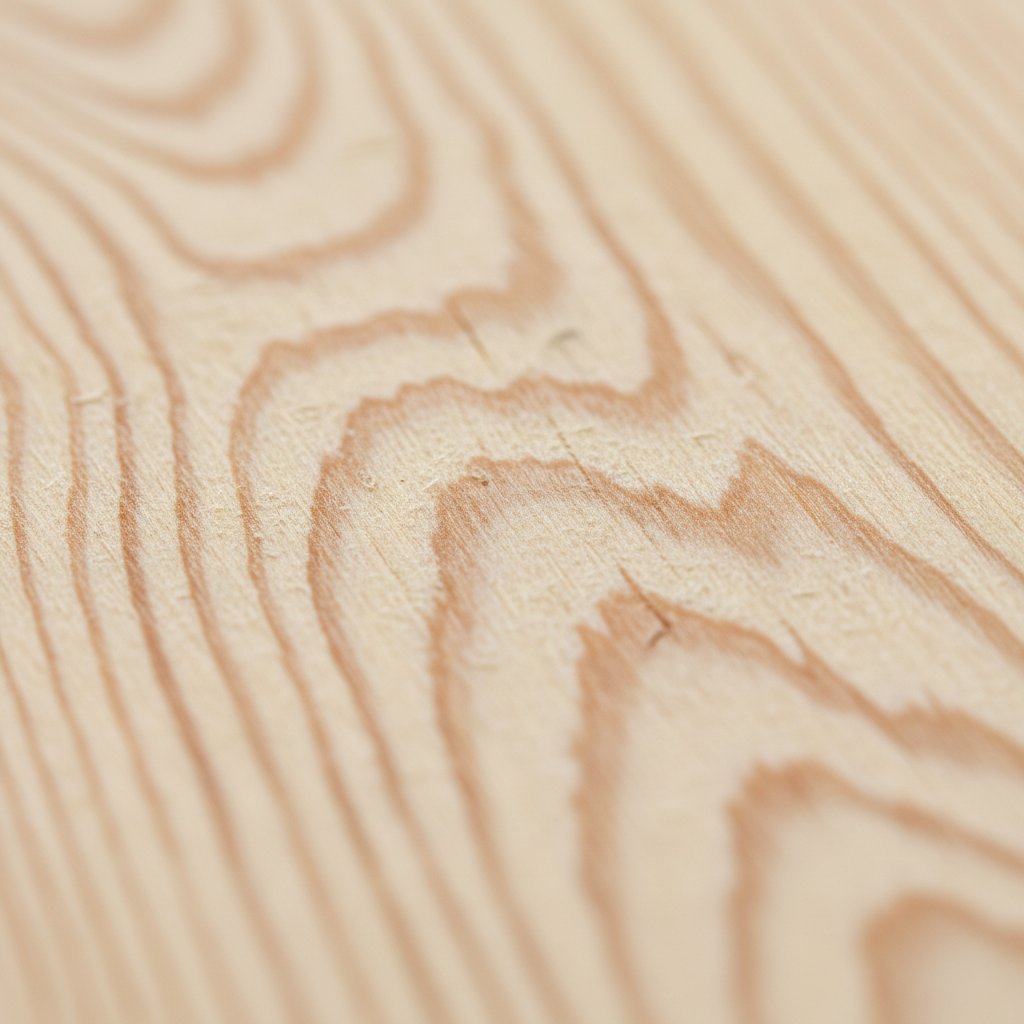
Natural Grain
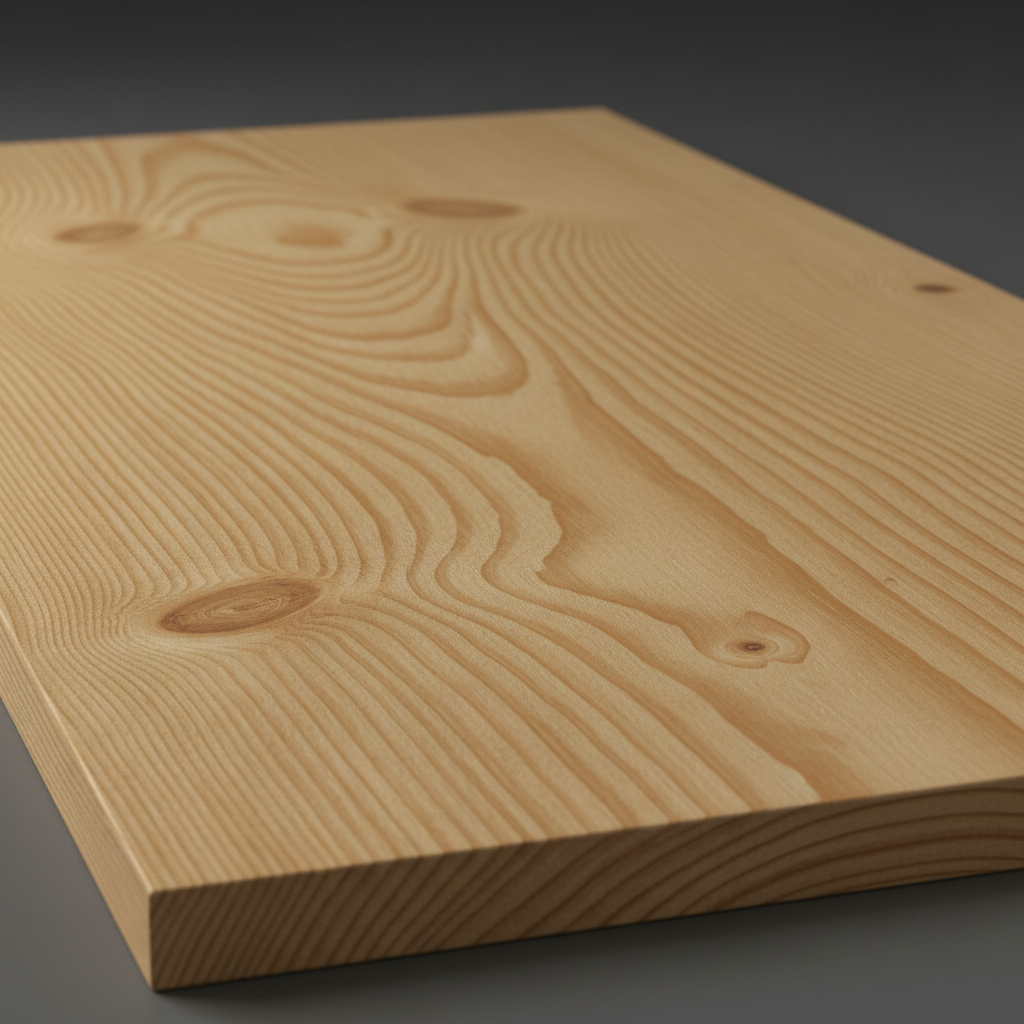
Finished Surface
Key Takeaways
- Density: 25 lbs/ft³
- Classification: Softwood
- Origin: United States, Canada
- Price: ~$3.5 per board foot
- Common uses include Interior trim, molding, paneling
Quick Facts
Representative reference values — natural wood varies by growing region, moisture content and individual board.
Durability, Stability & Workability
Texture: Texture is uniform and fine.
Workability: It is exceptionally easy to work with hand and power tools.
Fastening: Nails and screws well; pre-drilling generally not required.
Finishing: It requires a sanding sealer or primer to prevent uneven absorption of stains.
Color change: It turns a deeper amber color as it ages.
Insect resistance: It has very poor natural resistance to insects.
Ratings and published values are representative reference figures. Natural wood varies with growing region, moisture content and individual boards — treat them as guidance, not guarantees.
Common Sizes & Availability
Typical market availability for White Pine. Lumberama is a sourcing marketplace — actual stock, widths and lengths vary by supplier. Request a quote to confirm what's available for your project.
| Thickness | Rough | Typical surfaced | Typical widths | Common lengths | |
|---|---|---|---|---|---|
| 4/4 | 1" | 13/16" (3/4" common) | Sold in dimensional widths of 4, 6, 8, 10, and 12 inches. | Available in standard construction lengths from 8 to 16 feet. | Request this size |
| 5/4 | 1-1/4" | 1-1/16" | Sold in dimensional widths of 4, 6, 8, 10, and 12 inches. | Available in standard construction lengths from 8 to 16 feet. | Request this size |
| 6/4 | 1-1/2" | 1-5/16" | Sold in dimensional widths of 4, 6, 8, 10, and 12 inches. | Available in standard construction lengths from 8 to 16 feet. | Request this size |
| 8/4 | 2" | 1-3/4" | Sold in dimensional widths of 4, 6, 8, 10, and 12 inches. | Available in standard construction lengths from 8 to 16 feet. | Request this size |
- 4/4rough 1"
- Surfaced
- 13/16" (3/4" common)
- Widths
- Sold in dimensional widths of 4, 6, 8, 10, and 12 inches.
- Lengths
- Available in standard construction lengths from 8 to 16 feet.
- 5/4rough 1-1/4"
- Surfaced
- 1-1/16"
- Widths
- Sold in dimensional widths of 4, 6, 8, 10, and 12 inches.
- Lengths
- Available in standard construction lengths from 8 to 16 feet.
- 6/4rough 1-1/2"
- Surfaced
- 1-5/16"
- Widths
- Sold in dimensional widths of 4, 6, 8, 10, and 12 inches.
- Lengths
- Available in standard construction lengths from 8 to 16 feet.
- 8/4rough 2"
- Surfaced
- 1-3/4"
- Widths
- Sold in dimensional widths of 4, 6, 8, 10, and 12 inches.
- Lengths
- Available in standard construction lengths from 8 to 16 feet.
Decking & exterior profiles
Often milled into common deck board dimensions but requires pressure treatment for longevity.
Availability notes: Widely available at all lumber yards and home centers.
How lumber sizes are described
- Rough (4/4, 8/4…)
- Hardwood thickness in quarters of an inch as sawn, before surfacing. 4/4 = 1" rough.
- Surfaced (S2S/S4S)
- Thickness after planing. 4/4 typically finishes at 13/16" or 3/4".
- Nominal vs. actual
- Construction lumber is sold by nominal size; a 2x6 measures about 1-1/2" x 5-1/2".
- Random width / length
- Most hardwood is sold as it comes from the log — widths and lengths vary within a range rather than being fixed.
Color & Grain
Color: Light cream to pale yellowish tan heartwood with nearly white sapwood; darkens to a warm amber with age
Grain: Straight, fine, even grain with a soft, uniform texture; occasional small knots in lower grades
Common Uses
- Interior trim
- molding
- paneling
- shelving
- cabinet interiors
- pattern making
- carving
- light construction
Key Characteristics
Also known as: Eastern White Pine, Northern White Pine, Weymouth Pine, Soft Pine
Availability: In Stock
Advantages
- Janka indentation hardness: 380 lbf
- Heartwood decay rating: Non-Durable
- Sourced from United States, Canada
- Affordable pricing
Considerations
- Hardness does not establish decay resistance or structural design strength
Frequently Asked Questions
Alternatives to Consider
Species commonly specified for similar applications when White Pine is unavailable or over budget.
Related Species
Alaska Yellow Cedar
Alaska Yellow Cedar is among the most durable softwoods in the world, with natural decay resistance
View speciesAromatic Red Cedar
Aromatic Red Cedar is beloved for its distinctive spicy fragrance and natural moth-repelling propert
View speciesAtlantic White Cedar
Atlantic White Cedar is a lightweight, aromatic softwood native to the swamps and bogs of the Easter
View speciesCompare This Wood
Explore More on Lumberama
Popular Applications
Comparisons
Calculators & Tools
Related Blog Posts
Heat Pump Guide: Types, Cost & How They Work
Heat and cool your home efficiently with one system.
Read articleAir Conditioning Guide: Types, Cost & Efficiency
Stay cool and save money on cooling.
Read articleFurnace Guide: Types, Cost & Maintenance
Keep your home warm and efficient.
Read article