Fine furniture
gunstocks
cabinetry
turned objects
musical instruments
decorative veneer
How to Finish Black Walnut: Complete Staining & Sealing Guide (2026)
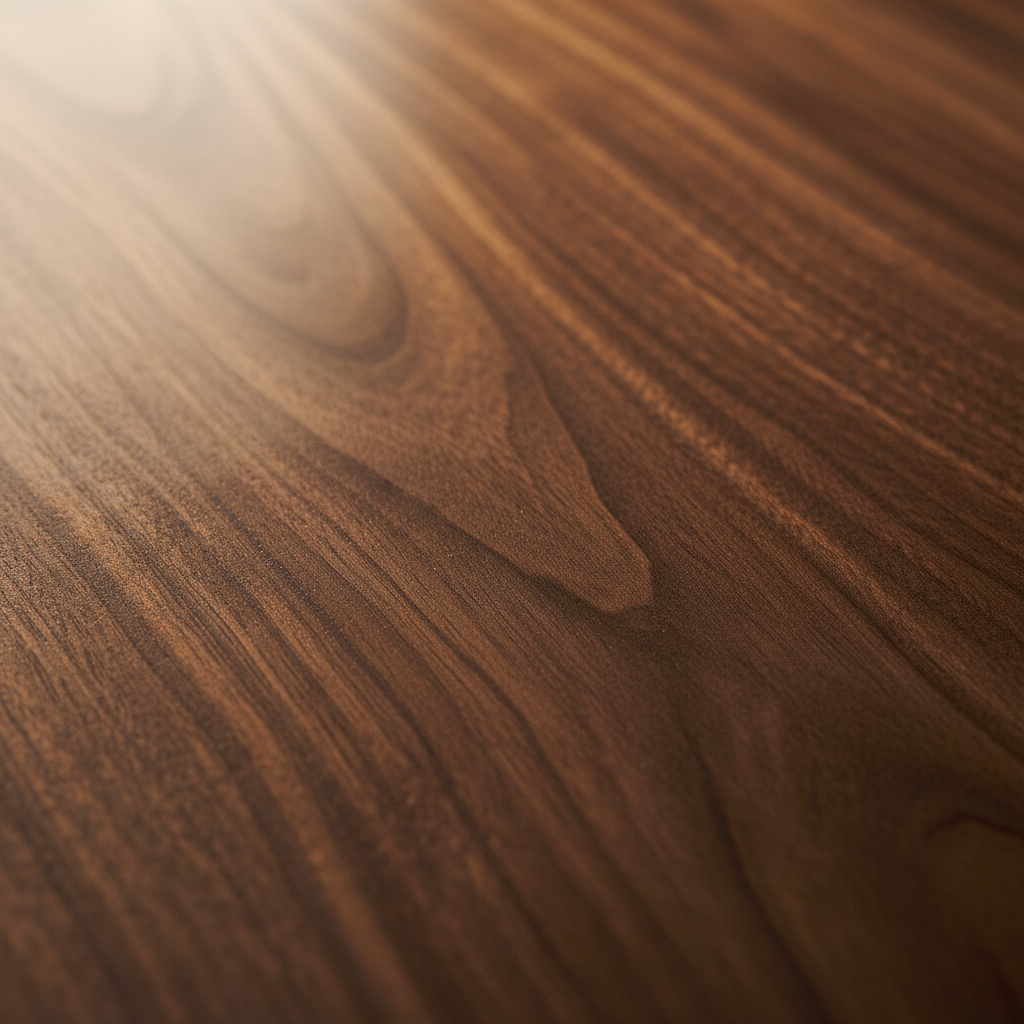
Black walnut is a premier American hardwood celebrated for its rich, chocolate-brown heartwood and straight grain. Most finishers prefer a clear or natural finish to showcase walnut's inherent beauty rather than staining it.
Key Takeaways
- Black walnut is a premier American hardwood celebrated for its rich, chocolate-brown heartwood and straight grain.
- Most finishers prefer a clear or natural finish to showcase walnut's inherent beauty rather than staining it.
- Tung oil or Danish oil to deepen brown tones; water-based poly to preserve true color; shellac as sealer under lacquer; spray lacquer for furniture-grade results.
- Straight to slightly wavy grain.
- Semi-ring-porous with medium pores.
Wood Characteristics
Straight to slightly wavy grain. Semi-ring-porous with medium pores. 1010 Janka. Rich chocolate brown heartwood with creamy white sapwood. Moderate tannin.
Recommended Finishes
Tung oil or Danish oil to deepen brown tones; water-based poly to preserve true color; shellac as sealer under lacquer; spray lacquer for furniture-grade results.
Preparation Steps
Sand through 120, 150, 180, and 220 grit. No conditioner needed. If sapwood is present, consider walnut-toned stain to blend with heartwood.
Application Steps
1. Flood coat of oil, soak 15-20 min. 2. Wipe all excess. 3. Dry 24-48 hours. 4. Second thin oil coat. 5. For poly/lacquer, thin coats with HVLP sprayer. 6. Sand 400 grit between coats. 7. Apply 3 coats minimum.
Maintenance Schedule
Oil: refresh every 6-12 months. Poly: recoat every 5-7 years. Lacquer: recoat every 8-10 years. Walnut darkens with age.
Common Mistakes
Staining when natural color is already beautiful; not blending sapwood streaks; oil-based poly yellows chocolate tones; sanding too aggressively creating swirl marks.
Interior vs Exterior
Interior: Oil or water-based finishes showcase depth. Avoid thick film builds. Exterior: Moderately durable but not ideal. Use marine-grade spar urethane with UV inhibitors, recoat annually.
Frequently Asked Questions
Generally no, natural color is its greatest asset.
Stain sapwood with walnut-toned stain before clear topcoat.
Heartwood lightens slightly over years; sapwood darkens, causing them to converge.
Related Guides
Live-edge furniture, flooring, cutting boards, outdoor furniture, turned objects, decorative pieces
Acacia
Learn how to finish acacia wood for furniture, flooring, and cutting boards. Expert tips on enhancin
Read guideFurniture, flooring, outdoor applications, boat building, joinery, window frames
Afrormosia
Expert guide to finishing afrormosia wood. Learn how to enhance this premium teak alternative for fu
Read guideCabinetry, furniture, interior trim, doors, turned objects, craft projects
Alder
Expert guide to finishing alder wood for cabinets and furniture. Learn how to stain alder to mimic c
Read guideDecking, dock pilings, heavy construction, marine applications, boardwalks, retaining walls
Angelim Pedra
Complete guide to finishing angelim pedra for decking and heavy construction. Learn oiling, sealing,
Read guide