Live-edge furniture
flooring
cutting boards
outdoor furniture
turned objects
decorative pieces
How to Finish Acacia: Complete Staining & Sealing Guide (2026)
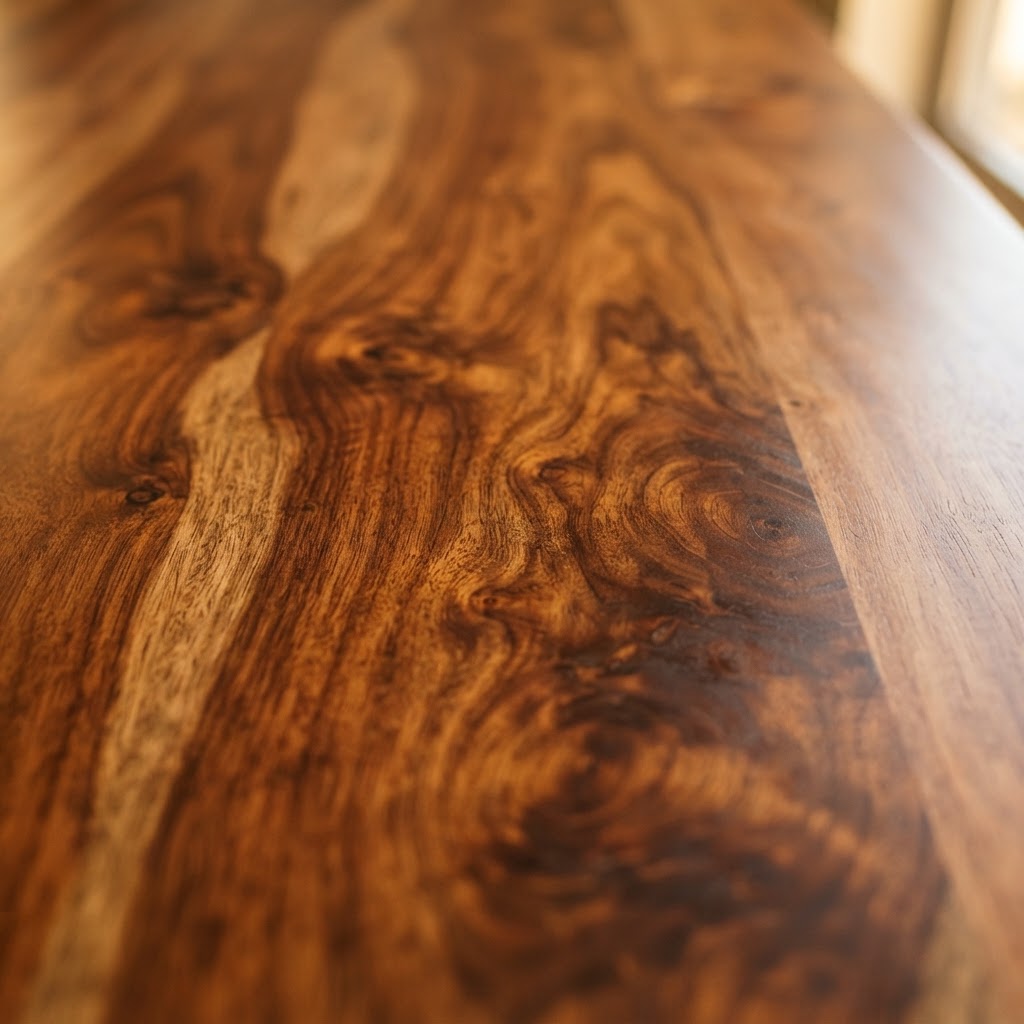
Acacia encompasses a wide group of hardwoods known for their dramatic color variation, natural durability, and attractive grain patterns. Most commonly available as live-edge slabs or engineered flooring, acacia brings warmth and character to any project.
Key Takeaways
- Acacia encompasses a wide group of hardwoods known for their dramatic color variation, natural durability, and attractive grain patterns.
- Most commonly available as live-edge slabs or engineered flooring, acacia brings warmth and character to any project.
- Hardwax oil for food-contact surfaces; water-based poly for clean look; tung oil for natural depth; lacquer for furniture; epoxy for live-edge slabs.
- Interlocked to wavy grain with medium texture.
- Diffuse-porous with medium pores.
Wood Characteristics
Interlocked to wavy grain with medium texture. Diffuse-porous with medium pores. 1170-2300 Janka varies by species. Golden brown to dark chocolate with dramatic color variation. Moderate tannin.
Recommended Finishes
Hardwax oil for food-contact surfaces; water-based poly for clean look; tung oil for natural depth; lacquer for furniture; epoxy for live-edge slabs.
Preparation Steps
Sand through 120, 150, 180 grit. Some species have interlocked grain that tears. Use card scraper as needed. No conditioner needed. Fill voids with epoxy on live-edge pieces.
Application Steps
1. Fill voids if live-edge. 2. Sand smooth. 3. Apply finish in thin coats. 4. Dry 24 hours. 5. Sand 320 between coats. 6. Apply 2-3 coats. 7. Food-contact: use food-safe oil or hardwax oil.
Maintenance Schedule
Oil: refresh every 6-12 months. Poly: recoat every 5-7 years. Hardwax oil for cutting boards: monthly. Acacia is quite durable and holds finishes well.
Common Mistakes
Trying to stain away natural color variation instead of embracing it; not handling interlocked grain tearout; using non-food-safe finishes on cutting boards; over-sanding live-edge natural edge.
Interior vs Exterior
Interior: Excellent for furniture, flooring, cutting boards, live-edge tables. Color variation is its defining charm. Exterior: Many acacia species have good natural durability outdoors. Use penetrating oil and reapply annually.
Frequently Asked Questions
Yes, many acacia species are hard enough and can be finished with food-safe oil.
Dramatic heartwood/sapwood contrast is natural to acacia. This variation is its defining aesthetic appeal.
Many acacia species are fast-growing and plantation-harvested, making them relatively sustainable.
Related Guides
Furniture, flooring, outdoor applications, boat building, joinery, window frames
Afrormosia
Expert guide to finishing afrormosia wood. Learn how to enhance this premium teak alternative for fu
Read guideCabinetry, furniture, interior trim, doors, turned objects, craft projects
Alder
Expert guide to finishing alder wood for cabinets and furniture. Learn how to stain alder to mimic c
Read guideDecking, dock pilings, heavy construction, marine applications, boardwalks, retaining walls
Angelim Pedra
Complete guide to finishing angelim pedra for decking and heavy construction. Learn oiling, sealing,
Read guideFlooring, furniture, tool handles, baseball bats, staircases, cabinetry
Ash
Complete guide to finishing ash wood for furniture and flooring. Expert tips on staining, grain fill
Read guide