Construction lumber
interior trim
paneling
musical instruments
framing
ceiling boards
How to Finish Spruce: Complete Staining & Sealing Guide (2026)
Spruce is a widely used softwood valued for its light weight, even grain, and excellent resonance properties. It is the primary wood for guitar soundboards and a common choice for construction lumber, interior trim, and paneling.
Key Takeaways
- Spruce is a widely used softwood valued for its light weight, even grain, and excellent resonance properties.
- It is the primary wood for guitar soundboards and a common choice for construction lumber, interior trim, and paneling.
- Water-based poly for light color preservation; shellac for musical instruments; gel stain for even color; paint for trim and exterior; lacquer for instrument soundboards.
- Straight, even grain with fine texture.
- Janka depending on species.
Wood Characteristics
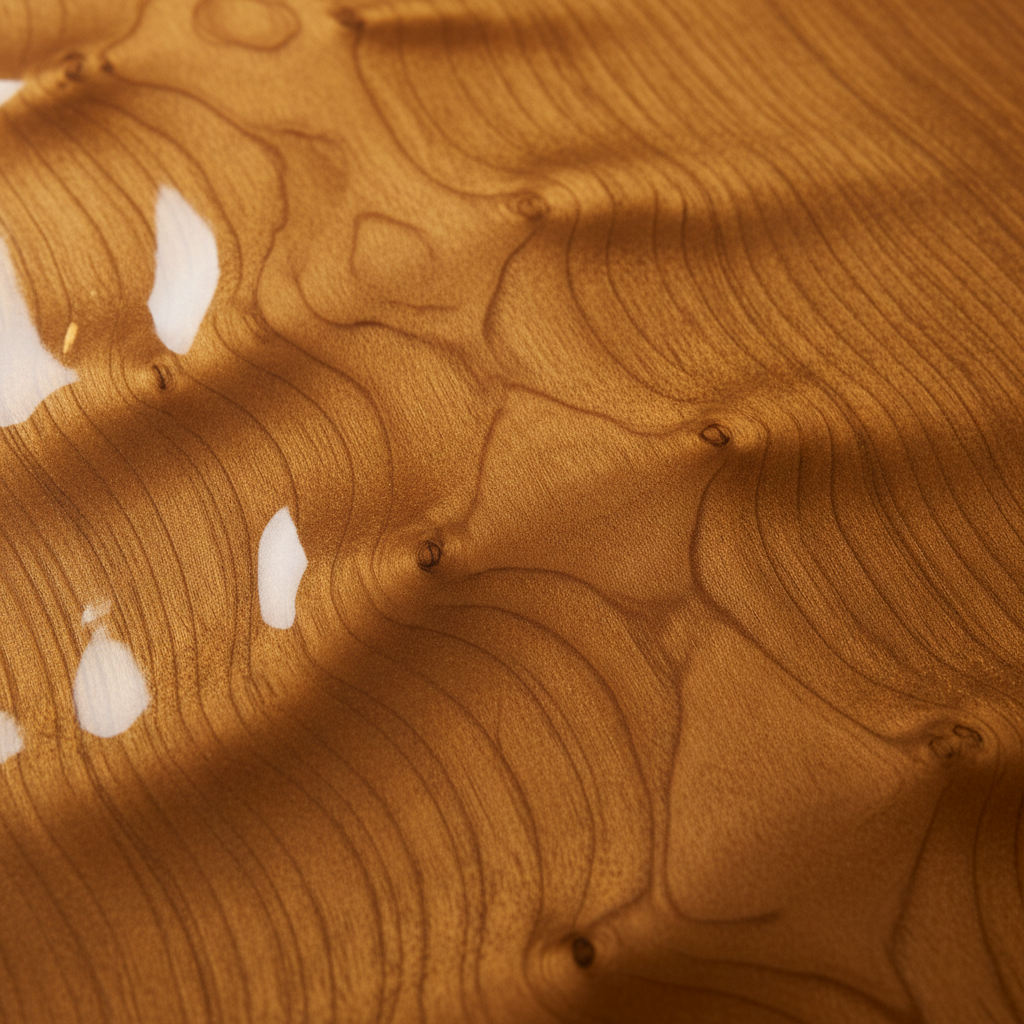
Straight, even grain with fine texture. Non-porous softwood. 400-510 Janka depending on species. Light cream to pale yellow. Very low tannin. Low resin compared to pine.
Recommended Finishes
Water-based poly for light color preservation; shellac for musical instruments; gel stain for even color; paint for trim and exterior; lacquer for instrument soundboards.
Preparation Steps
Sand through 120, 150, 180 grit. Spruce sands easily. Pre-stain conditioner recommended if staining. Less resinous than pine but still benefits from conditioning.
Application Steps
1. Apply conditioner if staining. 2. Apply gel stain or wiping stain. 3. Wipe excess within 3-5 min. 4. Dry 24 hours. 5. Apply topcoat in thin coats. 6. Sand 220 between coats. 7. Apply 2-3 coats.
Maintenance Schedule
Poly: recoat every 3-5 years. Paint: repaint every 5-8 years exterior. Oil: refresh every 6-12 months. Spruce is soft and needs regular maintenance on wear surfaces.
Common Mistakes
Staining without conditioner causing blotching; not sealing knots before painting; expecting spruce to withstand heavy wear; using dark stains that look unnatural on this light wood.
Interior vs Exterior
Interior: Good for trim, paneling, ceiling boards. Light color brightens rooms. Excellent for musical instruments. Exterior: Requires treatment (paint or stain) for outdoor use. Not naturally durable.
Frequently Asked Questions
Its high stiffness-to-weight ratio produces excellent sound resonance. Sitka spruce is the most common guitar top wood.
Spruce has less resin and finer grain. It blotches less but is softer.
Yes, spruce has no natural decay resistance. It must be painted, stained, or treated for exterior use.
Related Guides
Live-edge furniture, flooring, cutting boards, outdoor furniture, turned objects, decorative pieces
Acacia
Learn how to finish acacia wood for furniture, flooring, and cutting boards. Expert tips on enhancin
Read guideFurniture, flooring, outdoor applications, boat building, joinery, window frames
Afrormosia
Expert guide to finishing afrormosia wood. Learn how to enhance this premium teak alternative for fu
Read guideCabinetry, furniture, interior trim, doors, turned objects, craft projects
Alder
Expert guide to finishing alder wood for cabinets and furniture. Learn how to stain alder to mimic c
Read guideDecking, dock pilings, heavy construction, marine applications, boardwalks, retaining walls
Angelim Pedra
Complete guide to finishing angelim pedra for decking and heavy construction. Learn oiling, sealing,
Read guide