Painted trim
molding
furniture frames
cabinet interiors
crafts
utility shelving
How to Finish Poplar: Complete Staining & Sealing Guide (2026)
Poplar is one of the most affordable and accessible hardwoods, commonly used for painted trim, furniture frames, and utility projects. While its greenish heartwood makes staining challenging, it is an excellent wood for painted finishes.
Key Takeaways
- Poplar is one of the most affordable and accessible hardwoods, commonly used for painted trim, furniture frames, and utility projects.
- While its greenish heartwood makes staining challenging, it is an excellent wood for painted finishes.
- Primer and paint for best results; gel stain for even color; water-based poly for clear-coated projects; shellac as sealer under paint or stain.
- Straight, uniform grain with fine texture.
- Diffuse-porous with small pores.
Wood Characteristics
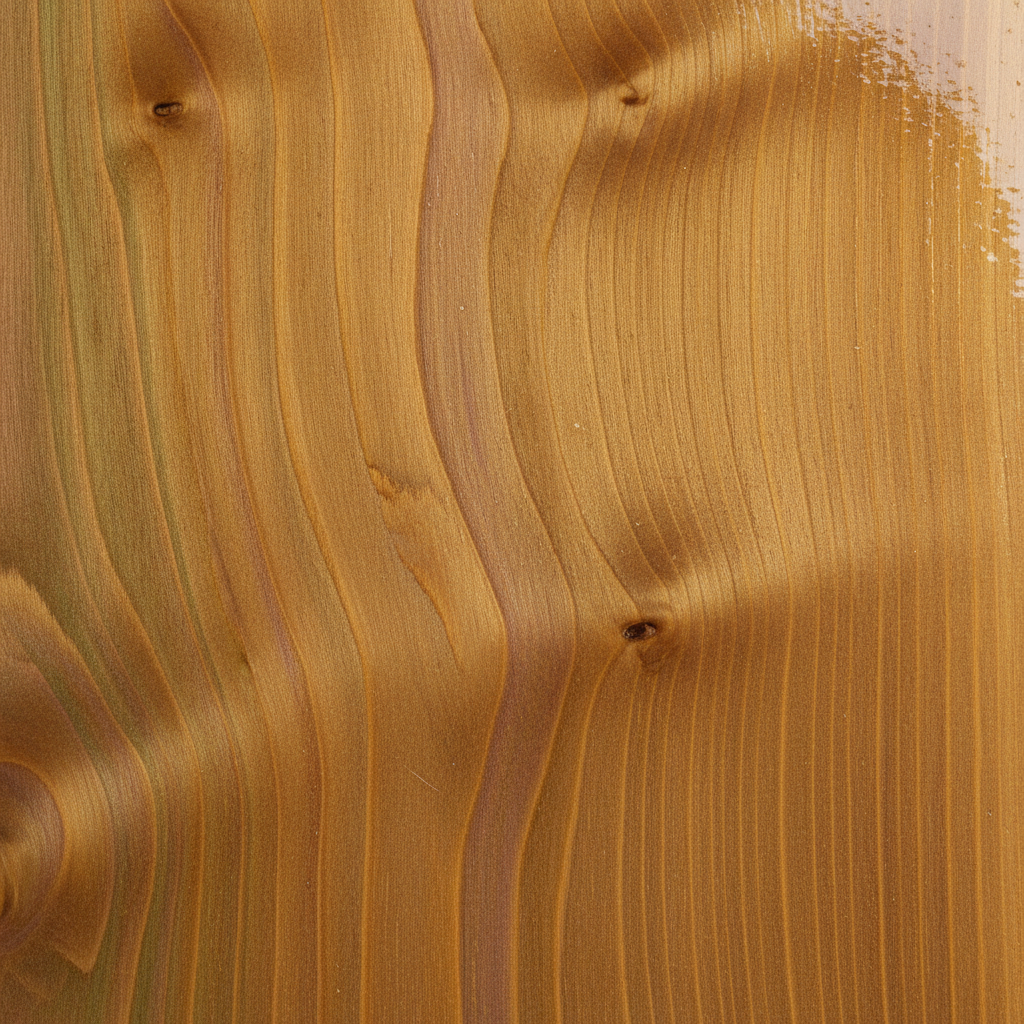
Straight, uniform grain with fine texture. Diffuse-porous with small pores. 540 Janka, soft for hardwood. Cream to yellowish-green, often with purple-gray streaks. Low tannin.
Recommended Finishes
Primer and paint for best results; gel stain for even color; water-based poly for clear-coated projects; shellac as sealer under paint or stain.
Preparation Steps
Sand through 120, 150, 180 grit. For paint, prime with shellac-based primer to block green color. For staining, ALWAYS use pre-stain conditioner. Gel stains provide most even color.
Application Steps
1. Sand smooth. 2. For paint: shellac primer, sand 220, 2 coats paint. 3. For stain: conditioner, wait 15 min, wipe, apply gel stain, wipe after 5 min. 4. Dry 24 hours. 5. Apply 2-3 coats water-based poly with 320 grit between.
Maintenance Schedule
Paint: touch up as needed, full repaint every 7-10 years. Stain and poly: recoat every 5-7 years. Poplar is soft, expect more wear marks.
Common Mistakes
Staining without conditioner causes severe blotching; untinted primer lets green show through paint; expecting poplar to look like premium hardwood; using poplar in high-moisture areas.
Interior vs Exterior
Interior: Excellent for painted trim, molding, furniture frames. Low cost and easy workability. Exterior: Very poor outdoor durability. NEVER use for exterior applications.
Frequently Asked Questions
Possible but difficult. Gel stain over conditioner for best results.
Natural heartwood color. Fades with light. Use tinted primer.
Yes for light-duty. Dents easily at 540 Janka.
Related Guides
Live-edge furniture, flooring, cutting boards, outdoor furniture, turned objects, decorative pieces
Acacia
Learn how to finish acacia wood for furniture, flooring, and cutting boards. Expert tips on enhancin
Read guideFurniture, flooring, outdoor applications, boat building, joinery, window frames
Afrormosia
Expert guide to finishing afrormosia wood. Learn how to enhance this premium teak alternative for fu
Read guideCabinetry, furniture, interior trim, doors, turned objects, craft projects
Alder
Expert guide to finishing alder wood for cabinets and furniture. Learn how to stain alder to mimic c
Read guideDecking, dock pilings, heavy construction, marine applications, boardwalks, retaining walls
Angelim Pedra
Complete guide to finishing angelim pedra for decking and heavy construction. Learn oiling, sealing,
Read guide