Accent pieces
inlays
cutting boards
turning stock
furniture accents
musical instruments
flooring accents
How to Finish Padauk: Complete Staining & Sealing Guide (2026)
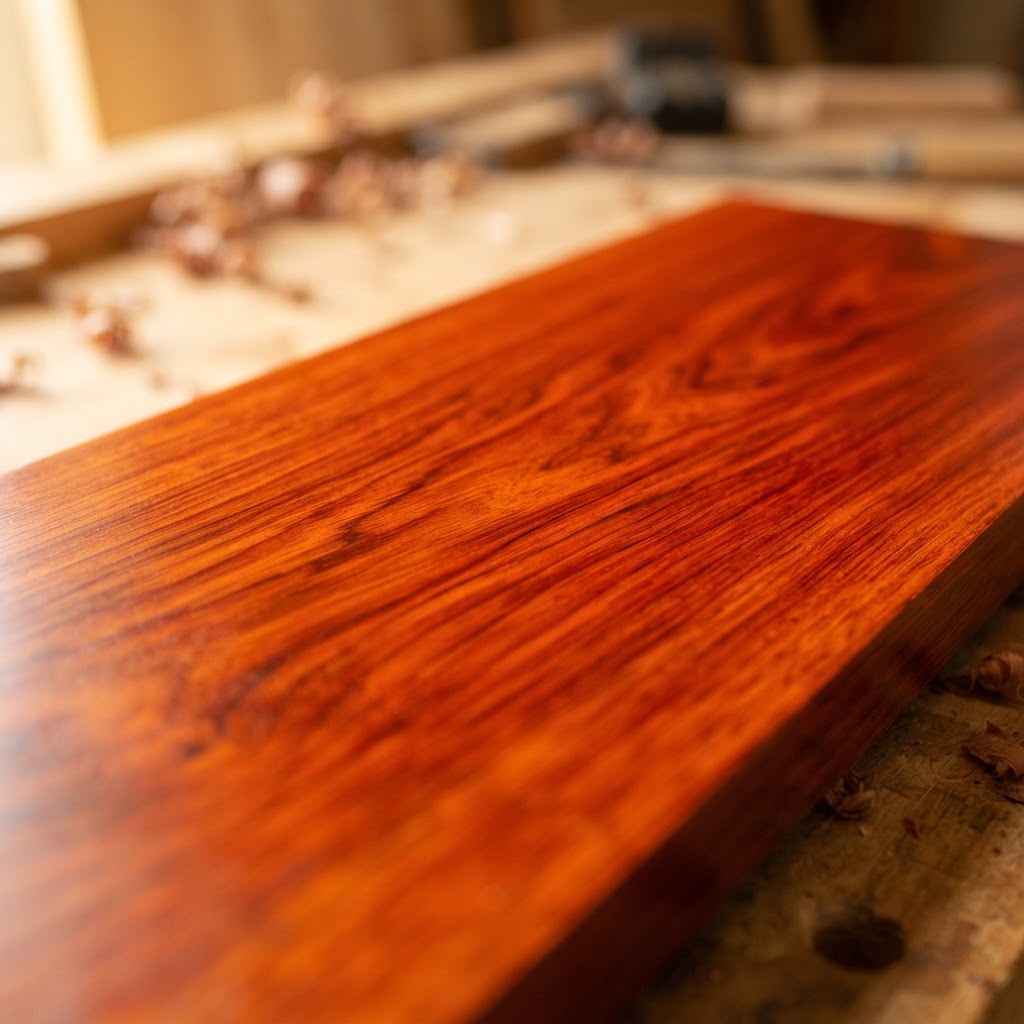
African padauk is one of the most vividly colored woods in the world, with a fresh-cut surface that glows brilliant orange-red. Like purpleheart, padauk's color is its main attraction and biggest finishing challenge.
Key Takeaways
- African padauk is one of the most vividly colored woods in the world, with a fresh-cut surface that glows brilliant orange-red.
- Like purpleheart, padauk's color is its main attraction and biggest finishing challenge.
- UV-inhibiting water-based poly for maximum color preservation; shellac as quick-sealing option; spray lacquer for accent pieces.
- Avoid oil-based finishes that accelerate darkening.
- Straight to interlocked grain with coarse texture.
Wood Characteristics
Straight to interlocked grain with coarse texture. Diffuse-porous with large pores. 2170 Janka, very hard. Vivid orange to coral red fresh, darkening to deep reddish-brown. Contains bright photosensitive dye extractives.
Recommended Finishes
UV-inhibiting water-based poly for maximum color preservation; shellac as quick-sealing option; spray lacquer for accent pieces. Avoid oil-based finishes that accelerate darkening.
Preparation Steps
Sand through 120, 150, 180, 220 grit. Produces vivid orange dust, wear respirator and protect surfaces. Dust stains skin and other woods permanently. Clean with acetone. Fill large pores with filler if desired.
Application Steps
1. Sand to final grit, clean with acetone. 2. Apply grain filler if desired. 3. Apply UV-protective water-based finish immediately. 4. Apply 3-4 thin coats for maximum UV protection. 5. Sand 400 between coats. 6. Cure in dark area to minimize color change.
Maintenance Schedule
Water-based poly: recoat every 3-5 years to refresh UV protection. Padauk darkens slowly but continuously. Regular recoating adds fresh UV inhibitors.
Common Mistakes
Oil-based finishes rapidly turn orange to dull brown; not wearing respirator in vivid dust; padauk dust permanently stains other woods; not sealing color quickly after sanding.
Interior vs Exterior
Interior: Stunning accent pieces, cutting boards (food-safe finish), inlays. UV-protective finish away from direct sunlight. Exterior: Very durable but loses color rapidly in sunlight. Not recommended.
Frequently Asked Questions
With UV-protective finish and indirect light, retains warm orange-red for many years. Without protection, begins darkening in weeks.
Yes, vivid orange dust permanently stains skin, clothes, glue lines, and adjacent woods.
Sanding below oxidized surface reveals fresh orange. Apply UV finish immediately.
Related Guides
Live-edge furniture, flooring, cutting boards, outdoor furniture, turned objects, decorative pieces
Acacia
Learn how to finish acacia wood for furniture, flooring, and cutting boards. Expert tips on enhancin
Read guideFurniture, flooring, outdoor applications, boat building, joinery, window frames
Afrormosia
Expert guide to finishing afrormosia wood. Learn how to enhance this premium teak alternative for fu
Read guideCabinetry, furniture, interior trim, doors, turned objects, craft projects
Alder
Expert guide to finishing alder wood for cabinets and furniture. Learn how to stain alder to mimic c
Read guideDecking, dock pilings, heavy construction, marine applications, boardwalks, retaining walls
Angelim Pedra
Complete guide to finishing angelim pedra for decking and heavy construction. Learn oiling, sealing,
Read guide