Piano keys
guitar fingerboards
inlays
turned objects
knife handles
luxury boxes
chess pieces
How to Finish Ebony: Complete Staining & Sealing Guide (2026)
Ebony is the classic luxury wood, prized for millennia for its jet-black color, extreme hardness, and ability to take a mirror polish from sanding alone. It is primarily used for musical instrument parts, inlays, and small decorative objects where its density and color make it irreplaceable.
Key Takeaways
- Ebony is the classic luxury wood, prized for millennia for its jet-black color, extreme hardness, and ability to take a mirror polish from sanding alone.
- It is primarily used for musical instrument parts, inlays, and small decorative objects where its density and color make it irreplaceable.
- Often left unfinished and hand-polished; thin shellac for minimal protection; CA glue for turned objects; wax for subtle sheen.
- Ebony rarely needs finish due to its density.
- Very fine, even grain.
Wood Characteristics
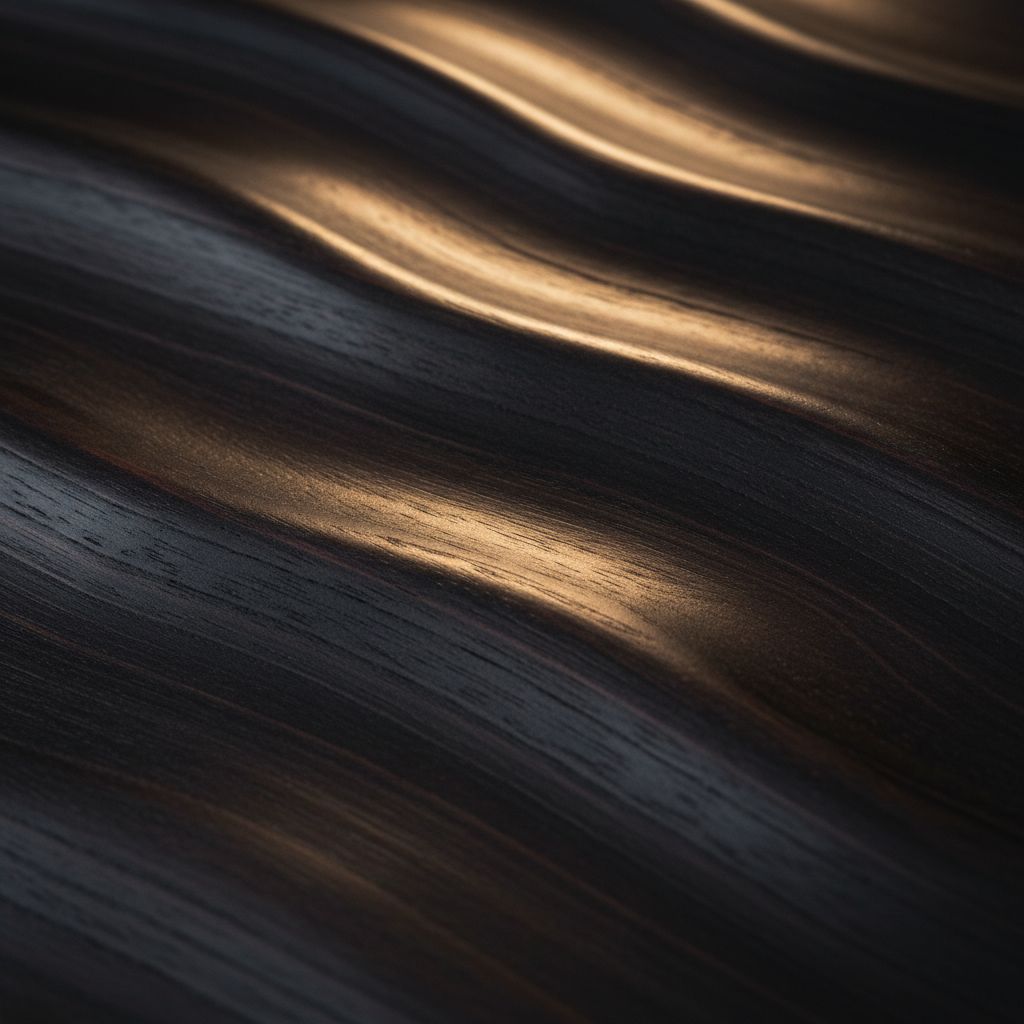
Very fine, even grain. Diffuse-porous with very fine pores. 3080 Janka, extremely hard. Jet black (Gabon ebony) to black with lighter streaks (Macassar ebony). Very low tannin. Dense enough to sink in water.
Recommended Finishes
Often left unfinished and hand-polished; thin shellac for minimal protection; CA glue for turned objects; wax for subtle sheen. Ebony rarely needs finish due to its density.
Preparation Steps
Sand through 220, 320, 400, 600, 800, and up to 2000+ grit for mirror polish. Ebony can be polished to a glass-like sheen from sanding alone. Use sharp abrasives. Clean with naphtha.
Application Steps
1. Sand progressively to 800-2000 grit. 2. Buff with polishing compound for mirror finish. 3. If applying finish, use the thinnest coat possible. 4. Shellac by pad in very thin layers. 5. For turned objects, CA finish or friction polish. 6. Wax for a subtle hand-rubbed sheen.
Maintenance Schedule
Unfinished: maintain with hand oils from handling or occasional wax application. Shellac: refresh every 5-10 years. Ebony is extremely low-maintenance due to its natural density.
Common Mistakes
Applying thick finishes that obscure ebony's natural polish; not sanding to high enough grit to achieve the natural sheen; dropping or chipping (ebony is brittle despite being hard); using ebony where it's not needed due to scarcity.
Interior vs Exterior
Interior: Used exclusively for small interior applications. Piano keys, guitar fingerboards, inlays, and luxury objects. Exterior: Never used outdoors. Too rare and expensive for exterior applications.
Frequently Asked Questions
Often no. Its extreme density allows it to be polished to a mirror sheen from sanding alone. Many instrument parts are left unfinished.
Most true ebony species are threatened. CITES restrictions apply. Verify legal sourcing. Many luthiers now use alternative materials.
Slow growth, limited supply, high demand, CITES restrictions, and the fact that only jet-black heartwood is typically valued all contribute to high prices.
Related Guides
Live-edge furniture, flooring, cutting boards, outdoor furniture, turned objects, decorative pieces
Acacia
Learn how to finish acacia wood for furniture, flooring, and cutting boards. Expert tips on enhancin
Read guideFurniture, flooring, outdoor applications, boat building, joinery, window frames
Afrormosia
Expert guide to finishing afrormosia wood. Learn how to enhance this premium teak alternative for fu
Read guideCabinetry, furniture, interior trim, doors, turned objects, craft projects
Alder
Expert guide to finishing alder wood for cabinets and furniture. Learn how to stain alder to mimic c
Read guideDecking, dock pilings, heavy construction, marine applications, boardwalks, retaining walls
Angelim Pedra
Complete guide to finishing angelim pedra for decking and heavy construction. Learn oiling, sealing,
Read guide