Knife handles
pens
jewelry boxes
guitar parts
turned objects
small decorative items
How to Finish Cocobolo: Complete Staining & Sealing Guide (2026)
Cocobolo is one of the world's most beautiful and challenging woods to finish. Its stunning mix of orange, red, and purple colors is matched by extremely high natural oil content that prevents most finishes from adhering. Successfully finishing cocobolo requires specific techniques to overcome its oiliness.
Key Takeaways
- Cocobolo is one of the world's most beautiful and challenging woods to finish.
- Its stunning mix of orange, red, and purple colors is matched by extremely high natural oil content that prevents most finishes from adhering.
- Successfully finishing cocobolo requires specific techniques to overcome its oiliness.
- Wipe-on polyurethane after solvent degreasing; CA (cyanoacrylate) glue finish for turned objects; shellac (the one finish that bonds well to oily woods); friction polish for turnings.
- Straight to interlocked grain with fine texture.
Wood Characteristics
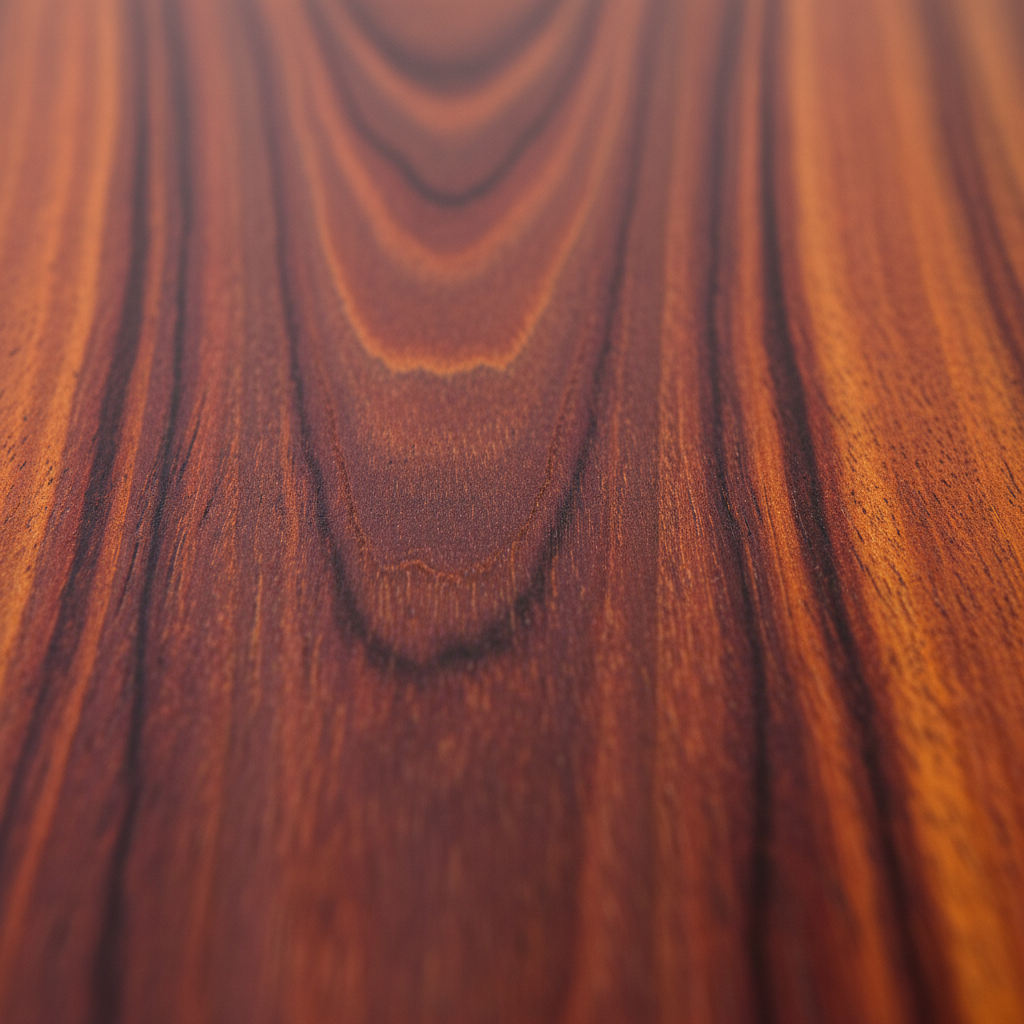
Straight to interlocked grain with fine texture. Diffuse-porous with very fine pores. 2960 Janka, extremely hard. Orange, red, purple, and brown with dramatic color variation. Extremely high natural oil content. Known allergen.
Recommended Finishes
Wipe-on polyurethane after solvent degreasing; CA (cyanoacrylate) glue finish for turned objects; shellac (the one finish that bonds well to oily woods); friction polish for turnings.
Preparation Steps
Sand through 150, 220, 320, 400+ grit. Cocobolo polishes to a beautiful sheen from sanding alone. CRITICAL: wipe thoroughly with acetone or naphtha immediately before finishing to remove surface oils. Wear gloves, cocobolo is a strong sensitizer.
Application Steps
1. Sand to 400+ grit for high sheen. 2. Wipe thoroughly with acetone, let dry 5 min. 3. Apply finish immediately before oils resurface. 4. For shellac: thin coats by hand or pad. 5. For CA finish on turnings: apply with paper towel on spinning lathe. 6. Multiple thin coats. 7. Buff to high gloss.
Maintenance Schedule
Shellac: refresh every 3-5 years. CA finish: extremely durable, rarely needs maintenance. Oil: cocobolo's own oils provide natural protection. Many pieces are left unfinished to be maintained by hand oils.
Common Mistakes
Not degreasing before finishing causing complete adhesion failure; not wearing gloves (strong allergen); trying to use polyurethane without proper surface prep; using water-based finishes that won't bond to oily surface.
Interior vs Exterior
Interior: Exceptional for handles, pens, jewelry boxes, guitar backs, and small turned objects. Its natural oils make it very durable unfinished for handled items. Exterior: Not used outdoors due to expense and limited sizes.
Frequently Asked Questions
Extremely high natural oil content prevents most finishes from bonding. Wipe with acetone immediately before applying shellac or CA glue finish.
Yes, cocobolo is one of the strongest wood allergens. Wear gloves and a respirator. Sensitization is cumulative and permanent.
Yes. Its natural oils provide excellent protection. Hand oils from handling maintain the luster. Many knife handles and pens are left unfinished.
Related Guides
Live-edge furniture, flooring, cutting boards, outdoor furniture, turned objects, decorative pieces
Acacia
Learn how to finish acacia wood for furniture, flooring, and cutting boards. Expert tips on enhancin
Read guideFurniture, flooring, outdoor applications, boat building, joinery, window frames
Afrormosia
Expert guide to finishing afrormosia wood. Learn how to enhance this premium teak alternative for fu
Read guideCabinetry, furniture, interior trim, doors, turned objects, craft projects
Alder
Expert guide to finishing alder wood for cabinets and furniture. Learn how to stain alder to mimic c
Read guideDecking, dock pilings, heavy construction, marine applications, boardwalks, retaining walls
Angelim Pedra
Complete guide to finishing angelim pedra for decking and heavy construction. Learn oiling, sealing,
Read guide