High-end furniture
musical instruments
turned objects
decorative veneer
knife handles
jewelry boxes
How to Finish Bubinga: Complete Staining & Sealing Guide (2026)
Reviewed by Lumberama's Wood Finishing Team
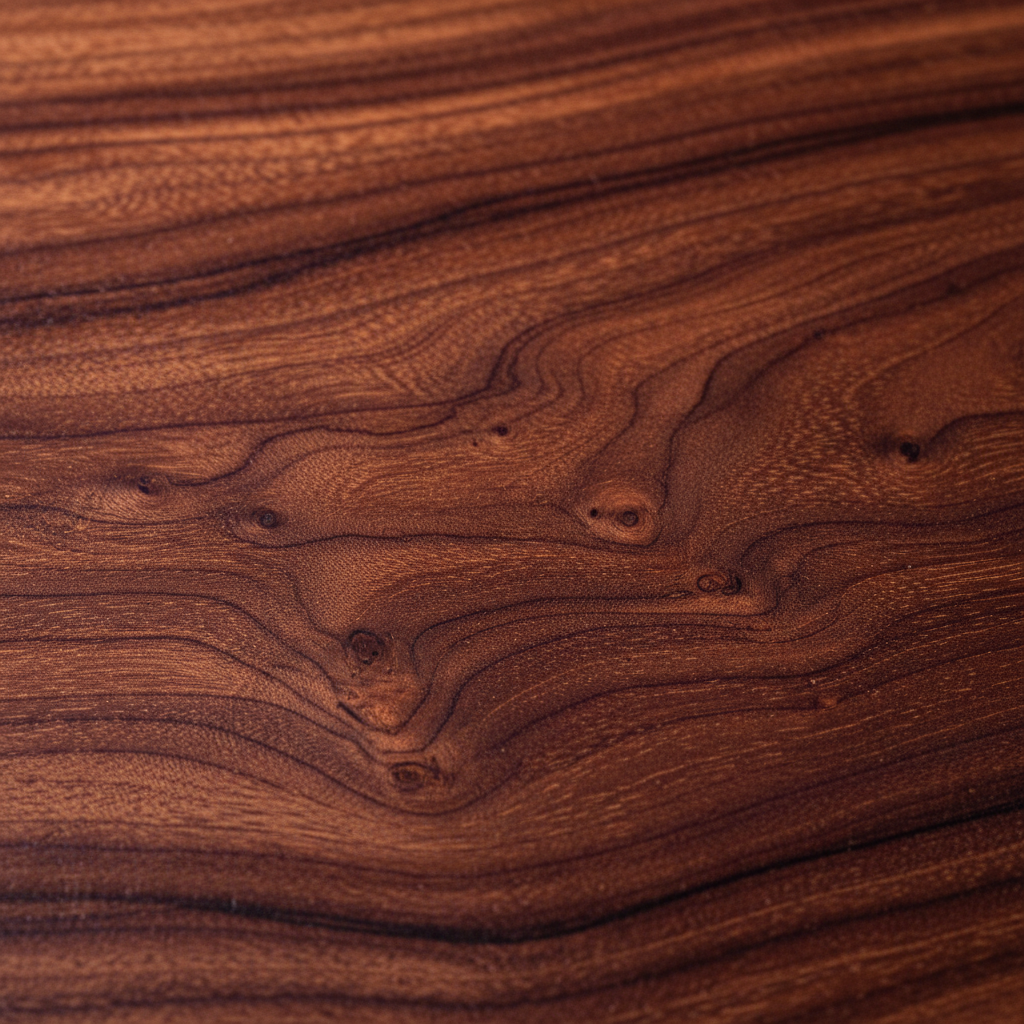
|Last updated June 8, 2026Bubinga is a prized African hardwood known for its rich reddish-brown color, often with striking figured grain including pommele, waterfall, and quilted patterns. Its beauty and workability make it a favorite for high-end furniture and musical instruments.
Key Takeaways
- Bubinga is a prized African hardwood known for its rich reddish-brown color, often with striking figured grain including pommele, waterfall, and quilted patterns.
- Its beauty and workability make it a favorite for high-end furniture and musical instruments.
- Tung oil to deepen red tones; water-based poly to preserve true color; lacquer for furniture; shellac for traditional finish.
- Clear finishes best to showcase figure.
- Interlocked, sometimes highly figured grain.
Wood Characteristics
Interlocked, sometimes highly figured grain. Diffuse-porous with medium to large pores. 1410 Janka. Pinkish-red to dark reddish-brown, often with purple veining. Moderate tannin.
Recommended Finishes
Tung oil to deepen red tones; water-based poly to preserve true color; lacquer for furniture; shellac for traditional finish. Clear finishes best to showcase figure.
Preparation Steps
Sand through 120, 150, 180, 220 grit. Figured pieces tear out easily, use card scraper or very fine sandpaper. Fill pores with grain filler tinted to match. No conditioner needed.
Application Steps
1. Address tearout on figured pieces. 2. Apply tinted grain filler, wipe clean. 3. Dry 24 hours, sand 320. 4. Apply clear finish in thin coats. 5. Sand 400 between coats. 6. Apply 3-4 coats. 7. Rub out final coat with paste wax for depth.
Maintenance Schedule
Oil: refresh every 6-12 months. Poly: recoat every 5-8 years. Lacquer: 5-8 years. Bubinga darkens and enriches over time.
Common Mistakes
Staining when natural color is already stunning; not using card scraper on figured pieces causing tearout; skipping grain filler; sanding too aggressively on figured wood.
Interior vs Exterior
Interior: Outstanding for high-end furniture, musical instruments, turned objects. Figured bubinga is among the most beautiful woods available. Exterior: Not recommended for outdoor use. Limited availability and no significant decay resistance.
Frequently Asked Questions
Related Guides
Live-edge furniture, flooring, cutting boards, outdoor furniture, turned objects, decorative pieces
Acacia
Learn how to finish acacia wood for furniture, flooring, and cutting boards. Expert tips on enhancin
Read guideFurniture, flooring, outdoor applications, boat building, joinery, window frames
Afrormosia
Expert guide to finishing afrormosia wood. Learn how to enhance this premium teak alternative for fu
Read guideCabinetry, furniture, interior trim, doors, turned objects, craft projects
Alder
Expert guide to finishing alder wood for cabinets and furniture. Learn how to stain alder to mimic c
Read guideDecking, dock pilings, heavy construction, marine applications, boardwalks, retaining walls
Angelim Pedra
Complete guide to finishing angelim pedra for decking and heavy construction. Learn oiling, sealing,
Read guide