Interior Door Buying Guide: Types, Styles, and Sizing (2026)
Interior doors define the style and functionality of every room in your home. From budget-friendly hollow core to premium solid wood, the options span a wide range of quality and price. This guide covers door construction types, standard sizing, style options, and how to choose between pre-hung and slab doors.
Key Takeaways
- Interior doors define the style and functionality of every room in your home.
- From budget-friendly hollow core to premium solid wood, the options span a wide range of quality and price.
- This guide covers door construction types, standard sizing, style options, and how to choose between pre-hung and slab doors.
- Bedrooms benefit from solid core doors for noise reduction (STC rating of 26-30 vs 20-22 for hollow core).
- Bathrooms need solid core minimum for moisture resistance and privacy.
Types Overview
Hollow core doors are the most affordable option with a cardboard honeycomb interior — lightweight and suitable for closets and low-traffic rooms. Solid core doors have a composite or particleboard core providing good sound insulation and a substantial feel — the best value for bedrooms and bathrooms. MDF (medium-density fiberboard) doors feature a smooth, paintable surface with crisp panel details at moderate cost. Solid wood doors are the premium choice with the best sound insulation and authentic wood character — available in paint-grade and stain-grade species. French doors and barn doors add design flair for transitional openings.
Selection Criteria
Bedrooms benefit from solid core doors for noise reduction (STC rating of 26-30 vs 20-22 for hollow core). Bathrooms need solid core minimum for moisture resistance and privacy. Closets can use hollow core to save money. Match the panel style to your home's architecture — Shaker style for modern and craftsman, raised panel for traditional. Pre-hung doors save time and ensure proper fit. Slab doors are best for replacing existing doors in frames that are in good condition.
Installation Guide
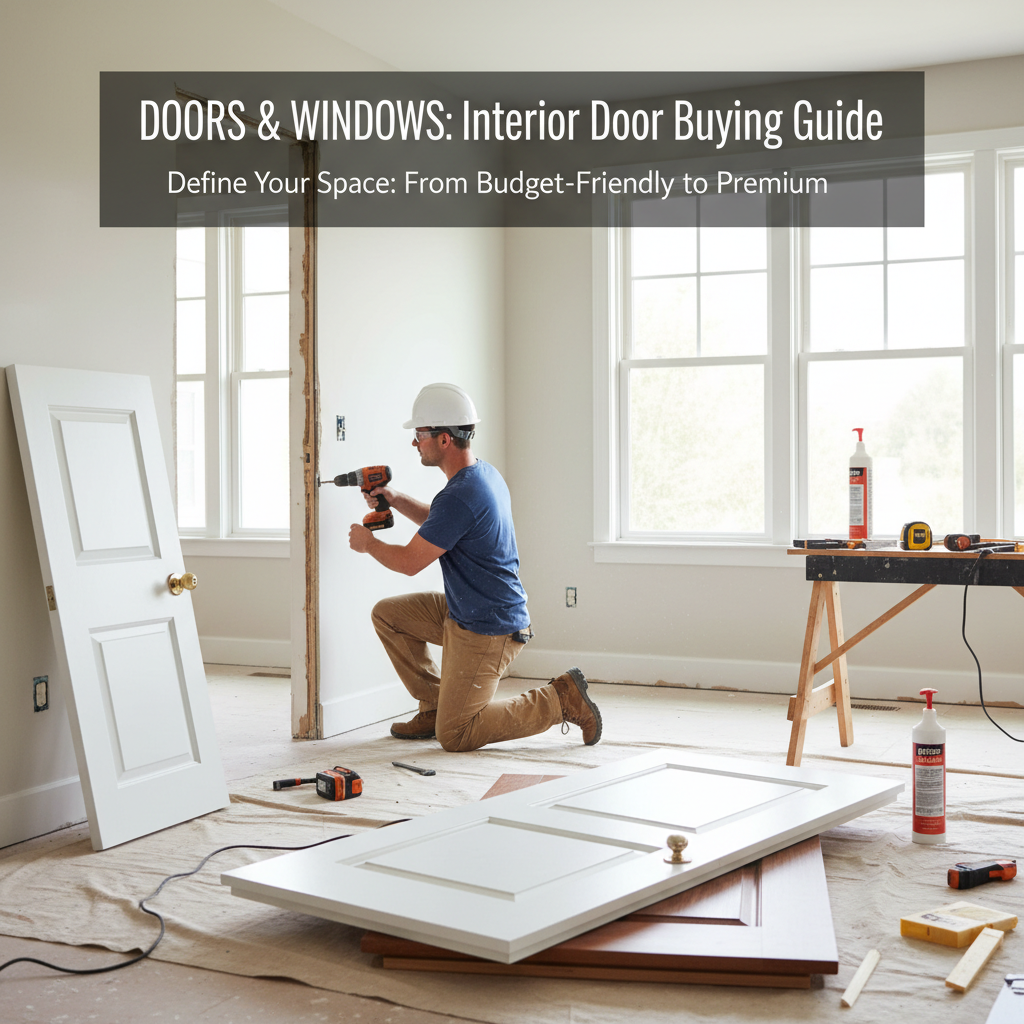
Pre-hung doors come with frame and hinges ready to install into the rough opening. Shim the hinge side plumb first, then adjust the head and strike side for even reveal (1/8 inch gap). Check that the door swings freely and latches properly before nailing off trim. Slab doors require mortising hinges and drilling hardware holes — use a jig for consistent results. Standard rough opening is 2 inches wider and 2.5 inches taller than the door size.
Code Requirements
Bedroom doors must be at least 32 inches wide for egress (most are standard 2-8 or 2-6). Bathroom doors can be 24 inches minimum. Fire-rated doors (20-minute) are required between garage and living space — these are typically solid core with specific labeling. ADA compliance requires 32-inch minimum clear opening width. Door closers may be required on fire-rated doors per local code.
Cost Breakdown
Hollow core slab: $30-$60. Hollow core pre-hung: $70-$120. Solid core slab: $70-$150. Solid core pre-hung: $120-$250. MDF panel pre-hung: $150-$300. Solid wood (paint-grade) pre-hung: $200-$400. Solid wood (stain-grade) pre-hung: $300-$800+. Barn door with hardware: $200-$600. Professional installation per door: $100-$250 for pre-hung, $150-$300 for slab.
DIY vs Professional
Pre-hung door installation is a manageable DIY project — the most critical step is getting the hinge side plumb. Slab door installation requires more tools and skill for mortising hinges and drilling hardware. Trimming a solid wood door requires care to avoid splitting. Professional installation is recommended for multi-door projects where consistency matters and for specialty doors like barn doors.
Common Mistakes to Avoid
Not checking the rough opening dimensions before purchasing — pre-hung doors require a specific rough opening size. Forcing shims instead of trimming the frame causes a bowed door frame. Not shimming behind hinges causes the door to bind or not latch. Installing hollow core doors in bathrooms leads to swelling and moisture damage. Forgetting to order matching hinges and hardware to complete the look.