Exterior Door Buying Guide: Materials, Security, and Energy Ratings (2026)
Your exterior doors are the first impression of your home and a critical barrier against weather, noise, and intrusion. The right entry door balances curb appeal, energy efficiency, and security. This guide compares fiberglass, steel, and wood entry doors along with patio door options to help you select the best door for every opening.
Key Takeaways
- Your exterior doors are the first impression of your home and a critical barrier against weather, noise, and intrusion.
- The right entry door balances curb appeal, energy efficiency, and security.
- This guide compares fiberglass, steel, and wood entry doors along with patio door options to help you select the best door for every opening.
- Consider your climate for energy rating requirements — look for ENERGY STAR certification and U-factor below 0.30 for cold climates.
- Security features should include multi-point locking systems and reinforced strike plates.
Types Overview
Fiberglass entry doors offer the best all-around performance — they resist denting, warping, and rotting while mimicking real wood grain. Steel entry doors provide the highest security and lowest cost but can dent and rust in coastal environments. Solid wood entry doors deliver unmatched beauty and character but require the most maintenance. Sliding patio doors maximize glass area and save floor space. French patio doors provide a classic look with full-swing operation. Multi-slide and bi-fold patio doors create dramatic wide openings to outdoor spaces.
Selection Criteria
Consider your climate for energy rating requirements — look for ENERGY STAR certification and U-factor below 0.30 for cold climates. Security features should include multi-point locking systems and reinforced strike plates. Fiberglass is the best all-around choice for most climates. Steel offers the best value for security-focused buyers. Wood is ideal for covered, protected entries where you can maintain the finish. Patio door style depends on opening width and traffic patterns.
Installation Guide
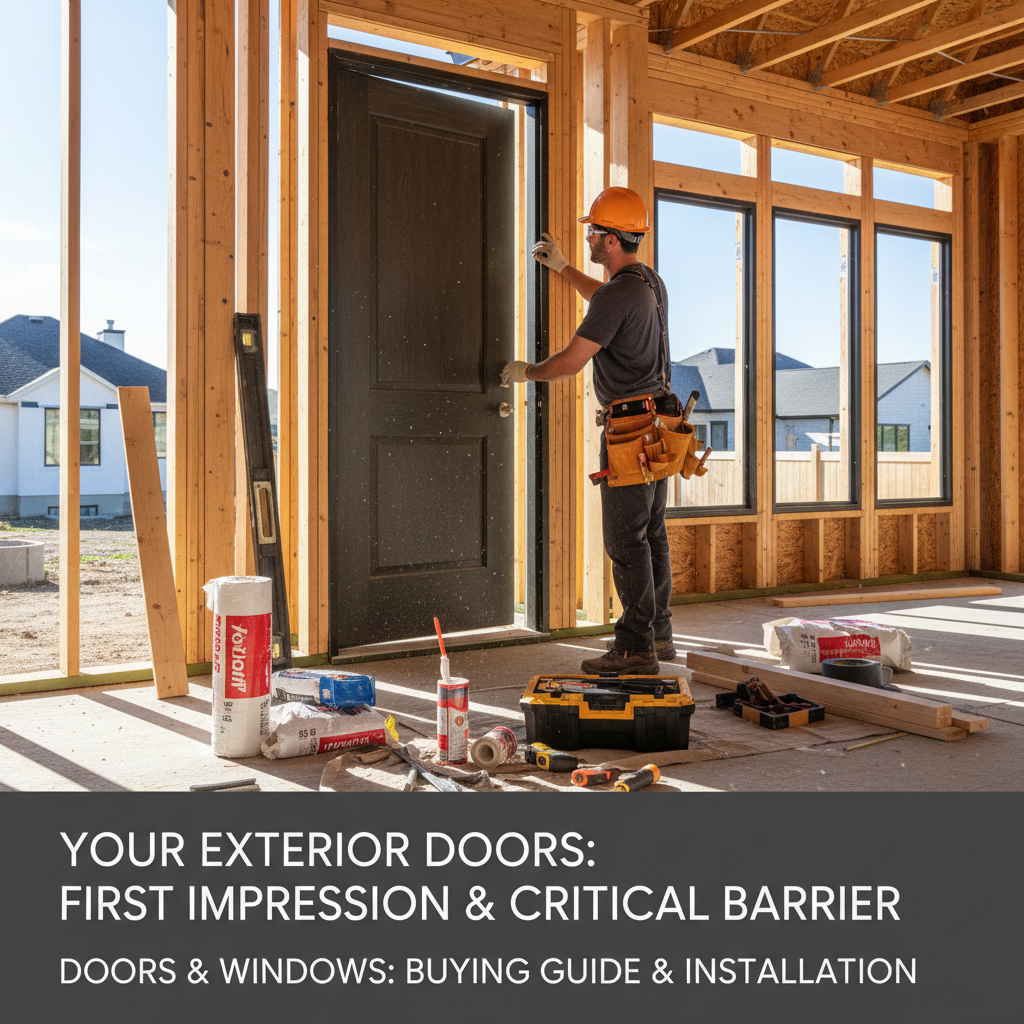
Exterior doors require precise installation for proper weather sealing and security. Apply sill pan flashing before setting the door. Set the door in the rough opening and shim the hinge side plumb first. Verify the threshold is level and adjust with shims. Check that the weatherstripping compresses evenly all around when closed. Insulate the gap between frame and rough opening with low-expansion foam. Flash the exterior perimeter and integrate with the WRB.
Code Requirements
Entry doors must meet minimum energy code requirements per IECC — maximum U-factor and SHGC vary by climate zone. Egress doors must be at least 32 inches clear width and 78 inches clear height. Door glass must be tempered safety glass. Impact-rated doors are required in hurricane zones per IRC and local amendments. ADA requires 32-inch minimum clear opening and accessible threshold (1/2-inch maximum height). Fire-rated doors required from garage to living space (20-minute minimum).
Cost Breakdown
Steel entry door (basic): $200-$500. Steel entry door (decorative glass): $500-$1,200. Fiberglass entry door: $500-$2,500. Fiberglass with sidelights: $1,500-$4,000. Solid wood entry door: $1,000-$5,000+. Sliding patio door: $600-$3,000. French patio door: $1,000-$5,000. Professional installation: $300-$700 per door. Full entry door system with sidelights installed: $2,500-$6,000.
DIY vs Professional
Exterior door replacement is an intermediate DIY project. The critical details are weatherproofing, flashing integration, and proper shimming for smooth operation and security. Pre-hung doors simplify the process significantly. Professional installation is recommended for doors with sidelights and transoms, multi-slide systems, and any time the rough opening needs modification. Improper installation voids most warranties.
Common Mistakes to Avoid
Not installing sill pan flashing is the most common source of entry door water damage. Using expanding foam that bows the frame and prevents proper operation. Not shimming behind the strike plate area leaves the lock vulnerable to kick-in. Failing to integrate the door flashing with the WRB creates water entry paths. Choosing a wood door for an exposed, uncovered entry invites premature failure.
Frequently Asked Questions
Related Guides
Interior Door Buying Guide
Compare interior door types: hollow core, solid core, MDF, and solid wood. Learn standard sizes, pre
Read guideWindow Buying Guide (Types and Ratings)
Compare window types, frame materials, and energy ratings. Learn about U-factor, SHGC, double vs tri
Read guide