What Size Header Do I Need? A Practical Guide to Header Sizing
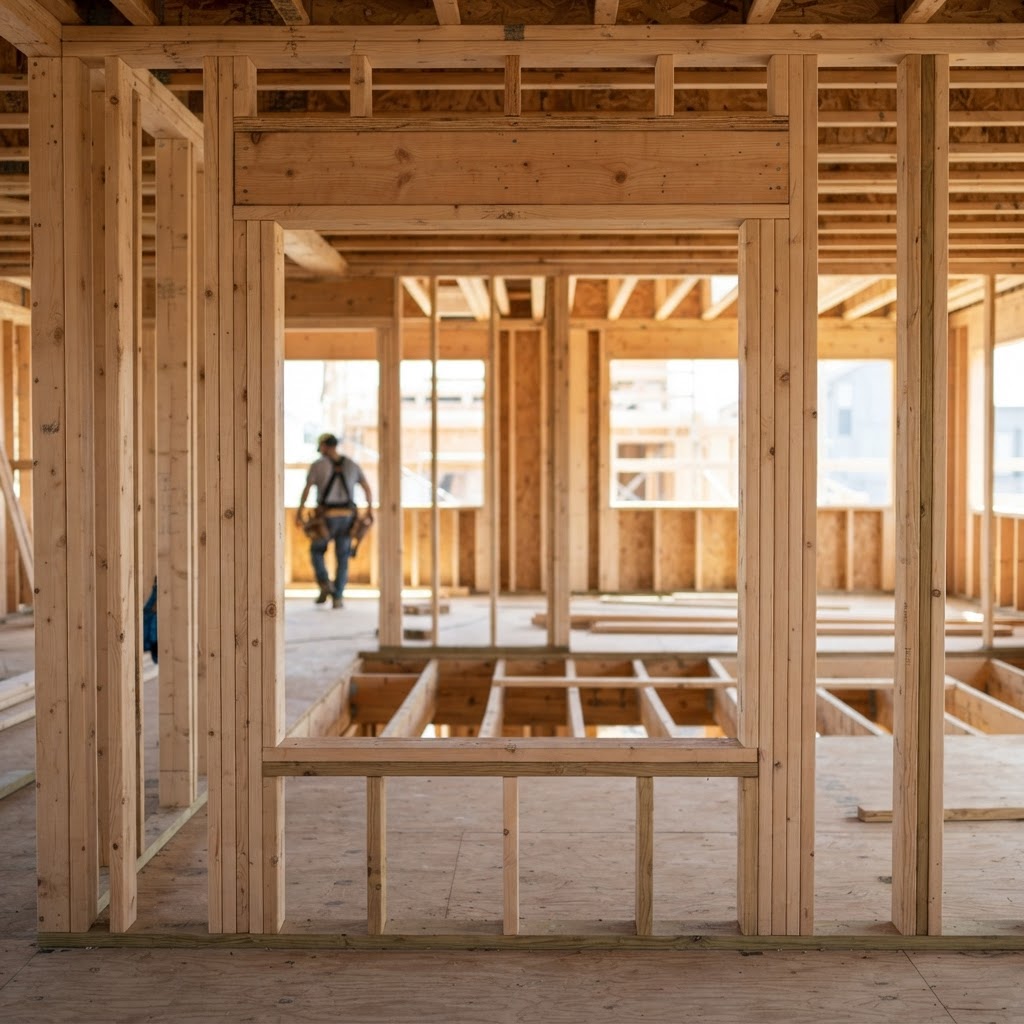
Opening width is only one input
A header carries the loads above an opening to the jack studs on each side. Its required size depends on what it supports, not only how wide the opening is. Code header tables account for these variables, and engineered headers are sized with the manufacturer's tables or by a designer.
This guide explains the inputs. Confirm sizing with your adopted code, plans or engineer.
What header tables consider
- Opening width: the span between supports.
- What is above: roof and ceiling only, or one or more floors.
- Building width: the depth of floor or roof the wall supports.
- Ground snow load: higher snow loads require larger headers.
- Species and grade: design values differ by species group.
- Number of jack studs: longer or heavier headers may need more bearing.
Common header types
Built-up sawn lumber
Two or three 2x members, often with a spacer, sized to the wall thickness.
LVL and engineered headers
LVL, PSL and other engineered products carry heavier loads or longer spans in a smaller depth and are more dimensionally consistent. See our LVL vs. solid lumber beams guide.
Insulated headers
Some designs use insulated or single-member headers to reduce thermal bridging where allowed.
Non-bearing walls
Openings in non-bearing walls generally do not need structural headers, but confirm a wall is actually non-bearing before removing or downsizing anything.
Ordering headers
On your quote request, list each header with material, size, length, ply count and quantity. For engineered headers, include the product series and depth from the plans so substitutions are not made by guesswork.
Frequently Asked Questions
Lumberama Editorial
Lumber sourcing and specification
Contributor to Lumberama’s reference library. Read our editorial standards and source methodology.
Framing and structure resources
Where readers of this article usually go next.
Related Articles
Floor Joist Span Chart: How to Read Span Tables Correctly
A joist span chart only gives a correct answer when every input matches your job. Here is how to read species, grade, spacing, load and deflection columns without guessing.

Janka Hardness Is Not Durability: What the Number Actually Tells You
Janka measures resistance to a steel ball, nothing more. Here is what it predicts well, what it predicts badly, and which properties you should be checking instead.

Why Is My New Deck Cupping and Warping? Causes and Prevention
Cupped deck boards are almost always a moisture story: one face is wetter than the other. Here is what causes the imbalance and the install details that prevent it.