Floor Joist Span Chart: How to Read Span Tables Correctly
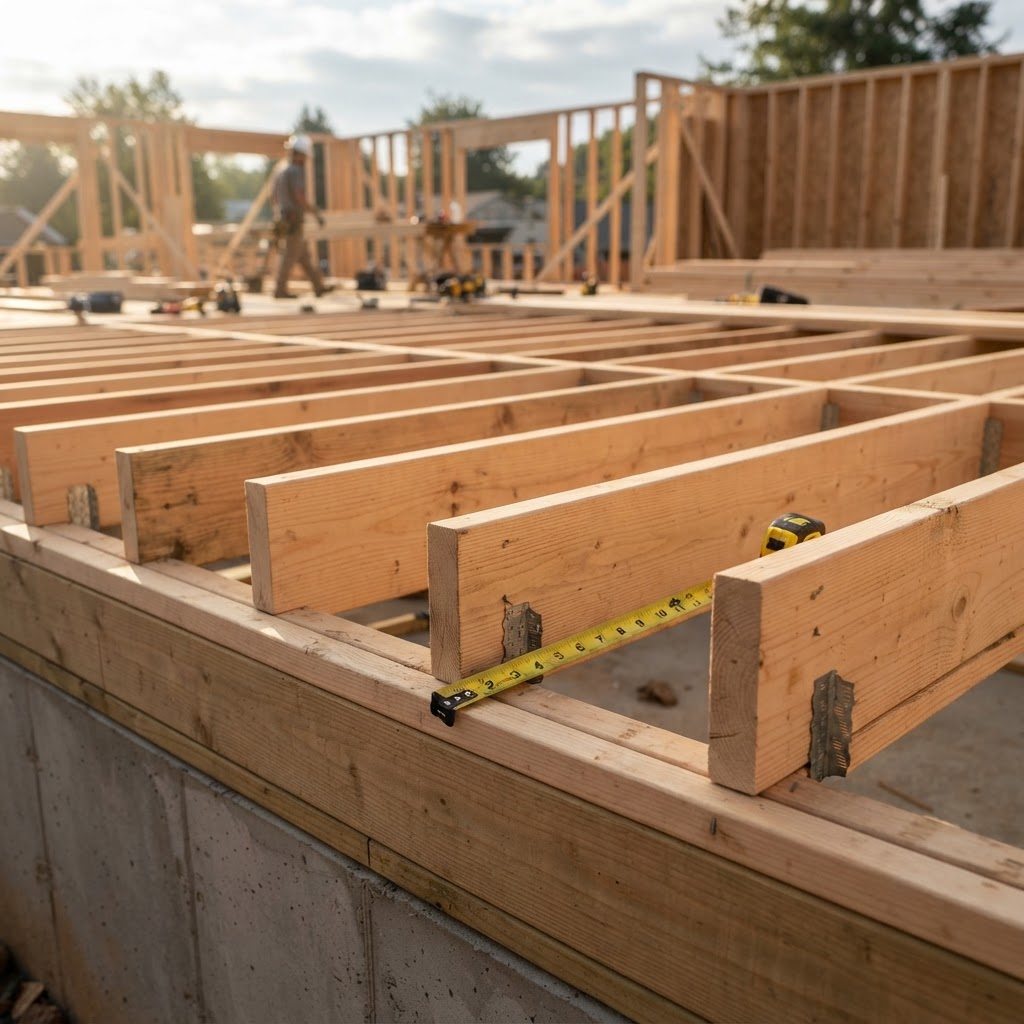
Why span charts get misread
A span table answers one narrow question: for this species, grade, size and spacing, under this load and deflection limit, how far can a joist span? Change any of those inputs and the answer changes. Most span errors come from reading the right size in the wrong table.
This guide explains how to read the tables. It does not replace the span tables adopted by your local building code, the American Wood Council (AWC) span calculator, or an engineer's design.
The inputs every span table assumes
Species and grade
Allowable spans depend on the design values for a species group and grade, such as Douglas fir-larch No. 2 or Southern pine No. 2. A No. 2 joist does not span the same distance as a Select Structural joist of the same size.
Joist size
Spans are listed by nominal size, such as 2x8, 2x10 or 2x12.
Spacing
Tables commonly list 12, 16, 19.2 and 24 in. on center. Closer spacing allows longer spans.
Live load and dead load
Residential floor tables commonly separate living areas from sleeping areas because the design live loads differ. Dead load accounts for the weight of the floor system and finishes. Heavy finishes such as tile or stone may require a different table.
Deflection limit
Deflection is how much the joist bends under load. Tables are usually based on a limit such as L/360 for floors. A stiffer limit may be appropriate under tile.
How to read a span chart step by step
1. Confirm the code edition and table your jurisdiction uses.
2. Pick the table for your load condition.
3. Find your species group and grade.
4. Find your joist size and spacing.
5. Read the maximum span, usually in feet and inches.
6. Measure your span the way the table defines it, typically the clear distance between supports.
Common mistakes
- Using a deck or ceiling table for a floor.
- Assuming the species on the delivery ticket matches the table you used.
- Ignoring point loads from walls, tubs or posts.
- Notching or boring joists outside allowed zones.
- Reading the span to the limit and getting a bouncy floor.
When to use engineered joists
For longer spans or stiffer floors, I-joists and LVL may be more practical than sawn lumber. Use the manufacturer's span tables for those products. See our engineered lumber guide.
Ordering the right joists
Once the span is confirmed, specify species group, grade, size, length and treatment on the quote request. Ask for lengths that minimize waste and confirm the grade stamp on delivery.
Frequently Asked Questions
Lumberama Editorial
Lumber sourcing and specification
Contributor to Lumberama’s reference library. Read our editorial standards and source methodology.
Framing and structure resources
Where readers of this article usually go next.
Related Articles

What Size Header Do I Need? A Practical Guide to Header Sizing
Header size is not chosen by opening width alone. Loads above, building width, snow load and lumber species all matter. Here is how header tables work.

Janka Hardness Is Not Durability: What the Number Actually Tells You
Janka measures resistance to a steel ball, nothing more. Here is what it predicts well, what it predicts badly, and which properties you should be checking instead.

Why Is My New Deck Cupping and Warping? Causes and Prevention
Cupped deck boards are almost always a moisture story: one face is wetter than the other. Here is what causes the imbalance and the install details that prevent it.