Particleboard Guide: Types, Grades, Uses & When to Choose It Over Plywood
What Is Particleboard?
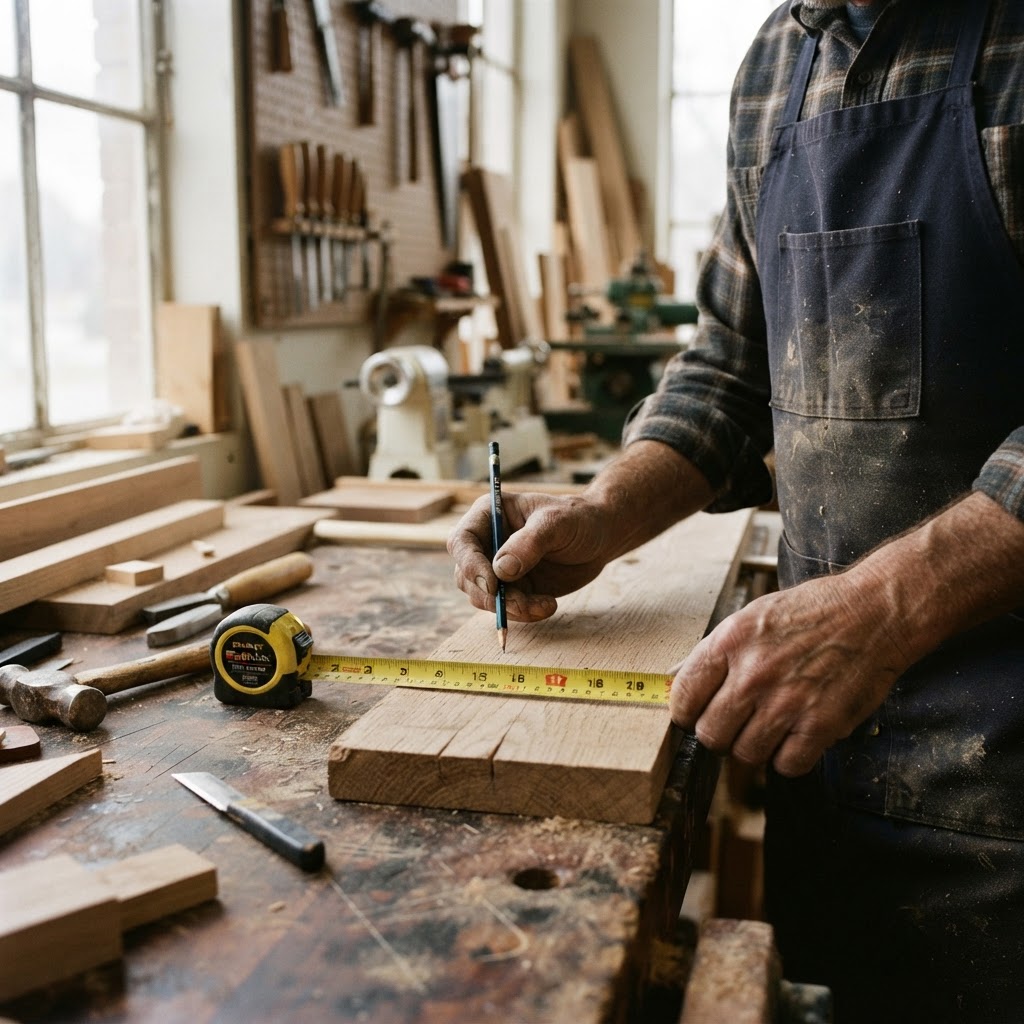
Particleboard is an engineered wood panel made from wood particles (chips, shavings, sawdust, and fibers) bonded with synthetic resin and pressed into sheets under heat and pressure. It's the most widely used substrate in furniture manufacturing worldwide — the flat-pack furniture industry (IKEA, Wayfair) runs almost entirely on particleboard. It's also the primary substrate for laminate countertops, closet systems, shelving, and commercial cabinetry. Particleboard was once considered a cheap, inferior product, but modern industrial particleboard has improved significantly in strength, consistency, and moisture resistance.
How Particleboard Is Made
Manufacturing begins with wood waste (sawmill residue, recycled wood, plantation thinnings) that's chipped into small particles, dried, mixed with urea-formaldehyde (UF) or melamine-urea-formaldehyde (MUF) resin, formed into a mat, and pressed at 300-400°F under 200-400 PSI pressure. The result is a dense, uniform panel with no grain direction — it's equally strong in all directions, unlike plywood. Modern plants use a three-layer construction: fine particles on the surfaces (for a smooth face that accepts veneers and laminates well) and coarser particles in the core (for strength and screw-holding). Industrial particleboard typically has a density of 40-50 lbs/ft³, compared to about 30 lbs/ft³ for MDF-core furniture and 35 lbs/ft³ for plywood.
Particleboard Grades and Types
ANSI A208.1 defines particleboard grades by density and mechanical properties. The most common grades are M-2 (medium density, general purpose — the standard grade for furniture and cabinetry), M-S (medium density, special — higher internal bond strength for demanding applications), H-1 (high density — for countertop substrates, industrial applications), and LD-1/LD-2 (low density — for door cores and sound insulation). Moisture-resistant (MR) particleboard uses melamine resin instead of standard UF resin, providing better performance in humid environments like kitchens and bathrooms. It's usually identifiable by a green or blue dye in the core. Industrial-grade particleboard (like Flakeboard and Roseburg brands) meets strict tolerances for thickness, density, and surface smoothness that generic big-box-store particleboard may not. Melamine-faced particleboard (also called thermally fused laminate or TFL) comes pre-finished with a melamine paper surface in hundreds of colors and wood-grain patterns — it's the workhorse of cabinet box construction and commercial furniture.
Common Sizes and Thicknesses
Standard sheet sizes are 4x8 feet (most common), 5x8 feet (industrial), and 49x97 inches (slightly oversized for trimming). Common thicknesses include 1/4" (underlayment), 3/8" (backing panels), 1/2" (shelving, cabinet backs), 5/8" (shelving, cabinet sides), 3/4" (the standard for cabinet boxes, countertop substrates, and furniture construction), and 1" and 1-1/8" (industrial flooring underlayment, heavy-duty shelving). Sheet weight for 3/4" x 4x8 is approximately 85-95 lbs, making full sheets awkward to handle alone.
Particleboard vs Plywood vs MDF
Each engineered panel has distinct strengths. Particleboard costs 30-50% less than plywood of equal thickness, machines cleanly without voids or patches, provides a smooth surface for veneers and laminates, and is dimensionally stable. However, it's the weakest of the three in screw-holding (especially at edges), swells irreversibly when exposed to standing water, and sags under heavy loads across long spans. MDF (medium-density fiberboard) is denser, stronger, and machines more precisely (perfect for painted profiles and router work), but costs more and is even heavier. Plywood is strongest in every category — screw-holding, moisture resistance, span strength, and impact resistance — but costs 2-3 times more than particleboard and has surface imperfections that require filling. For cabinet boxes where cost matters and the substrate will be covered with melamine, veneer, or laminate, particleboard is the industry standard. For shelves exceeding 30 inches, plywood or MDF is the better choice because particleboard sags under sustained load.
Working with Particleboard
Cutting: Use carbide-tipped saw blades — the resin content dulls HSS blades quickly. A 60-80 tooth crosscut blade produces clean edges on melamine-faced boards. Score the cut line with a utility knife to prevent chipping on laminate surfaces. Fastening: Pre-drill all screw holes and use coarse-thread screws (not fine-thread drywall screws). Confirm fastener bits are engaging — particleboard's edge-screw-holding strength is only 40-60% of plywood's. For edge-joined cabinet construction, use biscuits, dowels, or pocket screws in combination with glue for reliable joints. Confirmat screws (European cabinet screws with deep, coarse threads) are specifically designed for particleboard cabinet construction and provide superior holding power. Edgebanding: Raw particleboard edges are unattractive and absorb moisture. Apply iron-on edge banding (PVC or melamine), solid wood edge strips glued with yellow glue, or PUR hot-melt edge banding for commercial quality. A flush-trim router bit or edge banding trimmer cleans up overhanging tape perfectly.
Frequently Asked Questions
Lumberama Editorial Team
Building Materials Experts
Contributor to Lumberama’s reference library. Read our editorial standards and source methodology.
Choose and plan your plywood
Where readers of this article usually go next.
Related Articles
Plumbing Guide: Common Issues, Cost & When to Call a Plumber
Fix common plumbing problems and know when to call a pro.
Backyard Playground Guide: Types, Cost & Safety
Build the perfect play area for your kids with this guide.
Trampoline Guide: Types, Cost & Safety
Choose the right trampoline for your family with this comprehensive guide.