Maple vs Oak: Hardness, Color, Price & Best Uses Compared
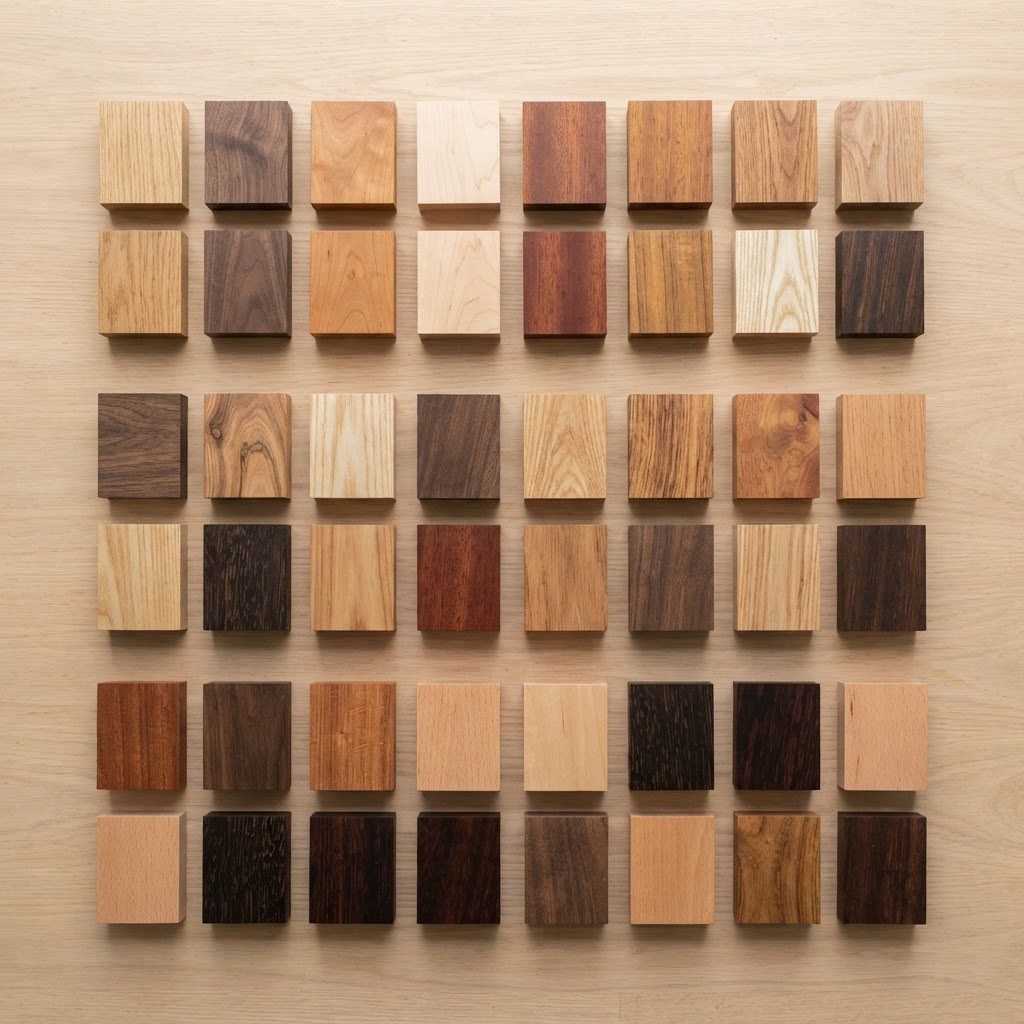
Species Overview
Hard maple (Acer saccharum): Also called sugar maple or rock maple. Grown throughout the northeastern U.S. and Great Lakes region. The hardest North American hardwood commonly used in woodworking. The wood behind bowling lanes, butcher blocks, and basketball courts. Light, creamy color with subtle grain.
Red oak (Quercus rubra): The most common hardwood in the eastern U.S. Open grain with prominent growth rings. Warm pinkish-brown color. The traditional American furniture and flooring wood. Strong, affordable, and widely available.
White oak (Quercus alba): Denser and more durable than red oak. Closed grain (tyloses block moisture). More neutral brown color without the pink undertone. The premium oak for outdoor use, whiskey barrels, and contemporary furniture.
Hardness (Janka Scale)
Hard maple: 1,450 lbf. The hardest of the three. Excellent dent resistance. The standard for commercial flooring, gym floors, and high-traffic surfaces.
White oak: 1,360 lbf. Nearly as hard as maple. Good dent resistance.
Red oak: 1,290 lbf. Softer than both maple and white oak, but still a hard, durable wood. Adequate for residential flooring and furniture.
Grain and Appearance
Maple: Very fine, uniform grain that's nearly invisible. Light cream to pale yellow color. Can have figure patterns (bird's-eye, curly, quilted) that are highly prized. The smooth, clean appearance makes it popular for contemporary and Scandinavian-style furniture. Takes paint beautifully.
Red oak: Bold, open grain with highly visible growth rings. Cathedral pattern on flat-sawn boards. Pinkish-brown heartwood. The grain is the defining feature — it gives red oak furniture its traditional character. Grain is too open for a glass-smooth finish without grain filler.
White oak: Medium grain visibility. Quartersawn white oak shows dramatic ray fleck patterns ("medullary rays"). More neutral brown color than red oak — no pink. The quartersawn pattern is the signature look of Arts & Crafts / Mission-style furniture.
Staining
Maple: Notorious for blotchy staining. The dense, closed grain absorbs stain unevenly, creating splotchy areas. Requires a pre-stain conditioner (like Minwax Pre-Stain) for acceptable results. Many woodworkers leave maple natural or use a clear finish. If you want dark wood, choose walnut instead of trying to stain maple dark.
Red oak: Takes stain beautifully and evenly. The open grain absorbs stain consistently. This is one of red oak's biggest advantages — it's the easiest common hardwood to stain to a custom color.
White oak: Stains well, though slightly less absorbent than red oak due to the closed grain (tyloses). Takes medium and dark stains evenly. Also takes fuming (ammonia exposure) which creates a deep, rich brown unique to oak.
Workability
Maple: Hard on tools — dulls blades faster than oak. Can burn during routing and sawing (the dense grain generates heat). Pre-drill for screws near edges. Glues well. Planes to a glass-smooth surface.
Red oak: Machines easily with sharp tools. Splits readily along the grain — pre-drill near edges. Sands easily but the open grain needs filling for a perfectly smooth finish. Glues well.
White oak: Similar to red oak but slightly harder to machine. Reacts with iron (steel clamps, nails, and hardware cause blue-black staining in wet conditions — use stainless steel). Glues well.
Price Comparison
Hard maple (rough sawn): $5-$8/BF.
Red oak (rough sawn): $4-$7/BF. The cheapest premium hardwood.
White oak (rough sawn): $5-$9/BF. Slightly more than red oak.
Flooring (installed): Maple: $10-$18/sq ft. Red oak: $8-$15/sq ft. White oak: $10-$18/sq ft.
Best Uses
Maple: Butcher blocks and cutting boards (food-safe, hard, closed grain), contemporary furniture, cabinets (especially painted), flooring (especially commercial/high-traffic), turning, musical instruments (guitar necks).
Red oak: Traditional furniture, flooring (most popular species), stained cabinetry, stair treads, trim and molding, any project where you want visible grain character at an affordable price.
White oak: Outdoor furniture and projects (naturally rot-resistant), whiskey barrels, Arts & Crafts furniture, modern/contemporary furniture, flooring, boat building.
Frequently Asked Questions
Lumberama Editorial Team
Hardwood Species & Woodworking Specialists
Contributor to Lumberama’s reference library. Read our editorial standards and source methodology.
Wood properties and behavior
Where readers of this article usually go next.
Related Articles

Tree Removal Guide: Cost, When to Remove & DIY vs Pro
Make safe and informed tree removal decisions.

Countertop Guide: Granite vs Quartz vs Marble and More
Choose the right kitchen or bathroom countertop with this comprehensive comparison.

Pool Guide: Above Ground vs In-Ground Cost and Types
Learn about costs, types, and which pool is right for your home.