How to Read Lumber Grade Stamps Explained: Decoding the Marks on Your Wood
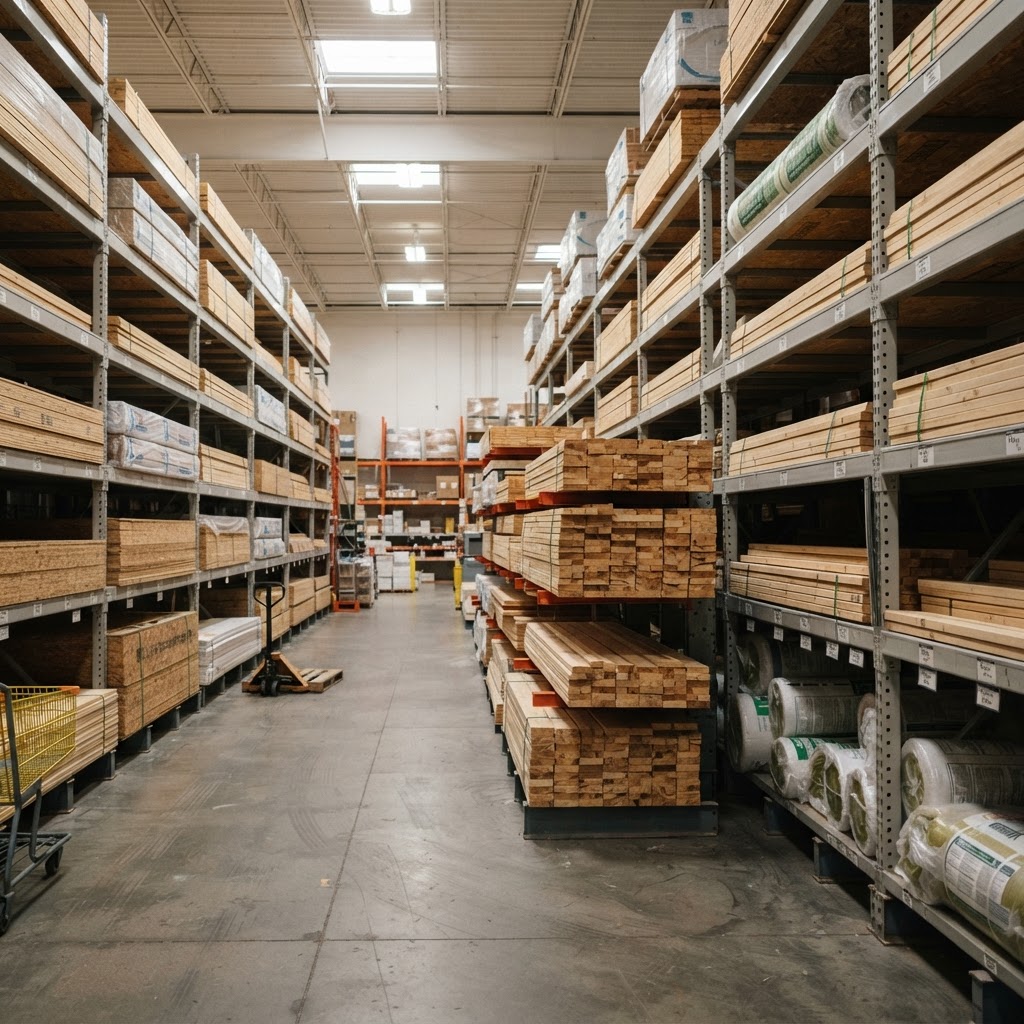
How to Read Lumber Grade Stamps Explained
The ink stamp on the face of dimensional lumber contains five distinct pieces of information. Once you know how to read it, you can walk into any lumber yard and immediately assess what you're looking at.
The Five Elements of a Grade Stamp
A typical grade stamp reads something like:
```
12 MILL No. 2
WWPA S-DRY HEM-FIR
```
Let's break each element down.
1. Certifying Agency
The grading agency certifies that the lumber meets the grade standards claimed. Major North American agencies:
- WWPA: Western Wood Products Association
- NLGA: National Lumber Grades Authority (Canadian)
- SPIB: Southern Pine Inspection Bureau
- NHPMA: Northern Hardwood and Pine Manufacturers Association
- WCLIB: West Coast Lumber Inspection Bureau
- NELMA: Northeastern Lumber Manufacturers Association
All of these agencies use the same grade standards (ASTM D1990 and the National Design Specification), so a No. 2 grade from any agency equals a No. 2 from any other.
2. Mill Number
A unique identifier for the sawmill that produced the lumber. This allows any piece to be traced back to its source if there's a quality concern. You won't need this number for most projects, but it's useful in the rare case you need to make a warranty claim.
3. Structural Grade
This is the most important marking for structural applications. Common grades from highest to lowest:
Appearance/Select grades:
- Select Structural (SS or Sel Str): Highest strength, fewest defects, best appearance. Used in exposed structural applications.
- No. 1: Very high strength, some minor defects. Suitable for most structural uses.
Standard dimensional grades:
- No. 2: The most common grade in home centers and lumber yards. Meets structural requirements for most residential construction. May have knots up to 1.5" and slight warp.
- No. 3: Lower strength, significant defects. Suitable for blocking, non-structural uses, and projects where appearance doesn't matter.
- Stud grade: Specifically graded for vertical use in wall framing. Cannot be used as a horizontal member without checking span tables.
- Construction grade: Between No. 1 and No. 2 in 2x4 and 2x6 sizes.
- Standard grade: Below Construction, above Utility in 2x4 and 2x6.
- Utility grade: Low quality, significant defects. For rough blocking and non-structural applications only.
What to use for what:
- Floor joists, rafters, headers: No. 1 or No. 2 (check span tables for your specific application)
- Wall studs: Stud grade or No. 2
- Deck framing: No. 2 pressure-treated
- Blocking, rough work: No. 3 or Stud
- Fine furniture: Select or clear grades (different grading system)
4. Moisture Content (MC)
The moisture content marking tells you how dry the wood is:
- S-DRY (Surfaced Dry): 19% MC or less when surfaced. Standard for most lumber sold at home centers.
- S-GRN (Surfaced Green): Over 19% MC. Wood will shrink as it dries. Avoid for finish applications.
- KD (Kiln Dried): Dried in a kiln, typically to 15-19% MC for dimensional lumber, 6-9% for flooring and millwork.
- KD-HT: Kiln dried and heat treated. Required for international shipping to kill insects. The heat treatment does NOT change structural properties.
- MC 15: Moisture content 15% or less. Premium moisture content designation.
Why MC matters: Wood at 19% MC will shrink as it dries to equilibrium moisture content (typically 8-14% indoors). A 2x4 studs framed at 19% MC will shrink about 1/16" in width as it dries — insignificant for framing, significant for finish carpentry.
5. Species or Species Group
North American lumber is often sold in species groups because closely related species have similar structural properties:
- SPF (Spruce-Pine-Fir): The most common group in the US. Includes multiple spruce, pine, and fir species from Canada and the northern US.
- HEM-FIR: Hemlock and white fir. Slightly different strength values than SPF.
- DF-L (Douglas Fir-Larch): The strongest common structural species group. Higher design values allow smaller members in many applications.
- SYP (Southern Yellow Pine): Common in the southeast. Very high strength and stiffness. Most PT lumber is SYP.
- WW (Western Woods): Several less common western species.
Practical Grade Selection Guide
Project: Deck framing: No. 2 pressure-treated SYP or Douglas Fir. The SYP PT lumber at most Southern and Midwestern suppliers is the right choice.
Project: Interior wall framing: Stud grade or No. 2 SPF or HEM-FIR. This is what bundles of framing lumber contain at most stores.
Project: Roof rafters: No. 2 minimum; consult span tables for your snow load zone. DF-L or SYP provide higher allowable spans for the same member size.
Project: Visible beams or posts: Select Structural or No. 1 with specified appearance minimums. Worth paying for if the wood will be visible.
Project: Blocking, rough sills: No. 3 or Utility if available. No point paying for structural grade when appearance and strength are both irrelevant.
The Clear Grades (Different System)
Clear and select grades for appearance lumber use a different system:
- C Select (or 1 Common): Near perfect, a few small knots
- D Select: Small knots, good appearance
- No. 1 Common: Small tight knots, good for most finish work
- No. 2 Common: Knottier, used for knotty pine paneling
- No. 3 Common: Large knots, rustic appearance
- No. 4 Common: Used for construction, not appearance applications
Pine paneling sold as 'knotty pine' is typically No. 2 or No. 3 Common.
Frequently Asked Questions
Sarah Chen
Wood Scientist
Contributor to Lumberama’s reference library. Read our editorial standards and source methodology.
Buying and sourcing resources
Where readers of this article usually go next.
Related Articles
Plumbing Guide: Common Issues, Cost & When to Call a Plumber
Fix common plumbing problems and know when to call a pro.
Backyard Playground Guide: Types, Cost & Safety
Build the perfect play area for your kids with this guide.
Trampoline Guide: Types, Cost & Safety
Choose the right trampoline for your family with this comprehensive guide.