Garage Floor Coating Guide: Epoxy, Polyurea & Cost
Why Coat Your Garage Floor
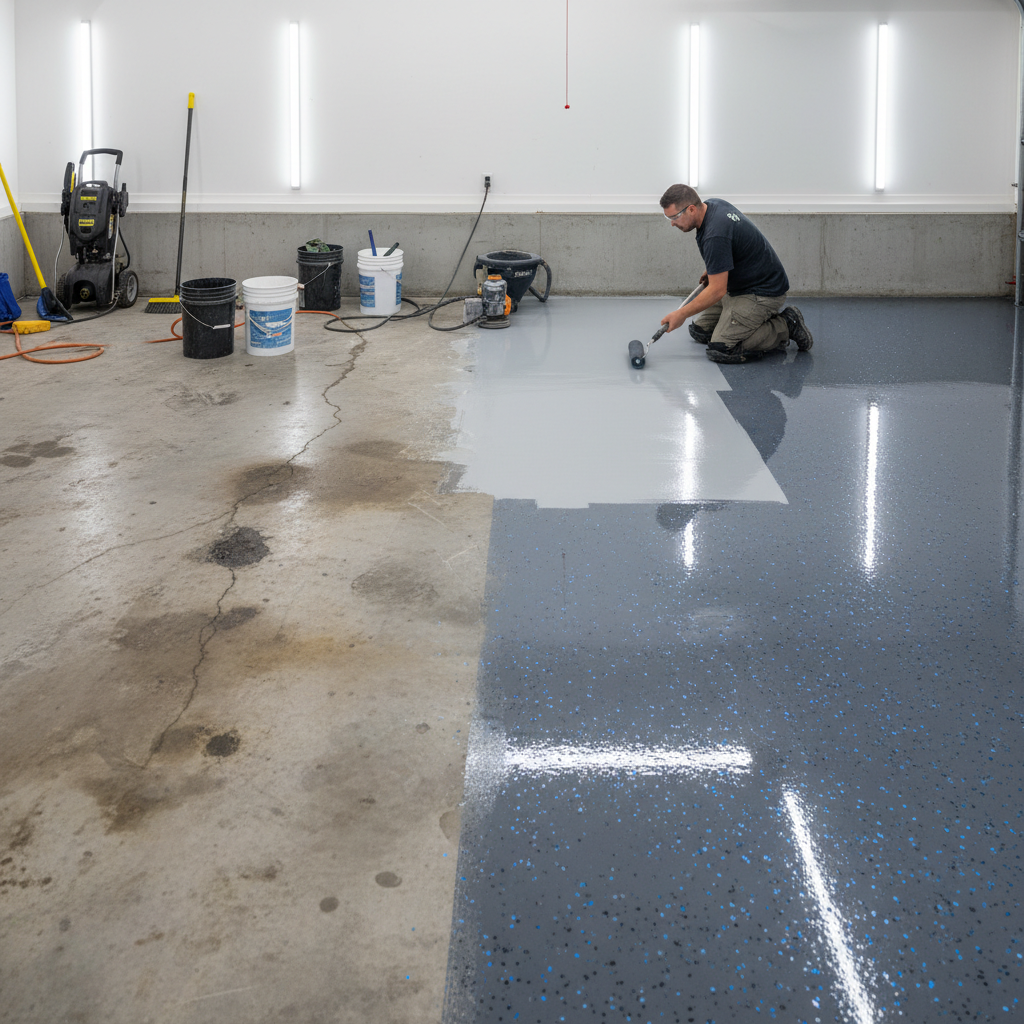
A coated garage floor transforms the space from a dull, stained concrete slab into a clean, professional-looking surface. Benefits: protects the concrete from stains (oil, chemicals, salt), resists tire marks (hot tire pickup), makes cleaning easy (sweep and mop instead of scrubbing bare concrete), resists moisture and dusting (bare concrete generates dust from surface deterioration), and significantly improves the appearance of the garage. A coated garage floor also increases home value and makes the garage feel like an extension of the home rather than a utilitarian afterthought.
Coating Types
Epoxy (water-based, DIY kits): The most popular DIY option. Available at big box stores (Rust-Oleum EpoxyShield, Quikrete Garage Floor Epoxy). Applied with a roller. Two-part mix (resin + hardener). Dries in 24-72 hours. Lasts 2-5 years before showing wear. Cost: $50-$150 for a 1-car garage kit, $100-$250 for a 2-car garage kit. Pros: affordable, easy to apply, and available everywhere. Cons: less durable than professional coatings, can peel in hot climates (hot tire pickup), and shorter lifespan.
Epoxy (100% solids, professional-grade): Much thicker and more durable than DIY kits. Applied by professionals or advanced DIYers. 100% solids (no water or solvent evaporation, so the full thickness of the wet coat remains after curing). Lasts 10-20+ years. Much better resistance to chemicals, hot tires, and abrasion. Cost: $3-$7/sq ft professional installed. Pros: extremely durable and long-lasting. Cons: expensive, requires professional application (fast pot life), and longer cure time (5-7 days before driving on it).
Polyurea/polyaspartic: The premium coating. Applied by professionals. Cures in hours (one-day installation — drive on it the next day). UV-stable (will not yellow in sunlight). Extremely durable (more flexible than epoxy, less likely to crack or peel). The best resistance to chemicals, stains, and hot tires. Cost: $5-$12/sq ft professional installed. Pros: fastest cure time, most durable, UV-stable. Cons: most expensive, requires professional application.
Garage floor paint (latex or acrylic): Not a true coating but a paint. Easiest to apply (one-part, no mixing). Cost: $30-$80 per gallon ($0.15-$0.30/sq ft). Lasts 1-3 years. Pros: cheapest and easiest. Cons: least durable, peels easily, and shows wear quickly. Best for: a quick cosmetic improvement when durability is not critical.
Preparation (The Key to Success)
Surface preparation is 90% of a successful garage floor coating. The concrete must be clean, dry, and profiled (roughened so the coating can bond). Steps: sweep and remove all debris. Degrease oil stains with a degreaser or TSP. Etch the concrete with muriatic acid or a concrete etching solution (creates a rough surface for adhesion). Alternatively: grind the floor with a concrete grinder (the gold standard for preparation — removes existing coatings, levels imperfections, and creates a perfect profile). Fill cracks and divots with a concrete patch compound. Let the floor dry completely (48-72 hours after washing). The moisture test: tape a plastic sheet to the floor, wait 24 hours. If moisture collects underneath: the floor has a moisture issue that must be addressed (moisture barrier or different coating system).
Decorative Flakes
Most garage floor coatings include decorative flakes (vinyl chips) broadcast into the wet coating. They add texture (slip resistance), hide imperfections, and create a professional, terrazzo-like appearance. Available in multiple color blends. A full-flake broadcast (covering the entire surface) creates a high-end look. Partial broadcast (scattered flakes) is more subtle.
Costs
Frequently Asked Questions
Lumberama Editorial Team
Garage & Concrete Coating Specialists
Contributor to Lumberama’s reference library. Read our editorial standards and source methodology.
Continue researching flooring
Where readers of this article usually go next.
Related Articles
Tile Backsplash Guide: Materials, Patterns & Installation
Design and install a beautiful kitchen backsplash with this materials, patterns, and installation guide.
Sprinkler System Guide: Installation, Zones & Maintenance
Design and maintain a lawn irrigation system with this installation, zones, and maintenance guide.
Concrete Driveway Guide: Cost, Installation & Maintenance
Build a durable concrete driveway with this cost, installation, and maintenance guide.