Why Stain Your Deck
A wood deck is a major investment ($15,000-$35,000+ for a quality deck). Without protection, it deteriorates rapidly. Unstained wood: turns gray from UV exposure (within 2-4 months), absorbs moisture (causing warping, cupping, and splitting), develops mold, mildew, and algae, and can rot from the inside out. A quality stain adds years of life. Stained and maintained decks last 25-30+ years. Unstained or poorly maintained decks: 10-15 years before major repairs or replacement are needed.
Deck Stain Types
Transparent/clear sealer: No color added. Protects against moisture but provides minimal UV protection. Shows the full natural wood grain and color. Needs reapplication every 1-2 years. Best for: new premium wood (cedar, redwood, ipe) where you want to show off the natural beauty.
Semi-transparent stain: The most popular choice. Adds a tint of color while allowing the wood grain to show through. Provides good UV and moisture protection. Lasts 2-4 years before reapplication. Best for: most decks, balancing appearance with protection.
Semi-solid stain: More pigment, partially hides the grain. Very durable (3-5 years). Good for older decks with some weathering or imperfections.
Solid stain: Completely covers the wood grain (like paint). Most durable (4-6+ years). Can peel and require scraping before reapplication. Best for: older decks in rough condition where you want to hide imperfections.
Best Deck Stains
Oil-based: Cabot Australian Timber Oil (excellent for hardwoods and premium softwoods, rich color, deep penetration). TWP (Total Wood Preservative) 100 and 1500 series (top-rated for UV protection and longevity). Penofin (penetrating oil finish, great for cedar and redwood).
Water-based: Benjamin Moore Arborcoat (excellent durability, wide color range, low VOC). Sherwin-Williams SuperDeck (good all-around performer). Behr Premium (available at Home Depot, good value).
Oil-based vs water-based: Oil penetrates deeper and provides richer color. Water-based dries faster, has lower VOCs, and cleans up with water. For maximum longevity: oil-based is preferred. For ease of use and environmental considerations: water-based is excellent.
Preparation
Clean: Apply a deck cleaner (sodium percarbonate-based like OxiClean, or a commercial deck wash like Defy Wood Cleaner). Let it dwell 10-15 minutes. Scrub with a stiff brush or pressure wash (1,500-2,000 PSI, fan nozzle, keep 12+ inches from the surface).
Brighten: Apply a wood brightener (oxalic acid-based) after cleaning. This opens the wood pores, neutralizes the pH, and prepares the surface for stain absorption. Rinse thoroughly.
Dry: Allow 48-72 hours of drying time after washing. The wood must be completely dry (test by splashing water — if it beads up, the wood is not ready; if it soaks in immediately, the wood is ready).
Sand (if needed): Sand raised grain or rough spots with 60-80 grit sandpaper. Sand with the grain.
Inspect and repair: Replace damaged boards. Set popped nails or screws. Tighten any loose connections.
Application
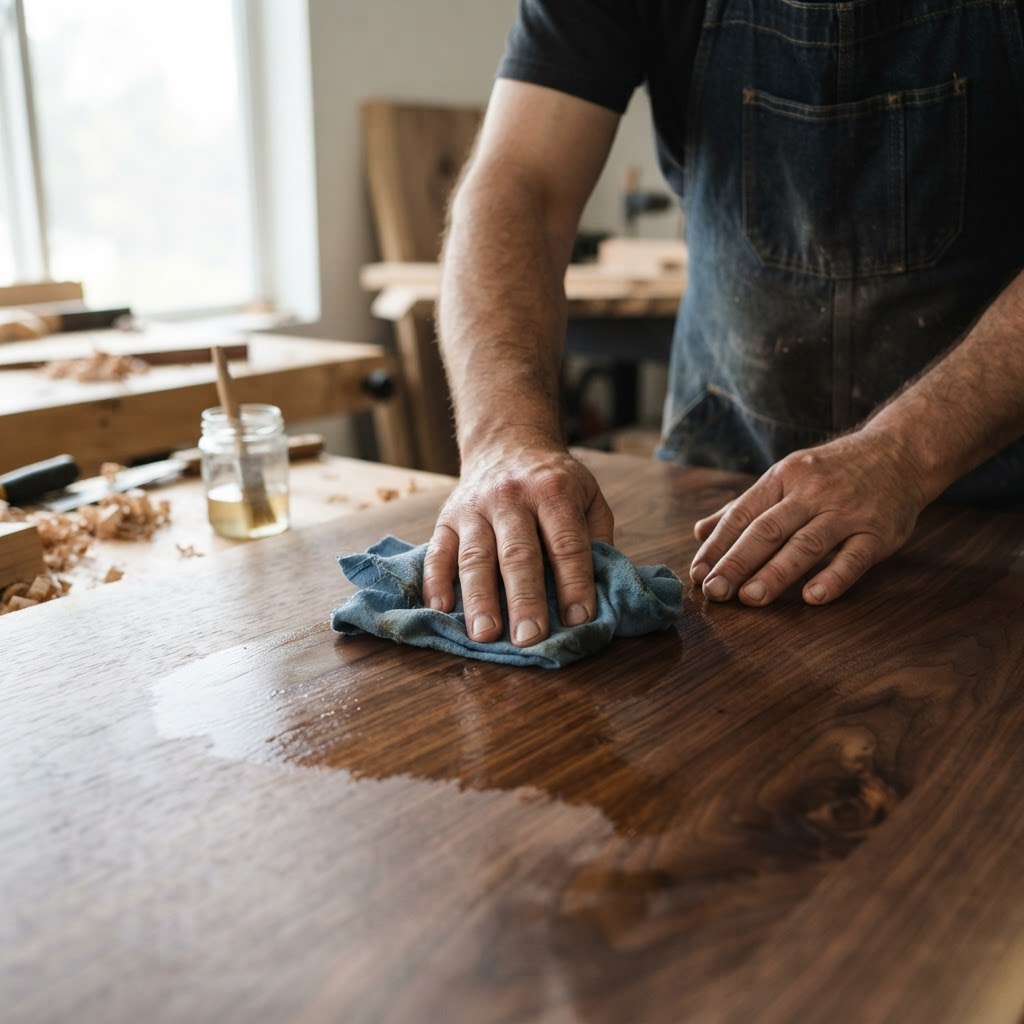
Apply stain when: temperature is 50-85F, no rain in the forecast for 24-48 hours, deck is not in direct sunlight (stain dries too fast in sun, causing lap marks), and humidity is below 85%. Method: use a roller or pad applicator for flat surfaces (fastest and most even), a brush for railings, posts, and between boards, and stain 2-3 boards at a time to maintain a wet edge. Apply thin, even coats. Work the stain into the wood — do not leave puddles or thick spots. For most semi-transparent stains: one coat is sufficient. A second coat can be applied within the recoat window (check the product label, typically 2-4 hours for water-based, 24 hours for oil-based). Allow 24-48 hours of curing time before foot traffic and 72+ hours before placing furniture.
Costs
Stain (per gallon): $25-$70 (covers 100-300 sq ft depending on wood type and stain opacity).
Deck cleaner: $10-$25.
Brightener: $10-$20.
Supplies (brushes, roller, tape): $20-$50.
DIY total (300 sq ft deck): $100-$300.
Professional (per sq ft): $2-$5 (staining), $3-$8 (including cleaning and prep).
Professional total (300 sq ft): $600-$2,400.
Restaining frequency: Every 2-4 years for semi-transparent, every 3-5 years for semi-solid.