Concrete Patio Guide: Design, Pouring & Cost
Why Concrete
Concrete is the most popular patio material in America. Reasons: extremely durable (lasts 25-50+ years), low maintenance (occasional sealing and cleaning), versatile (can be stamped, stained, colored, or polished), cost-effective ($6-$15/sq ft installed for standard, vs. $12-$30/sq ft for pavers), and strong (supports heavy furniture, grills, and hot tubs). A well-built concrete patio is a one-time investment that requires minimal upkeep.
Design Options
Thickness and Reinforcement
Standard residential patio: 4 inches thick. If the patio will support a hot tub or heavy structure: 6 inches thick. Base: 4-6 inches of compacted gravel (provides drainage and prevents frost heaving). Reinforcement: wire mesh (welded wire fabric, placed in the middle of the slab) or rebar (#4 rebar on 18-24 inch centers for larger slabs or areas with heavy loads). Fiber reinforcement (fiber mesh mixed into the concrete) helps prevent surface cracking but does not replace structural reinforcement for larger slabs. Control joints: saw-cut or tooled into the surface within 24 hours of pouring. Spacing: every 8-12 feet (or the slab thickness in feet × 2-3). Control joints control where the concrete cracks (it will crack along the joint instead of randomly).
Pouring Process
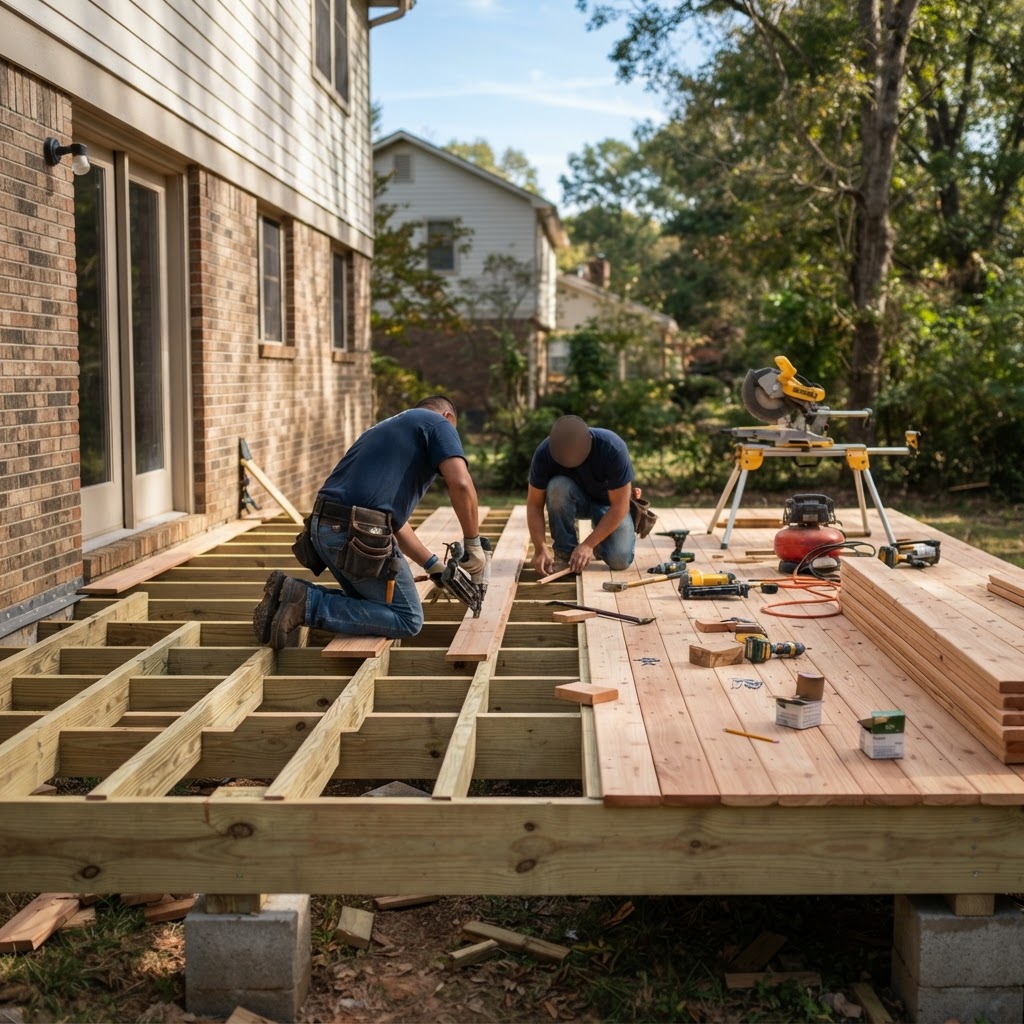
Excavate the area (remove sod and topsoil, dig to the depth of the gravel base + 4 inches of concrete). Compact the subgrade. Add and compact 4-6 inches of gravel base. Build forms (2x4 lumber staked around the perimeter, set to the desired height and slope — slope the patio away from the house at 1/8 inch per foot for drainage). Place reinforcement (wire mesh on chairs/supports to keep it in the middle of the slab). Order concrete (calculate: length × width × thickness in feet, divide by 27 = cubic yards needed). Pour, spread, screed (level with a straightedge), bull float (smooth the surface), and finish (broom, stamp, or expose aggregate). Cure: keep the concrete moist for 7 days (spray with water or apply a curing compound). Do not walk on it for 24-48 hours. Do not place furniture for 7 days. Do not drive on it for 30 days.
Costs
Frequently Asked Questions
Lumberama Editorial Team
Concrete & Outdoor Living Specialists
Contributor to Lumberama’s reference library. Read our editorial standards and source methodology.
Finishing resources
Where readers of this article usually go next.
Related Articles
Pressure Washing Guide: Cost, Tips & What to Clean
Restore your home's exterior with pressure washing.
Arbor & Trellis Guide: Types, Cost & DIY Ideas
Add vertical beauty to your garden.

Screen Porch Guide: Types, Cost & Design Ideas
Enjoy the outdoors without bugs.